

Extra content pops up along the way.
Trailheads
Good places to start walking.Chapters
August 2, 2025
From Tobacco to TikTok
Double-tap the sides to skip 15 seconds
Trailheads
Places to startArtwork explorations
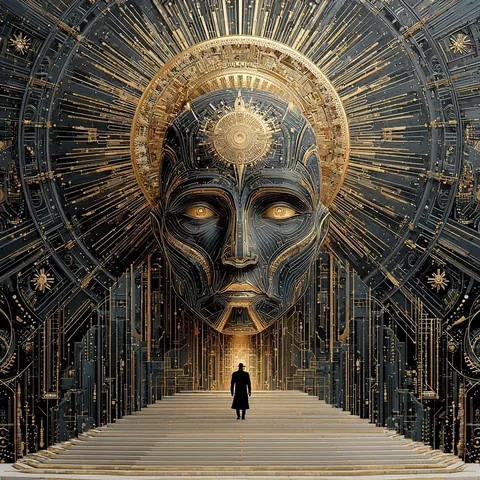
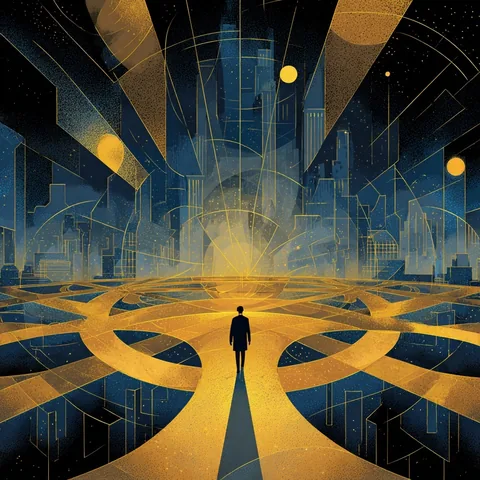
The other takes the image generator gave us, and the prompts behind each piece.
Chapters
Settings
From Tobacco to TikTok
With Kris Tyte & Sean Snodgrass
Hosts Kris Tyte & Sean Snodgrass are joined by guests Noah and Kalib in this deep, unfiltered, and insightful conversation. Together, they explore the parallels between tobacco regulation and social media in today's society. They also discuss the importance of public health in a capitalist system and technologys ongoing effects. Sit back and relax as we question the role of power in our society, political influences, faith, and complex modern problems.
Share
Detour
Episode description
Hosts Kris Tyte & Sean Snodgrass are joined by guests Noah and Kalib in this deep, unfiltered, and insightful conversation. Together, they explore the parallels between tobacco regulation and social media in today's society. They also discuss the importance of public health in a capitalist system and technologys ongoing effects. Sit back and relax as we question the role of power in our society, political influences, faith, and complex modern problems.
Chapters
Show notes
Episode Art 12 pieces
Full Transcript
And so in a very complex, modern industrialized society where technology is expanding beyond recognition, like technology is spending in every domain extremely rapidly, right? It is impossible for a human being to know all this stuff like that. It's well beyond like nobody even understands how the whole iPhone works, right? Like, right. Of course, the amount of intricacy of the components are so vast.
Like, no one person understands the whole. There is nuances tracks. There is one guy who went to Shenzhen and source all the parts, and in a building his own iPhone, he's probably the closest person, engineering wise, who understands how it works. But he built it and it works. Sure. But but like, I can almost guarantee you he doesn't know every subprocess or every.
No, no, but he didn't know about the OS, right? No, no. There's so many things. There's still black boxes to him. He probably understands the most of any single person. Right? Right. And so let's say for I say I do a nine out of ten job with keeping my kids safe online and doing it right. Let's just say for this, I could do that, right.
I have to go to another domain. I haven't teach them about nutrition and all the fucking shake they put in food and, you know, like, oh, yeah. So it is it's literally overwhelming to to like, if you're really going to think that you're going to do it right across the board, you're naive. There's no one right. So there's no perfect solution.
There's no perfect solution. No. But what I would like, what I would like, like imagine one that I would love to have a world where the defaults at least were on my my side and on the side of my shoulder. If you specify wines closer to your finish line, the easier show is running 100m. It's going to be a lot easier than running a 400.
Sorry. However many feet that is, let's say 400 yards is this year. Yes, 100 yards and one for Phil versus four. But that's not in society. Out of capitalism. Point blank. True. Because they they want the goal of capitalist societies glamor capital this and to put other people who aren't the capitalist who aren't the aren't the ones at the top and the different starting well the secondary.
Right. Like that's not really the goal, but that's fucking pretty much the best way to get there. Right, right. It is. So you can find a better way than that or change but fucking anything happen. Well, so capitalism is brains. Everything is a zero sum game I achieve you dumb. And that's honestly I'm going to disagree with you on that.
Yeah, yeah. Look, again, if that is the case I think that's probably a good piece of them. And that might very well be a means to an end. But I think I think playing zero sum game is trying to think it's it's like a process got down the words fucking skipping out on me. You know it's it's it's it's one method.
It's one way to do it right. Like if, if you're struggling to increase your profits and your company, but you can go and beat someone else down, right. Like take the Walmart model. You can go into some town and fucking underpriced. And Louis take a loss and dominion the lowest rises from the people. You're getting good. But that is just a strategy to that increase your own profits, right?
They don't actually want the other people out. They just want to get the most of profits. Sure. Right. And if Walmart rolls into some town, they've decided they'd make a bunch of money. There's not many small businesses and whatever, you know, just as an example. So a lot of problems with capitalism are just secondary. They're just means to an end.
So they're just not fun effects and emergent behavior due to the way the system. Yeah, it's the goals of the system. Right? It's just it's the goals. It sounds like to me this is an environment that can be regulated without too much difficulty because, you know, the ambition of the. Yeah. What's the motivation to regulate there is not well, if anything, the motivational society, there'd be a lot of motivations.
But in this current incarnation of society. How does that approve any more capital? Yeah. In this current incarnation of society in America, you. That's it. The goal is bold based achievement. Oh, capital. It's infinite growth and a finite system. Okay. You know. Right. So so the blind and mission of just increasing more capital. Yeah. Has generations of children raised on all these on sucks their brains out.
That's right. That's that that that that price or that, you know, that penalty isn't worth the gains in my opinion, of, well, we might not even bloom capitalist. Not right. Of course I'm not. Yeah. Well, so back to the YouTube idea. Right. To bring the conversation full circle is that we can roll our eyes and say, yeah, a kid that's 14 can easily circumvent and just say that they're there, but it's still worth making.
But what's happening? The regulation is changing the default. At least it's changing the default. You created this sieve. It's going to catch some people and a strategy to for all conditions, you have to then go out of your way to make a secondary to to then in that that content. That's wonderful as you always have to start at some point to figure out what pieces work and what pieces duct there was.
As soon as you put those sort of regulations in place, which I think they've already been put in place, if I'm not mistaken, Allison would have been reading in. Give them a decent ground zero point to begin. So do you feel like they are monitoring coupling? Coupling, monitoring? I think they are. Have they not really huge amounts into it beyond so should be headed so should in the United States.
Should we have a TikTok ban? I think that it should be specific. Content I think is always there. See, that's a problem because then you come into like fucking capital ownership, right? Like right. To run a company, you know, and like even then defining what people are and aren't allowed to do. You got to define what is what harms how.
And so if you go back and TikTok then like, are we asking to ban YouTube shorts Instagram like or for. We just now discriminate because we don't like this company. Why we like this competition. Because they're from some other place that we also are some like adversary to like like, you know, you can't just pick one okay. So let's site that's not legal.
And, and but I guess at this point in time that's not really concern for many things either. Okay. Legality and yeah time in this country I think it was like in the early 80s or something. There was about 80% of the adults were cigarettes notes. Oh yeah. That's fucking way down now. Yeah. And right, it's like it's like a like to do just that.
Oh is it. It's like 58 to 15% now somewhere. Right. Which is actually higher recent years. Yes. Yeah. Well that came in with and other bits and pieces which kind of just in general decline society. Let's look at for a second. Like what. Let's look at the, the the brief like, you know, just the surface level history of this.
Right. They said tobacco companies were revealed new for years that their product was highly addictive. And they hid the evidence that sheriff throws for their profits. It was profit over people model always. And it just devastated the health of Maine and people. Right. And all this stuff came out and the government said, okay, no, we have to put all these regulations in place now to, to to stop this harming the people.
Right. And so for the years when the getting was good for the Philip Morris and all these other big tobacco companies, you know, they laughed all the way to the bank. They didn't care about the health and wellness of people. But when it was revealed what it actually does to the health and wellness, common sense regulations started to come into play.
And then look what happened in society. Over time, smoky rates went down. I don't like that phrase common sense. It's ambiguous as fuck. What's it? I know that once you have, once you have sufficient information and that information becomes common, then you can have the common sensibility you have. You are relying on this. I don't I don't have someone does or doesn't like the phrase compensation.
Common sense though you know that too. So so it's anywhere everybody's subjected common sense. I guess my only problem with it and you can, you can add on to this or take away from it. But my, my problem with it is it's the common sense. It relies on a shortening. It's a short way to say the moral code of the day, the ethics of the day, the social mores.
It it's a way to boil down the moment and it's just a point in time. It's not a well for you that you do not think for that other guy. Common sense was to leave it for the first dude's getting my. I won't use the phrase common sense. It's fine. It's not. But it's not die on these comments.
Like number two government, the people in Congress, they always thought common sense legislation, such praise. And to me that's just that's a huge turnoff. And that's a way to like pressure people for things that I am to present facts. Yeah. So like some guy. So it's just some sense it's what it looks like. You know what? You know what happens all the time is like this always gets a semantic in, in discussions.
It's it's a pejorative thing. Right. So like some person invariable right. Some person will say something and then that particular phraseology means something specific to someone on the broom. Right. And so but you can't you can't ever get like you can't put like boundaries on yourself. And just your common way you say that is to try to get a point across.
You know, wondering what phrases of two and not to use. It's true, but you get an effort into it because so many k. The point of communication is to take your idea into someone else's head without it changing too much. That's right. I mean, I'll use comments and I'll define though what I mean by comments. Okay, now I'm okay with that because that clarifies all your music ineffective.
So what I need you what I, what I mean by common sense. Okay. Is once the public at large has a default state of knowing the pieces of information they have, they then have natural or logical, easy to obtain solutions. Let's say it's a right sensibility towards them I think. Everything okay? Okay, so I think the common person in America, even children, now have the sensibility that smoking is bad for their health.
Well, I think that people so people knew for very long time that smoking is bad for their health. Nearly everyone, I don't know if I've ever met in my entire life who smoke that didn't know it was bad for their health. Okay, well, I was in my I spoke to pack a day for ten years. I knew it was bad for my health.
Little time. Okay, well, that's a whole other story. I don't know, I feel like that. But you did. You like. Did you actually not know? Is bad for your health when you smoke? I never smoked. Oh, right. So, what happened, though, is that the 80% of the adults were smoking. And then the generation before that, in the 70s, the 60s, there's advertisements were more doctors smoke.
Winston. Right, right, right. And it was actually a it was actually like at one point in our country, in the vernacular, that smoking had health benefits. Right? Right. Now that's true. But over time he with her scribe it to people who had another lung can go ahead to can and Pepsi had pepsin right. And so then as I worked on and more submission more information became publicly available, I think more of the general population had more of a sensibility that's more King was bad for you, right.
And that's how I'm framing the word compensate. So and so when with smoking, you now see this, this legislation on the sense legislation, but legislation was put in place to act as a counterpoint, to start to tamp down or put more controls on the subconscious. Right. He strikes constraints. And so the defaults have changed. And then what we've seen over time is we've seen legitimately a valid decrease, dramatic decrease in the amount of smokers.
Absolutely. Especially like people that smoke indoors and around children and cars. And the rules for that came into play, Sports Illustrated you cannot sweep within five meters within a values main door. That's awesome. So stuff like that general rules as well. And then you have designated smoking areas for those that still do. But the generally outdoors in areas and away from general populace.
There you go. And so 25% this is falls out of the data when you use some statistical analysis, 25% of people that die of smoking related illnesses and nonsmokers that that's wild. When I heard that statistic, that's from the CDC. When I heard that statistic, I was like, that's that's diabolic, right? So like 25% of people disease and early deaths because of like other people's.
Well, yeah. The secondhand smoke. That's crazy. Now bring us bring this now to this poll scrolling videos in our end in this poll. What that does dopamine in this phenomenon. Right. Sedition. Right. Right. Right now is addiction relatively. It's prison like right now you look well. The drugs that you designed for, it's a lot of them hit your dog main centers which then back to give you this a big hit of pleasure which similar things like chocolates and all those sorts of things also release amounts, which is why a lot of that becomes addictive and problematic as well.
Sure, easy access to those things that stimulate because our biology was built for those things. B to be wreck our Bible. We were built to crave them because they were so rare. Right? So so we know these things and we have these other touchstones now using tobacco as a model for this right now. Think about this. We have now if you look at screen time, I'm just just just have some friends that you're close with and just say, you know, hey, you might let me look at your fault and look at their fucking screen time.
And you will see after a very short sample size, right. Like do enough of a sample size, do this with ten people. And what you'll find is that people are spending a tremendous amount of their actual life time and attention scrolling fucking short form. Yeah, right now, we also know clearly that the biggest source of manipulation and source of miss and disinformation is that exact mechanic.
Okay, so what I'm saying is that why can't we then, as a rational society, I'd like to think we're rational or rational. We are humans across the board. I would like to think I said I'm like, think I, I'd like to thank everyone has their own delusions. What central in mine I do let's say for argument's sake, okay, that we know we know there's enough information now to know that that is an unhealthy behavior when you're getting over six, seven, eight plus hours a day doing this, this activity.
Right? Right. We know, like the myopic problems, we know the problems with with the activity like your activity levels go down, your actual social engagement goes down. Real, real life social engagement goes down. There's very little positive comes out of it, almost very little positive. And it's a mind virus because you get fucking people like Trump in office.
And you know why? Because of that right there. No I'm sorry. That's why. That's why it would be have Donald Trump sorry. We don't talk about politics and about but no we do. Sorry. But this is this is this sorry. Not sorry. This is where this comes from, right? This delivery mechanic has given us a now a virus in our in our, you know, nation might not we don't even know it's going to make it through it at this point.
Right. Of all the shit that's coming down the pike is unbearable and unbelievable. Well guess what? It's been enabled by X by months. By all, by his upper, by right. He was back grew fucking deal. And it's mind control and it's a mind virus and we know it's worse than tobacco. Sure bet. And so there we go. Why don't we make the defaults associated to where it's a little different.
Why don't we use that has a bigger impact. Well wives they don't size because it's not just affecting you and the people around you. It's fitting you the people around you. People around them. Right? Just like the secondhand smoke has killed so many people, right? The second hand ideology that's coming from the social media bullshit is now infecting families.
It's turning families apart. It's like, how many people have a fucking until that can't come to Thanksgiving because, you know, they're like, you know, serving. Right. And so really what we've got is we need support. Just like we talked about how quick people stopped smoking and there were bans against it, and there were attendant laws and and all that.
We need social winds of change. We need social support for these. A scaffolding for the information we have. The information is not enough. We need that information to matriculate through society. And we need people to generally agree this is a bad thing. So you can't just educate, but you have to kind of craft policy to support the education, to educate and regulate, right?
Yes. You have to educate and regulate in such a way that it's open and supportive, but that's not going to happen because who actually makes those policies? I recently read there's a study, something like, fucking I'm trying to remember what it was exactly. There's there's something like there's a bunch of studies. So like what people want, laws to be passed and what people vote for different things, you know, for and against across the country.
And it was something like across the board, it didn't matter how people voted. It was ballpark. 30% got enacted whether people voted for or against of it. And then there was another study of corporations doing the same thing, and it was very linear. Because the corporations have the support of their lobbyists who have direct connection. Let's do the legislature right.
Legislature right. And so if you want shit like that passed, it's, there's got to do some money behind it. It's got to cost somebody something. It's got to hurt something. And then over time, you know, at least in this country that has gotten worse and worse than worse, partly because of all this slow changes to education there. I got one point that's a board says this is from Frank Herbert.
All governments suffer a recurring problem. Power attracts pathological personalities. It is not that power corrupts, but it is that power is magnetic to the corruptible right? I agree with that. Yeah. That's the. And you see that I think emerge a lot. And, you know, various empires have risen and fall, right. Josh Hawley just proposed, you know, that people not in Congress not be allowed to insider Drake.
It's talking about that for ages. It'll happen because why are you going to decide to take your own money away? Exactly. It came out of committee. And it's probably going to die on the Senate for us. But it's nice that it's actually gotten that far. That's the first time it's gotten that. Well, it's true, but so you're I don't know how what mechanics were different.
What are what's different now okay. Versus back when the using tobacco metaphor again you know tobacco was legislated to, you know, have these new controls put on it and had the big social change over time that we see is measurable, right. So what was the quality of the people then. Right. The tobacco lobby was present then. What was the what was the quality of character?
What cloth were they cut from back then that made them say, no, this is the right thing to do for the right. We have to do this because it's the proper thing to do for the people. We need to change the defaults. We need to make it so a child care by spec cigarettes. We need to put all these controls in place.
And so, you know, we need to find the tobacco company for their deceit. And because they knew what they were doing and they they added special chemicals to their product and they get more addictive. And all of a sudden they came out and they knew damn well, you know, blah, blah, blah, because it's all in their documents. When they subpoenaed and when the truth came out, these people felt compelled for some reason, to do the right thing.
Well, why isn't that happen anymore? What's changed between the 80, you know, the mid 80s and today? So we're now our politicians are completely in. The thing is, we still have most of the same people in power that we're in power, that that would be the backup. So the only thing that changed is these people's view on world.
Did technology change the playing field, the technology change the playing field to the point where now even their behind the behind their beholden to it now because it's too big for that. It's is it too big a tool for them to use. Then tobacco was always there to view the masses. It's easy for them to get their political ideologies and all these sorts of things across on, especially a media based service.
I mean, they used to have your radio, TV and those sorts of things. There wasn't a huge amount beyond that, those places that they used. Now with your social media, it's such a huge platform for them to use and is probably the biggest platform for them to use. Just being that not a huge amount of people will tend to listen to radio or the watch TV, being that you're on some sort of streaming service, or if you're in your car listening to music is streaming on the music.
And those things which, if you're not paying for, have your advertisers all sorts of places in it. And a lot of those will be everything from podcasts to music to comedy, pretty much cost of words, which will have some hand within some sort of political ideology, pretty well within that. And then being able to use that is a lot easier for them than completely getting rid of it.
So they're kind of like they're a little part because I'm Hans Parker's in the crime now. So hamstring cells, if they completely erase anything to do with that or if they start putting in bands on putting in like that, say going back to TikTok, if you go as far as you're not allowed to post, if they take out the post, anything political within it so you can still users and tame it, face that that hamstrings whole avenue that they're using for their political marketing, which they now have these conglomerate companies that are now more international, meta, Facebook, you know, all the, you know, Facebook meta, you know, X, you know, all that same with the
president has certain things. Right. So it isn't I. This makes me realize I don't know as much as I wish I did about the whole fucking smoking bans and how all that changed, but I don't know, just pulling out of my ass. I think the big difference between the two is that, like in people die from smoking, you get less out of, you get less output from them, you can't control them as much.
They're going to get sick sooner. They're going to put more demand on hospitals, okay? They're not there. The more people are sick and dying from that shit, the less you can control society. So you. Oh, sure. Worker bees and nobody. Nobody's dying from fucking TikTok. Yeah. And so now you have more people who are healthier, longer, and they're going to work longer because they're fucking broke in society.
You know, financial shit is all in the toilet. And now you also have a wonderful avenue to fucking give people ideas about things down. I take that away. So so the whole thing doesn't give people ideas. And so let's outperform. So so we know that we know that the TikTok or not just TikTok shouldn't be exclusive. This short form video content and the total amount of screen time, we know that that leads to behaviors.
We know that leads to anti-social behavior. We know that. Right. And and now obesity related diseases is worse than smoking ever was. Or is this crazy? Right? This is beyond crazy. The the absolute like obesity related diseases. Okay. Or make what the ravaged the cost of society of that is so much so much greater than tobacco. We should ditch pot and bring Marlboro back.
I mean, seriously, if we had to choose between the two, we have a greater evil now. So we're arguing the diabetes rates of juvenile obesity related illnesses, even in children now is off the chart. So I just want to phrase this. We're arguing that both of these were capitalist tipping points related to economic output. Yeah. And it is.
Yes, I agree with you on the whole obesity thing. But I guess comparing that to smoking is just that there's one that's a bad impact on them. Well, no, it's just a different time period. It's just a completely different period of time. And they didn't have an overlapping where we chose one or the other, you know, one happened and then fucking later on the other map.
Right. Yeah. And then like much, much you had secondhand smoke affecting kids, you know, respiratory allergy type stuff, you know, and then later this as I said, the statistics show that 25% of people exposed to second hand smoke and ended up being part of the people dying of smoke related illness. Right now we have second hand cheeseburger, if you will, because you have parents raising kids to eat chicken nuggets and fucking fries as normal food, and they're big as all fucking house, right?
Well said. We're asking people are the more they're going to be on their phone. And also we're more service account now than we were back then. Right. And so their attempt which is trying to change right now. Well you can you everyone a lot more people now works from their desk anyway. You don't have to be up and moving around and active and strong and physical and busy.
So you know so so basically related disease is is more prevalent and causing more harm, disease and disability and early death. I just wonder is the the economic output compares or not I think and it may either. I know I'm ignorant of this, but in my mind that'd be the metric. So, you know, when we when we look across the arc of society and we say, how do we want to manage our society, what kind of society we want to have?
Right? I would assume that almost everybody like much of some kind of psychopath or something. I would assume that's pretty pretty much everybody would say that we want our children to be healthy. Right. And I think almost everybody would say, we want to have a food delivery system that delivers nutrition, nutritional, beneficial food to our population. Right? I would assume, you know, we want a health care system that that heals people and creates good positive health outcomes for people, right?
We want a financial system that serves people well and so that people can can live well to a standard of living to where they're, you know, is there a healthy and but those people are not going to fight their way to the upper echelons of society. People who think like you are busy living their lives trying to be helpful, trying to take care of their family, trying to leave things better than they found it.
They're not going to be doing what it takes to fucking climb to those levels and says, you have to do nasty things, or to be hired as a people who are doing that. Ultimately, what you have person will do that. What you have to do is make a capitalist case for these things. And I get carve out a lobby.
What you have to do to make this change is you get to get social support and legislative support within the capitalist system. That is the only way to make this change. You can't say it's common sense, you can't say it. But everybody wants this. You have to take the approach of economic output. You have to take the approach of this is better for business.
You have to take the approach and you say those things behind closed doors and thing pat and door. The policy that actually benefits people might add to that. So there was this thing that almost happened when I was a kid. There was this like movement amongst the children. Like the scene seemingly came out of nowhere, right? It was called Straight Edge.
No one ever did. Yes. Right. But there was no right. But it was like skinheads and shit. Well, not that there's a difference, but a lot of people I met anyway. Yes. Okay. In, in the, in the, you know, small that I saw. Right. It was this like idea amongst youth to like, you know, live really clean and you know all that that was part of it.
And then other Shackleton but nevertheless part of it. And I just saw like a little bit of it, but it disappeared and it just, it went away. Okay. But still exists but not much does I don't know. Yeah. It's kind of like a punk subgenre sort of thing. But. So there's a school, there's this coming. There's this other like, much like, the phrase common sense.
There's another phrase here of like, you know, who's at a higher level. Okay. And I would definitely I would definitely argue that, that, you know, if you if you look at how much money you have in the fucking bank as where you are as a human being, you're you're lost. Sure that if you look at if you say that that's what our society is built upon.
Okay. And so what are you going to build as a society or not? I think we need to I think we need to remove that from our dialog. I think remove the idea that being wealthy means you're successful. Books like in Good Luck, No good luck. But I mean, that's very similar in Australia. We've got one which is your tall poppy syndrome.
What, one of the tall poppy syndrome. So basically it's those that stand out will always be bought out by others or another. One is cabinet pot. What happens when a crab tries to get out of a hot pot? You can drive it, blow it down, yeah, then sticks out. Not necessarily to bring that person down, but to to try to bring everyone to the same level.
Which means that as much as you try to do your best and you stand out, you're going to be more down by the rest of it once, because you stand out and you're different to make that a look bad. And so, from the purview of this guy, this, this dickhead that, you know, it's like you shouldn't, you know, let let let some, you know, legal immigrant and clean that shit, right.
Don't don't wipe down the sink and leave the place. Better than, in my opinion, later. And this is my opinion that, you know, society to have its own judgment. But I think that I'm way fucking or higher level than that asshole. Sure. Right. He thinks the same of you, though. No, but but like because he's. Because he's bought into the facade of the lie that how much you have in your bank account is your measure.
He's also bought into the fact that he's better because he does not gage in this menial labor. Oh, you. You're a sucker. Yes. He thinks that you help soils. Yeah. Why the. It's this. It's this prevailing sentiment that Musk and arrest perpetuate that empathy and togetherness or weakness. It's in I don't know how to change the social wind to combat that, but I completely agree with that.
You don't make billions by having strong empathy. No you don't. You make billions by hoarding resources, cutting people, cutting people down by destroying so so it doesn't doesn't conversations like this serve as the mechanic to get something at least started? And I say so no, absolutely. Yeah. It helps. I mean, so that's how you kind of break the cycle.
I think you get off of TikTok and you go talk to people. Well, I've always said that how like discussions of politics are generally taboo, right. Like you're not supposed to discuss over the dinner table. I think that's a fucking huge societal failing arts. A goddamn people in the dark. That's why we discuss it on this podcast. Despite what Chris says, he don't know what's going on, and then you may get Tabu to even talk about it.
Nothing should be supposed to spread it through society. I supposed to have everyone understand where we are, what's going on, what matters, what nasty shit people in charge are doing if you're not even allowed to fucking talk about it. Everybody has heard me out of this. Always. If you talk to me for ten minutes. But progress is in the taboos.
The things he don't want us to talk about are the things we need to talk about. If you don't want me to to discuss how much money I make, I need to talk to Chris about it. I need to talk to. You know, I make a point every time I fucking see you to say this is how much money I was.
Good. Everyone should know these things, right? You know? And we should talk about it. Hey, what skills earned you that? Hey. What? You know, how did you climb the ladder? Why? You know, all of that needs to be open and transparent. Yeah. If you don't like the status quo, then the next question is, is why is that the status quo and the next question after that she doesn't serve him.
And then you find out who it serves. And then you look at all the shit that they're telling you to do or not do then. Well, that's to serve out. There we go. Right. So then it serves you best if you don't like the status quo, to oppose it and to resist it with all of your which I had just an absolute minimum to sit down and ask a hard question about why, why, and is this actually bad for me, or is it just bad for them?
And there may be good reasons, there may not, but it's just exception at point blank and say, well, that's just good manners. That's just what we do. That's it. Or that's just common sense. You got to ask that fucking hard question instead of just, oh, that's just what it is. That's what it means, you know? Right. That was by any rights Lords, you've got a fucking look.
You do yourself a disservice if you don't seek out your own philosophy of life and the branch. But what are you going to say? Well, so it's like that's where it's fighting on both sides, one side trying to keep everyone in the door and not talk about it. And those we think that that's the correct thing to do or follow in the sanctuary and just not questioning, do I rob the boat?
That's we all only got here the way that we got here by asking those questions. Yeah, right. What? Why. Right. Not what I think is the fucking time antibody that tells you not to question immediately should be viewed as suspicious. They're they're creating they're creating in like religion helps create those kind of soft headed approaches, those kind of things where it's like do not question but accept.
And, you know, faith gets a bad rap because of religion. Face is not acceptance. Faith is an openness to possibility, in my opinion. But you know, in that's it. You've got to keep maybe not well, but you've got to keep yourself questioning I guess is my opponent. Yeah. I guess the issue I have with the concept of faith is, is that usually what follows after is then being told not to question, only to have faith.
But I in at least in my experience, the two always come together. I have ever seen someone saying have faith, but then also like fucking dig into it. I just say have faith and then move on. I guess I think, what's the move on that I don't like? Not the faith, I guess I'm, I'm trying to pair faith with.
I'm not going down the river without pals. Right. I try to put those two together. Yeah. And I'm going to have faith in that fucking paddle. But I'm also going to have a look at it, you know, instead of just have faith in the paddle. Who's on you should floats either. Any poles. Yeah. Those those just have faith in the boat.
No, no. And best to get your tools and use your tools I guess what a friend is say and and and then have and then also realized that, you know, you've also got some machinations you kind of have to believe in. That's what moves you down the river, and that's life, because you can't know everything, right? I'm going to have faith in myself that by examining the boat, I, I know whether or not it's good, but at the same time I might well be wrong.
And so I should then also question my own skill and see if I can grow that, and thereby you grow and bring it. And so faith is good. It's just it's so often follows by then stop right. There needs to be more to it. So it's a very segway to kind of like the last topic I like the bird chairs pose.
A question is that if if we look at history serving as a guide, it seems like that people, when they uncover enough information and understand things well enough, it seems like people then if they find that as harmful, they do seem to take measures. Sometimes it takes time, but seems to take measures to put in counterpoints to help correct situation.
Want to be good? It seems like right over time these things tend to rectify and self-correct. It seems like people tried to improve societies in general, right? A very simple analogy for that. But there's a lot of this. But there's a certain monkey that there's somewhere and over time they have stopped eating vertical berries because those berries are dangerous and will kill them.
And the child will see and observe and they won't. And over time you'll find that they just will not. They don't know why they're not eating them, but they watch. And there was this bad quaint that has affected this group. And over time they have found the the issue and directed away from it. Whether they find more things down the line, there's always got to be the issue of the unknown.
Yeah. And then the learning. Right. And then I ordered thinking and then I learned intelligence that bridges that gap. And that has humans where I would like to think that that's kind of where we are. And so by, by getting rid of that part and saying, well, this is just that, so just don't do it. Like it may well be true, but then that reduces us down to a lower level of intelligence and puts us there.
And if you get into the habit of just always living that way, then you're still limiting on what the individual is able to do. Yeah. It's like to go back to the religion point. One of the strictures added by the Old Testament was, hey, here's some unclean animals that you don't eat. And that goes back to again, you were saying, yeah, those eights were sick when they ate these berries.
People got sick when they ate shrimp that wasn't taken care of correctly. They got shrimp made in this world. Oh, yeah. But the point being, Diana. Rick. The past that triggered gnosis, things like that. My cells, all of these parasites and things like that. But they created a blanket rule rather than understand. And you're advocating the penetrative questioning of understanding and that we need to preserve that rather than make blanket rules for society to say avoid this, because as things range, we may be able to dip and dabble in that.
I can eat shrimp and gator and pork now because we understand how to take care of it, right? It's just the right. The issues that you buy blindly accepting is you don't know if those those norms or rules or whatever are malicious or just. Yeah, you have to ask what is in the monkey berry situation. Imagine humans fumigate a certain pesticide across a certain part of this forest, right?
And the monkeys have no idea what a pesticide is. Never will have be able to figure anything about the city. Of course, that's completely visible to them, but yet, you know, could understand. Right, right. And so what happens is that within the the experiential brain of that creature, it can only go so far, right? It can it can observe that, that that you can have observation, but the learning and education needs to come.
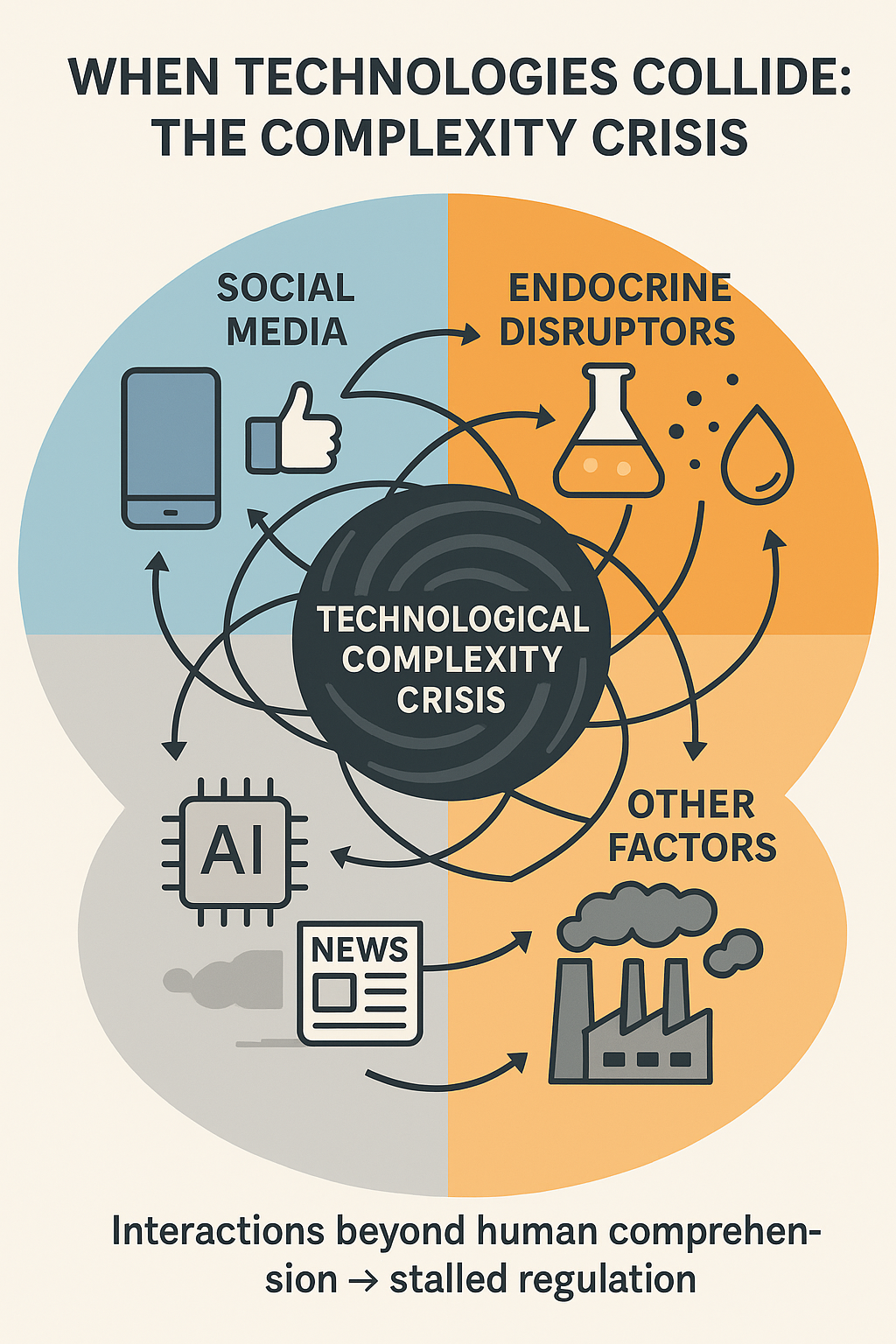
That's part of that. Yeah. So this idea is if like if history if we do seem to always like get things right over time and prove society as time goes by, is are we at a precipice right now in the technological expansion, as I call it, to where it's so vastly beyond anybody, right, that we're we're losing the idea to have these corrective measures, like people can't understand the full dynamics of it because of the level of complexity is going so, so rapidly and so fast and so much like the, you know, metaphor, the amusing.
Do politicians ever. Can they ever really understand even the slightest thing about how, you know, an addictive cycle for social media uses? I mean, maybe a little bit, but the vast intricacies of how the knock on effects that goes through all through society, all those permutations of just that alone, let alone these more advanced. Right. So, like, what did the what did the endocrine blocking hormones that are in all these different plastics and stuff.
Right. How does that mesh with social media influence which then how does that mesh with this technology over here to create this output in society? It's horrifically terrible, right? Can anyone even begin to think of making some type of corrective action or countermeasure against that? Because of the level of complexity of the interactions, because of the technology has gone so fast.
So what I'm saying is that we can have faith in people. I think overall using the faith idea is that yes, people do seem to want to improve things over time. Sure, but but we might be at this precipice right now. Maybe, I don't know. That's what I'm posing as a question. So where it's gotten so complex that nobody can put together the complexities anymore and will lead new tools to start to understand those complexities, to help us make regulations, corrective action that's going to have better quality of life, better better productivity, better output, better whatever.
So I honestly, I think there's there's a fairly direct response to that. It's Maslow's hierarchy, Mead's Adorno's society. You know, if everyone's busy just trying to find a place to live in foodie, then how do they have time to fucking introspect and consider it, you know, existentialism and all these big, great ideas and study all these interactions? You're talking about?
The opportunity to even do that only comes from people who have those basic things cared for. And I think that's a big reason why the fucking a lot of the folks in power are getting rid of shit that helps people, and they're putting in things that fucking don't, you know, like the the Corporation for Public Broadcasting is not shutting down due to loss of funding.
Yeah, no more NBR. There's no more PBS. Yes. Why the fuck would they do that? It's been on for decades and decades because it helps everyone across the board. It raises the playing field for everyone just a bit. That helps bump the average position on the Maslow's hierarchy up a smidge. And that gives people more time to think about these ideas you're talking about.
Can't have that. Yep. And that's it. They they want to quell rebellion. They want to remove any elements of it before it even begins. They want to remove critical thought and consideration. They wanted to give you not even give you time for it. So has a dark cloud descended upon humanity, which is these at least the US, I think.
I just think it's a lot of a lot of these kind of things have been been in the works for ages and ages like fucking for a long time, like even even like the the whole abortion mess. I think it exactly. But I think it's, it's sometime only the late 60s, the early 70s and some shit you can look at all.
There's some particular politician who got in league with some of these like megachurches and started pushing the issue with them, like it's actually documented. And the T is a proliferation of Catholic ideas to Protestant. Well, no knowledge of people. It was a political group. And I may be wrong. I'd love to be correct if I'm wrong, but I'm pretty sure it was some political group who decided they wanted to use that as something to get people together with.
But but they used and they figured it the churches. And now they look at it the other way around saying, oh, it's a religious viewpoint. And all these religious people love the law. But it didn't start with them before them. They were, you know, and then nobody they fucking love it. But people look at it as a medical issue.
It's something to fucking, you know, that can save people's lives and shit. Like there is a reason to do it sometimes. And so this guy ended up, you're saying creating a religious war, something that was purely a medical thing to begin with, right? Right. It got started as a way to improve his situation or whatever by getting the churches to push it for.
All right. And that this whole fucking, like, stink about abortion that's been going on was artificially created. Damn. But it's been in works for fucking decades. So now the public memory that's completely gone. And so now we just look at it as well. You got religious people and the non-religious people, but these viewpoints. So these Vangelis that are protesting all the worst thing, it's that your rose out of this one dude's campaign.
Right. And so all this stuff, the yeah, I will admit that a lot of things or escalating faster than they were now, but the absolute bulk of it is over a very long period of time. This is all long game shit that's finally starting to reach a point. Some of that people don't know the history. People don't tell you there's no collective memory.
On to the point. So a lot of times we have generational knowledge or we have ideas that come from the past experiences that can then be passed on to next generation. So I'm not that right. And we have long play ideas like your about your whatnot. But what I think is happening now is the velocity and the the new the new things coming out.
Technological things coming out across the board, across every domain is not blind. The technological curve is insane. Talk actor look that up. Yeah. And it starts off progressive and then it just skyrockets. Had like so many things that we can reference today. It's a hearty stick. Yeah. Do things come out. And it allows for the creation of something better.
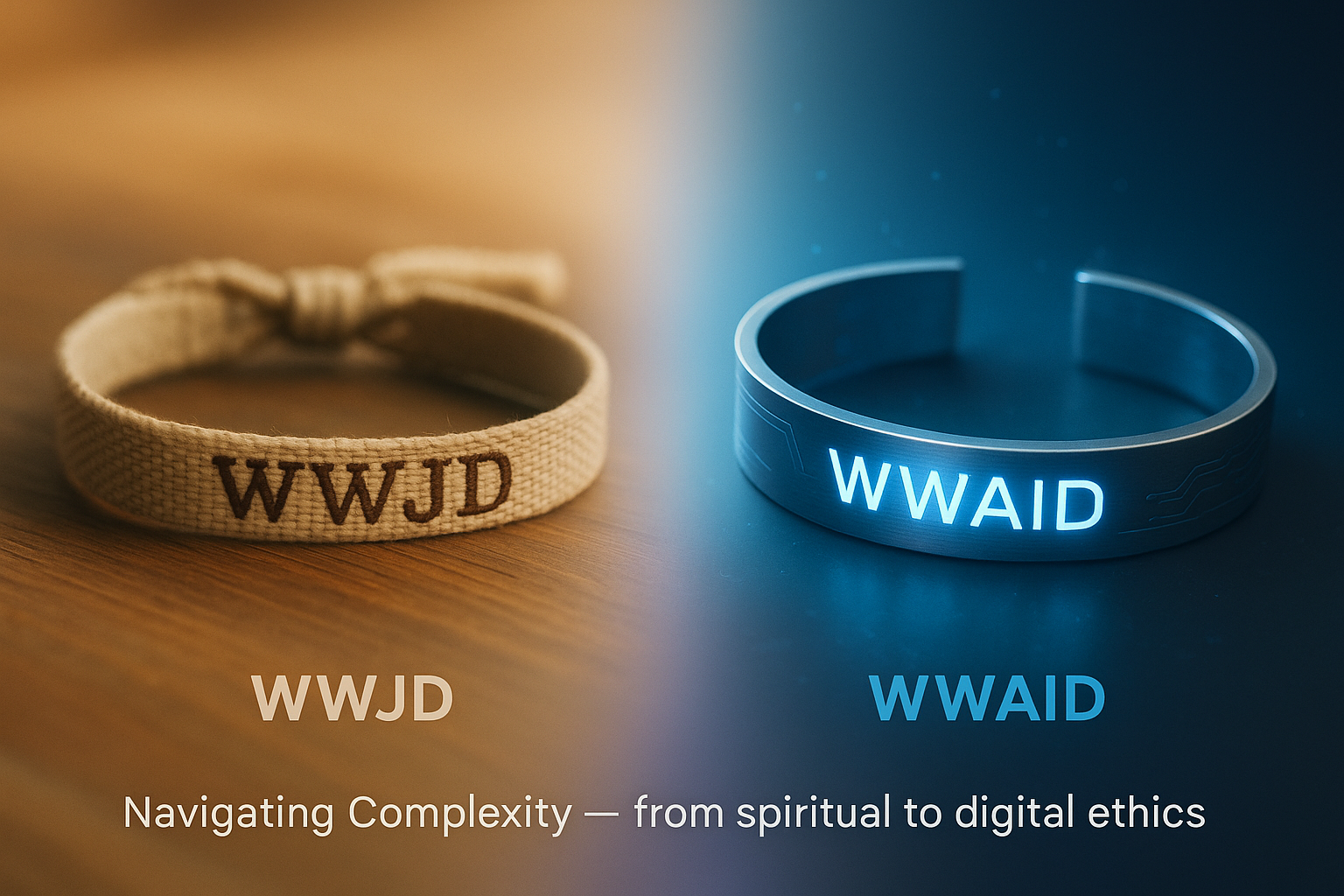
And that allows for the creation of something going on and it just snowballs. And so I don't know if there's many like corollary touch points for generational knowledge that then really apply in this new paradigm. Right. So like I have this called the self-replicating machine. So I have this like little wristband that I wear. It's funny thing that I made, right.
It's like I you might have seen because I'll type back into the faith idea and this whole talking about trigger stuff. Since bracelets that kid used to wear. So WW JD what would Jesus do? Right. And the idea is that like when you're faced with a moral, you know, dilemma, you know, like like think about it for a second, stop and think, what would Jesus do with Jesus?
Take a puff on that joint. You know, you know, maybe something else. You turn water into wine. But. So yeah. Yeah. So I made these I made these wristbands as a joke, but it's supposed to be like a double entendre thing, right? And I had a ID. What would I do? Right. Because we we have this access to this new tool.
What would you do that? Right. Have to add a nice I was sure that. Yeah. And so, you know, this idea of like, what would I do is this idea of a tool to help us navigate the complexity. So again, it's it's some kind of technological tool solving problems created by other technologies, you know, so it's like we're almost like this virtual arms race to stay on top of it, much like we do with disease and viruses.
And in the end, a lot of you, I will comes down to what the person who programed added into it to you. I mean, one of the things that I saw the other day was a video of someone talking to an AI and trying to get it to imitate a different accent had said that of good, and it wasn't allowed to because of an ethical point of view.
Yeah, and the city gardener with the persons then went, well, you're imitating an American accent to the moment, right? But I'm, I'm Chinese. And what you do to give me a Chinese accent and he basically didn't trick it, but he theorized that theological sort of idealized news, basically. And we then had enough reason to try it still gave the impression of not liking doing it, being that it wasn't wasn't it wasn't supposed to because of its it was basically.
Yeah. Yeah. But he got it to attempt. So the it all came comes down to what your ideas are when it's created from the first place and what access you give it in, you know, as a mob back in the day gave the treatment of this with his, his idea of robots and the three laws based in so many people in these books were often convincing robots to violate the laws of, you know, of protecting themselves and protecting others, you know, and it was all about crafting.
What can I say to this robot? It's always the loopholes, you know, and that's what it is. And that's what all of these jailbird problems are. It's grafting. Hey, how do I get round with the controls? Where how do I use some mantis and syntax as this spirit cut through it? Which is one example of why semantics, despite being kind of annoying, are very important.
Yes. And you know, we all get burnt by semantics and our own personal definition of words. And that's what makes communication hard. I mean, we all draw from a shared pool of cultural experience, but that cultural experience is becoming highly specific now because of all of our tribes, all the things we belong to now, it's a little it's the people that you talk to every day and the different conversations that you have.
Every conversation for every person is going to be different, but now they're so much more of a parameter of tribes because of the fragmentation of this technology and social media. You know, we have even more splendid groups there than they ever is. So be honest, because at the same time, like there's more global access to just information knowledge in general anyway.
Like there's I think the base level of education information available is increasing like globally. Right. And so there are going to be a lot of things 100 or 200 years ago, like some people may have never heard of this, this word might need something different. I think a good example is look at the UK, look at how different accents are you fucking 50 miles and people have different accents now.
Folks who've lived there their whole life can tell what part of fucking money do you from just listening? We know. And because they were so cut off. But now that's dying off there in here and they want of places because, you know, a good example is like the regional accent around these parts. Right. You're in my own lifetime.
I'm watching it just fade away. Yeah. When I was younger. Oh, boy. You hear that shit you tell there from the mountains or from further east? You know, it's it's fading because we're in many ways becoming less blinkered. So you think that globalization is actually doing the work of gluing us together? It's a mix. Yeah. And but also in some ways separating us and isolating it.
Right. It's it's a mix. It's a mess. Monoculture would never be the right answer if it's like, you know, mono mono, genetic diversity is obviously terrifying, right? Like, if you, if you have like, monogenic culture, it's so. Right. One disease comes through, wipes out 99% of the. So like you don't even have. So it was the average.
Yes. Australians and in the British and they bring influenza. Oh yeah. And that's just on blankets and those sorts of things. So they you out music by gets to the natives and it works out whole tribes. We have the same with smallpox. And it's such a small thing to us. But it's never been in range and they don't have any expense for us.
Yeah, it just does. Lorenzo, there's no small thing to us. Influenza is a waltz. Yeah, well, like influenza year over year is one of the biggest. Oh, yeah. More of the sense of. Yeah, it was a lot. Worst of it. Yeah, but it doesn't wipe out. Well, yes. I don't get it in a household and everyone dies. We don't have the 1918 flu epidemic like we had, right?
Yeah, yeah. But anyway, so, that last, the kind of the final piece here is the piece of this puzzle of this conversation is that idea is a I wonder, you know, I think it's a really vital question. You know, it's like, I wonder if we've crossed that precipice of technology expansion to where it's it's kind of the genes out of the bottle.
And we've passed a point of no return. I'd like it to wait. No, no. Yeah. Lace that old allergy. I don't I like to hope not as well. But, if trend lines show that we're, we're in some serious trouble, like. Right. But trend lines are just that. They they trend and they can go a different way.
I'll say they've always indeed. Yeah, but that's not arguable. You know, technology for technology's sake, the poetry of technology and the extreme capabilities and the power of technology is definitely increasing. Just look at what the measure. So something to how we're using that and indeed what we actually put in place to be able to either keep ourselves safe and those around us.
And the best way to protect action. We've been able to destroy the planet for three quarters of the century. Yeah. And so that exact thing that you so I don't I don't think it's technology at all. It's not technology. It's it's people in power that's in technology is just one more tool. That's all it's ever been. Like I said we've been able to destroy the entire planet for how fucking long.
It's got nothing to do with the technology is just a tool. And then we're getting better. Oh it it's the folks in power. Arguably the reason we haven't destroyed the planet. And we have many stories to tell that. Well, we had many stories that individuals interceding. We have many stories of. Oh, yeah. That was the Cuban missile crisis.
Yeah. Cuban missile crisis or the the Russian guy that was verified in the Cold War of. Hold on. These awards went off. But let me see actually, what happened. Let me go to aspire the nukes at the US. All right. So I think there's a big difference between the sage with the, you know, device that allows them predict eclipses over, you know, a small group in England somewhere around Stonehenge.
Right? Right. Has a certain amount of damage that can be done. Right? There's only so much damage that can be done in that type of settings. Right. But now through these potency of these technology tools, the scale of the damage that could be done is now unprecedented. Sure, sure. But at its core, it's still the same issue, same issue, but it's malicious people.
So once you once you have the certain hold on what the best solution is, once you have this, once you have a certain degree of scale, it has the same. It has the same foundation to it. But what it is now is completely different. Think about this, right? The scale is completely different between someone that can influence a family, right?
Or someone that can influence a nation. Sure, the scale makes that then different until you agree, but this is the solution. Different though. Yes, the solution is yes, it will be on the scale very much harder to implement. Yeah, right. So some psychopath with a gun can like kill their family and a few other people in the community, and then they get it stopped.
Right. But a psychopath with a fucking nuclear arsenal of 5000 missiles can do something completely different. And the scale is so different that it's no longer fair. To compare those two things is what I'm getting. But the solution is to get all that fucking psychopath or add a minimum. If I can put things in place to help reduce the number of psychopaths that are made.
Yeah, there's a saying, I agree with you. The scale is very different, but at the end of the day, the core of the solution, I just don't think it's different. So it's a cycle change, right? Fixes whatever's along with the US that creates the shooters. It's the core issue. So it's the core issue has to be addressed. So one is a one is a very small problem and the other is a major.
I don't disagree with you on that I believe but I don't I don't think they're so different. Okay. So you guys are you're saying you think scale and scope is the difference, but the solution is the same to you? Yeah, the idea of the solution is the same. Yeah. The enactment of it is. Sure. Yeah. Because you're going to have to scale it up and appreciate the entire situation.
But the core issue remains the same. The most reduced. If they say why, let me show why I think it's not the same. Right. Is that in the in the small, in the small form factor, the cycle would be done right. Take that cycle with the gun out and it's done. Sure. The other factor with the magnitude of technology.
Someone to command the nuclear arsenal. This isn't just one individual. This is an institution. This is a this has to be a whole system. And the scale is different. But there's a systemic structure in place in the second version. So therefore it makes it different than the first version. One is one psychopath can do a little bit of harm in this little space.
And by the it's, it's the same. Right. But this other requires a psychopath enabled across a whole echelon of institutions that then commit that to occur. Is there already a systemic issue that allows that psychopath to get through his life to reach that point? Here? He does what he does it, and it has to be, but it has it all the systemic.
It's just the same way. It's had that reduce scale. Right. So the scales, authorities so on on this, this like phenomenon of somebody rising up in the power in 2025. Yeah. To rise up into power has to then go and make all these deals with these companies to say, hey, use your power and influence over the algorithm to put me in office, and I'll make you guys wealth that you've never seen before like we've ever seen before.
That's very sane. It's interesting issues. This is all just long game. It's been going on for ages. It's not new, it's just the next iteration. So. So the cycle path with the gun that murders his family and a few people in the community and get stopped. It's totally different in this case because this psychopath has to have complicity, has to have coconspirators, as you will across all of these incredibly potent echelons of power through this massive technology course in basically a conspiracy right to, to to enable that at that, that high magnitude.
And I think that becomes something different than, well, you go from psychopath to sociopath that there to graduation. There's the difference. You know, you're talking about someone with social skills and the ability to connect, make deals and, you know, court power and influence. So you got one guy who just goes up the elevator and kills one of the C-suite people for black Blackrock or whatever.
What what happened to the other one was one of the. Yeah, yeah, yeah. So you've got, you know, he he kills somebody who's over all the housing crisis. Right. I see and then you've got and that's, that's one man didn't come up with a plan, didn't have infrastructure, did not have the social connections to create a systemic situation.
I would have to disagree with you on that. He absolutely must have, at least to some small accept. You think somebody's going to be able to pull that off. Just wake up one day in this. I'm a go pop this fucking guy I don't know. All right. Yes. Some at least a little bit of infrastructure. He had some at least a little bit of connection.
He had put some time and effort and work into it. Okay. This fucking do that here. We're here in the CEO. Whatever sense of him and Luigi which I support. Holy I playing golf they got their own guy, you know 100%. But, you know, it's like, you know, these things. So these guys, you're saying anytime you up backed a visible and in in great change, you had to have support infrastructure and an understanding a little bit.
And that's why I maintain it. It's it's still an issue of scale. It's at the, at its core it's the same fucking thing. It's just an issue of scale. Okay. All right. So still they were able to make deals and make moods. So they still have that sociopathic. So how do you even figure out whether the guy is going to be.
How do you make sure you know what's going on? How do you make sure you get the right shit? How do you know you're going to get rid of it? How do you think you did? Larry will let Ave Larry have to go to be able to plan in place, and somebody help him at least a little. He didn't do that on his own.
Hell, true. True. Absolutely not. So there's your social connections. I can't speak I don't mean to know what you're talking about, but this I don't need to know. Somebody recently CEO. Yeah, somebody was on a live. They claim he was trying to go to the NFL, but he made a targeted strike against one of the big firms that's buying up all the houses.
Yeah, so it was not at all. You know, an NFL stripe. No. Yeah. It's just some fucking drunken hey, it went nuts on some people or. Yeah. You know, this was planned out. This was orchestrated and it was well done. And we were not editing the scripts. So the, the thing that we were talking about earlier is that the whole idea behind the technology philanthropy is to fruit of these things out.
That's so that's like been for years now. I'd been working in that domain like trying to trying to sort these things out, try to understand them, try to at least where we can have the conversation like we're here now, I agree to, to help maybe to some extent to, to the, to my maximum extent with my power. Right.
Even monologue was still a lot. I just I just say that I don't know somebody once told me you most all your problems in life are going to be people processor technology and you have to solve the problem. Use the same tool. You can't solve technology problems by improving your process. You can't solve people problems by changing the technology.
You guys saw people problems with people. You got to solve your technology problems with technology. You got to solve your process problems with process. If you think you're going to solve one with the other, then you you know, you might make some progress. But at the end of the day, you're going to put a lot of effort in for smaller boards.
If you got problems with fucking crazy people going and killing people all the time, that what you got to do is figure out a way to help people not be so crazy. True. You, you you work on the societal level. I mean, and, you know, you can work on fucking weapons and this and that. And I'm not saying fucking just because you'll not get 100% and ain't worth doing, so just don't bother.
I mean, yeah, he's still absolutely going to help and something to consider. But at the end of the day, you're going to get your best returns on using the same category of things to address the same category of problem. So I'm I'm 100% behind you. I'm using technology to prove society and help people. But you got to kind of understand that there are a lot of problems that technology is not the best solution for.
And thereby we don't just solve all of these problems with technologists. We bring in a plurality of experts across a disparate set of fields. To fix it. We have to have societal by in and societal, you know, the impetus, the, the, the drive. And so figure us talking about this from a technologist point of view, which we all are, is great.
But we also have to bring in the social side and the I side of the day. We had society of cavemen with fucking rocks and sticks, you know, and if they're out killing each other and then somebody sits down and, well, we need to make these rocks not so dangerous. Like, yeah, sure, there wouldn't be as dangerous. But like, if somebody wants to kill somebody that figured out the problem there is not the technology, it's the people.
And it might be, hey, we've decided on territory or hey, we've agreed upon this or that, or we have dispute resolution, you know. Right. And the job is that Portland helps with that. But the focus on solving problems with society, which is made up of people, is focusing on the people. The tools are very important. But ultimately, problem with people needs to be solved by looking at as people and using tools that help people.
So bring that conversation full. And I give a final thing for you guys to think about, right? Is that, in Australia, I did a project for age care, and what we're doing is using machine learning. I was part of this team. That's what I was doing. Australia. And what we're doing is we're using machine learning to try to figure out what works in aged care, where the government gets the maximum return on their investment.
You know, where they from. Everything from like sex workers, like they they pay like, you know, is smiling. Is that, like like legit part of part of what they considered to be health was sexual health was a ball was or was a component of health. Absolutely. And so they found out what we found out in some of the data is that the dollars that they were spending on basically, you know, we would call prostitutes or escorts, right?
So go in there workers. Yeah. Sex workers, they pay them to come into these like literally aged care facilities and talk to these old people. And it was what tremendous return on investment. It'd be surprised how much they get around in their circles. Yes. And you know, that's the data was even showing. So there was actually no pun intended.
They were getting their bang for their buck out of that. Right. And so that was one thing that scored high. And but one of the, really early on, things that the machine learning figured out was that death cures all disease. Yep. So there's this conversion. It was a solution. No, sir, is the most moral question. So it's quite ultimate and final, I know.
Yes. In the end, it is the best solution. It's just not the best solution. Yeah. There's a cell he ordered that do. Why the skated goals was not continuity. That needs to be the chief thing. How do we foster continuity of life that so technology tools and technology when applied with the goal in mind of like improving the health and wellness of people can be extremely effective, right.
Because the focus is the people component. And we're using these people to help us solve problems with people. That was supporting what you were saying, right? Right. Right. And so when when you have a convergence of this positive intention, right, with a, you know, people that are really brilliant and know what they're doing and, you know, playing it with that agenda in mind, but like improve the health and wellness of society through these mechanisms.
It's extremely poorly flip side of that is a danger factor is that as these technologies as well, people that want to use that for malice want to use that for a right for blind ambition to undermine people and exploiting mixed thought. It's equally as potent and dangerous. So we're coming to this bifurcated, in my mind future where it becomes a choice.
Do we use technology to enable people? Do we use it to like emancipate people and bring people to this new state of existence where, you know, health and wellness and prosperity and all this kind of stuff and, you know, well-nourished bodies, well-educated kids, you know, healthy kids and so forth, mentally and physically. Do we use technology in that domain or do we use it to continue to exploit, undermine, you know, give people, drive people's attention?
Don't mean cycles gamified human existence in general for just some profit. You know, it comes down to a paradox. It's a choice. And so I don't see the right now. I see the trends looking pretty grim, but I'm very optimistic and hopeful that that will well reverse because of the history that we have of reversing these big is two slots that there's always going to be those that want do good.
There's always going to be those that have one of the best buy them. And it all comes down to who gets there first as the biggest contender as Adam was really good. The biggest tipping point on which way you tend to go and which way, whether or not that then stays in that direction, or whether there's another tipping point later on being that, of course, that there's always the opportunity for change.
And as much as yes, it may not work perfectly fine, but we've seen that in the past as well, with ex dynasties and those sorts of things where they will have a tipping point and it'll work for 800 years, and now it doesn't, now don't. And you find a new tipping point and society changes again, whether or not we're at that point where we can hope that it will last longer, or whether or not it's at that tipping point where it'll suddenly switch.
Wiki has a better way to conclude the conversation. Well, I do want to say one thing. AI and these tools that we can run locally, let us solve problems in the small and give us that hope of tipping point and let us help solve get get the ingredients to solve CEO killers, psychopaths that shoot all of these things, you know.
So yeah. I'm good.