Extra content pops up along the way.
Trailheads
Good places to start walking.Chapters
December 10, 2025
Gaming II - Breaking the Game
Double-tap the sides to skip 15 seconds
Trailheads
Places to startArtwork explorations
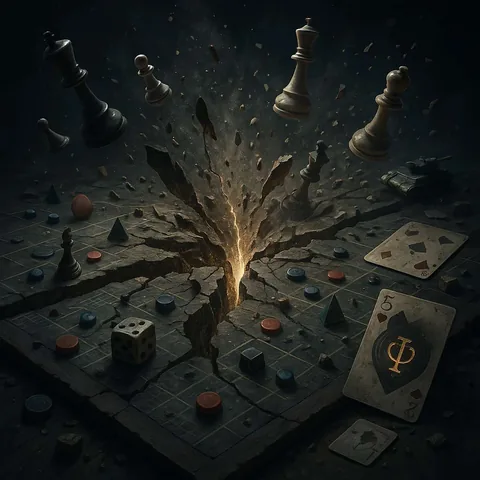
The other takes the image generator gave us, and the prompts behind each piece.
Chapters
Settings
Gaming II - Breaking the Game
With Kris Tyte & Sean Snodgrass
From CIA-designed board games used in military training to the surprising emotional depth of working together as a team, this episode resumes Gaming l: Rolling into Reality’s discussion with game enthusiast: Shaday Agosto-Vázquez. Together we dive deep into several topics: sexism, the “gaming-ego” iceberg, and how gaming reveals your personality. Whether you’re a competitive gamer or not, just don't go asking ChatGPT for medical advice.
Share
Detour
Episode description
From CIA-designed board games used in military training to the surprising emotional depth of working together as a team, this episode resumes Gaming l: Rolling into Reality’s discussion with game enthusiast: Shaday Agosto-Vázquez. Together we dive deep into several topics: sexism, the “gaming-ego” iceberg, and how gaming reveals your personality. Whether you’re a competitive gamer or not, just don't go asking ChatGPT for medical advice.
Chapters
Show notes


Episode Art 9 pieces
Listener notes (1)
Every note is read by Kris or Sean before it shows. Real people are starred.
- Real person Sue T 0:01:45
Amazing conversation!
Full Transcript
So, I set the stage here is that we went to house for his birthday, and we when we first reached this conversation. Right. And when you go to Chinese house, he has shelf upon shelf upon shelf, a punch, like, literally a catalog of games. And so that's why we're talking about gaming specifically board games specifically today. Tonight.
Because we have should I hear we're having him walk us through his experience with this depth and breadth of like an incredible number. So one game you were describing me had geopolitics in it. I forgot the table of it, but you were talking about it and death, where it was like a CIA guy or something wrote it. It was.
So it's a game like, I know you guys are so like, I always think like, I was like, like this. A lot of barons play war games. It happens a lot, you know? Makes the war game in community for, you know, strategy and all this stuff that is very enticing. So, there's this game. Yeah, that I was telling you about called the one that I have, he has series called A Distant Plane that is about the war in Afghanistan.
And so he has a series of games. He did a series and he's continues doing more games. And I'll tell you more about the most recent that I want to get from him. But he used to be a CIA consultant and the designer, and then he designed this series of games with other designers to doing that. That is called they called them the coin series because of the abbreviation of counterinsurgency.
Oh, and so COIN like certain like a flip point, but it's actually actually the yeah, the abbreviation of counterinsurgency. Okay. And these all these games mostly military war games. But the particular thing about them is that different to other war games, this one, it's the factions are very different. So instead of like you being the blues and you being the red, or decide on that side and you have this number of armies and these weapons, you actually have a complete different system, like for example, you can have on one side the whole army.
Well, on the other side you just have the, the, the people that are fighting, you know, in terms of the morale for the insurrection. So they fight differently. They do not have weapons, maybe, but you still are going head to, you know, right. You're using like partizans most like, right, right, right. But then you know that the whole you have basically two game systems.
That's cool. This person plays this way, this person plays this way. And then these are the ways that you make points. And then these are the ways that you can then get an advantage to have a control of the outcomes. Like for example, which group does do the people like more. Which which group do the people follow more could score points.
Something along those lines, right. Yeah. One of the coin games is so I mean, of course they are a distance playing and then you don't only have the armies, but you have all their factions there that played a role. Different people that were in around the Afghanistan war. But then like you have another one like Gandhi with the fort, you know, that is not a matter of like the cannons over here and the cannons over there.
But you have the nonviolent movement from Gandhi, but then you have other factions that were playing with their political power, and then like, they score differently and they behave differently. So it's this game of risk with actually a social component involved, where you're dealing with hearts and minds that add to the point structure. Right? It's pretty, pretty cool.
So you can use this to actually train people. Oh yeah. I mean like, yeah, there's there's something to learn from playing the game for sure if you're just is what I'm getting. Yeah. And then basically this is what also it's called I mean like this is a very generic term but asymmetric in games. So being asymmetric means that you don't have a symmetry of the two sides, but you're still going like one side against the other or whichever number.
But then of course, you know, that is also applied in wargaming. And there's a evolution of war professional wargaming where is not available to the public or for purchase or retail, is just professional war game designers teaching in West Point, teaching in military schools. By the way, from me following these signers like there's one Canadian very good designer, Brian Train from that game, the distant plane, actually distant plane.
Not from case from Brian Train. Wait. Is it? Yeah. Anyway, so Brian train, I think if I get confused, I might show up in the Aurora. But then Brian train. I have other games from him to, But then he was. I was reading on his newsletter about wargames and design and you know, he does conferences about and this is his design also for professional military.
Right. And one of the things that he was commencing is a now in our current government. And I'm not and not that I'm getting into politics. We there's apparently there's the news of like the government backing out from participating on all of warm gaming conferences. Whoa. Yeah. Because there's always will be they usually always in some representative of the US defense or some type of like the Department of Defense.
Some were participating in this conferences because you will have all these different, you know, I mean, like the war games are part of military strategic studies. I mean, when you're in the military, you do all these war games all the time, you know, battle drills and stuff. I mean, it's part of you have to because you have to prepare for the real things.
I also what better way than gamify something, I mean, right, we would go on a, on a, we'd go on a big whack out to the field and we would dig, you know, our foxholes and, you know, they would even have tanks roll over them to see if they were all nice and even. And they would do, you know, they would have us break out our laser based weapons and, you know, with our or concussion rifles that would cause a Lakers to fire.
So you put the blanks in the you have blanks, right? And you have a suppressor on the front. So like, even if there's a mistake and there's a real round, it's blow your gun up. It's not going to really fire something. But it's like literally a laser tag. So every time it bumps, every time, the every time the gun bumps with the blank going off, it suits the laser.
And then the other person on the other side is wearing literally like the sensors. And so if you score a hit, their thing will go off and right. And it's like, yeah, it's like laser tag using your actual you're using your actual gear. You get to use the sights for your gear. You even have, you know, an M60.
So you can, you know, so I, I did not know. Yeah. You know, it's not like so many other games. This is another I love this idea behind games too, is that people learn really quick how to game before the game, like how to write. Right. And so what soldiers would do is they just hit the back of the room and say bullet and have aimless ammo.
Yeah, yeah. So you do actually play testing of games. So board game designs, one of the things that you kind of like tried to do or that I've heard that is it seems to me like a great idea, is you will ask some people to just break your game because you want to find out if your game is breakable, like there's something that I, that I, that I have that I bought.
And then this little math game they gave it, like the designer or the publisher gave it to some people in MIT just asking them, like, please break it. And they broke it. They broke it. And then like they signed it. So it made them kind of like work it more. So that's definitely an element. Another thing that I found cool about in the from the interviews that I've heard from the wargame wargame designer professional for the military, is that it's not that they're going to simulate everything as if it could happen, but they designed to answer questions.
So military, certain military people will hire them. We need to figure out this question, the answer to these questions. And that's what the simulation is going to try to do, is not going to try to like, prepare you for everything that is going to happen because like, you cannot putting all the factors in there. But then like the focus is what questions you need answered.
And I think that's super interesting. So you create a game that fits for this problem space, and you use the game to explore that pool lovers and create situations that really help the players understand it, but also the people charting the game. Understand it. Yeah, yeah. Okay. Yeah. And then like it's a matter of like then do you have those questions answered?
But you have to have of course, the, the wisdom to understand that it's way more complex than just those few questions answered. But yeah, it's whatever you discover also from that that you maybe did not figure out already. So let's put some context here. How many games do you have right now? I have on your full inventory. You have me fully inventoried your games.
Do you have like a 30? Oh, I don't have a spreadsheet. What I've done is like, I just basically started putting them in my collection in BG BoardGameGeek, which is the other side of BoardGameGeek. No. This exists. I didn't either. Yeah, yeah, yeah. So Board Game Inc. is like the to go. It's like a internet movie database. If you want to know about like oh, good movies that much like check off that you have that game.
But this is, this is like a combination of IMDb and Goodreads because good is. Yeah. Oh, yeah. Yeah. So how many do you have? So right now, I think the number that shows up in my collection is 455. Wow. Damn. There are a lot. There's very few people on the planet that have that many, actually. Society, the proportion of society to have a mini has, you got to be in the top 1%.
1% is your, I will only say just join like board game groups on Facebook and then see the their shelves. Sure. Like so the outliers have found themselves and we've got yes shell fees. Is there a shell shellfish. Yeah. Yeah that's the term. Sorry I'm talking like virgin language here. Yes. This is about yeah yeah yeah yeah. So yeah there are people that have many more than me.
I remember when I started, a few years ago, going to the store and talking to other people, and I was like, oh yeah, man, I have 100 game. And they were like, yeah, we kind of like have 300. And I'm like, oh, and now I find myself with this number and I'm like, oh my God, I have too many.
So no, that's going I started off this is just like me, like history of my life. Like I started off like just buying the operation and monopoly and the Scrabble. It's like we have to have Scrabble and then I have to have operation. It was like a basic way if you need to raise your kids, well, that's one of the ideas that you need.
I'm kidding on this. Like it's not so important, but I thought it was like emblematic of, like our, you know, childhood experiences. Right? So I got that. And as soon as I got those, my wife started telling me a the third one, you have too many games. Why do you need more than one and then like or two?
And then I was like, well, this is basic. And I wasn't thinking at all about getting many more. But once I found out my what you could call my gateway game or the kind of like the game that kind of like introduced me to this other world beyond this typical selection of monopoly, Scrabble and stuff, which was ticket to write for me, then that was like I went through the rabbit hole there because like that opened up the door for me to, educational, the education that you can get from games.
And then I by the way, it is a little bit shy from like the idea of like all board games because sometimes when they try to do board games that are all, they're not fun. So like right now you have like in the board game world, a lot of like, no, I guess I'm not a vocational. They're fun.
But man, you will have, for example, the designer of like this of Genius Games. I remember him like making a comment similar to this. Genius games is a game that is a it's a publishing board game publisher that does games that are super nerdy and that all have a rulebook, plus a whole book about the science behind the whole game.
And there's, you know, the one that we just played recently was genotype about the Gregor Mendel's. Yeah. You know, peas and genes and genotypes and phenotypes. And then it comes with the science behind that book that, you know, it's like they're not at all. And the thing is, like, I know he says that because like, there's the stigma in the world, what an educational game is.
But I'm one of those too, because luckily, because I'm a parent, I have this extra drive to get something. But in the end, I've come out being like, I don't care if they don't get this, I'm getting this because it's super interesting. Like at work right now, I'm a medical interpreter. That's my job. If I'm not playing war games at night.
So like, as I'm, I as I was interpreting, I think two days ago, there's a provider or nurse that told the patient about their sodium. Right. So their sodium is too high, right. So they're telling them like okay, so your sodium is to high. So and then trying to talk to them about diets sodium is just salt. Yeah.
And I'm like no he's not. No he's not from what I and this is something that I because of a game I kind of like went into that rabbit hole of like revising my reviewing my science sodium by itself. If you mix it with water, it will explode. If you take if you take sodium and put it. So yes.
Yeah. But then salt is not sodium chloride. Yes. So it's chlorine and and and sodium because otherwise the sodium is unstable because of that volatile electron that is not balanced. Because and then like you know, it comes ionized all of these because I had a card in this game that is called chemistry flux that says salt and water boom or explosion.
I'm like, wait, what? Like they say salt and water. It said sodium and water and then explosion. I'm like, what sodium and water explosion. And then like I went into the rabbit hole. So like even if my kids didn't get that, I'm like super, you know, I'm I'm taking advantage. They've been at work when I'm telling my coworkers is wrong.
So sodium unfortunately has become colloquial for sodium chloride. So there's that there's that wrinkle to the whole thing. Right? Sodium chloride and sodium are two things indeed, but lots of people in the colloquial sense have started to just say sodium and levels in place of certain client. Unfortunately, because it's not clear language, right? It shouldn't be. So that's how we kill signs.
So first for first show. No that's true. Yeah. People will forget the whole weird thing that happened recently with ChatGPT and an old man. Oh, an old man. This older man was trying to cut out salt from his diet. He learned the hard way that ChatGPT isn't to be trusted for medical advice. Because he ended up with bromide induced psychosis.
Basically, they ChatGPT instead of telling it, said, okay, get rid of your sodium chloride and replace it with basically brominated salt, which is used in pesticides. And so he ended up poisoning himself because he listened to Chad dubbed because ChatGPT is just thinking, okay, we have one salt that we don't want. Let's take this other salt and replace it with that.
He should be okay. And yeah, yeah, yeah. I mean that's I wouldn't trust Doctor Google or Doctor GPT. Yeah. So sodium bromide. Wait. Yeah. Maybe in a few words. Yeah. So yeah there's always that human factor about how you relay information and kind of like getting the sense of like not just saying the truth, but how do you actually communicate and get the message across.
And what, what is it that you want the person living, you know, what do you want them to leave out with what in their head. And then that that question is kind of like tricky. And it's not something that AI can necessarily take care. That's true. So I made a game myself. I have a video game that I made called meld, which is a color matching strategy game.
It's like multilayered. It's educational game. You got to think you got a strategy. Strategize to solve the puzzle. It's a puzzle solving game. And I made that years ago. It's just on scheme. You can. I'll give you a game code for it. Oh wait I want to check it out so you can. I don't think it's in your database probably of your game or database, but it can just be another one to add to your collection.
Maybe I just haven't been able to, like, I just haven't stumbled upon it. But. So this has the game database that you referenced. What's it called again? That is maybe or something. Oh yeah. The database board game geek. The board game game. That's it. Well, so, how many possible games are in there? It's gotta be tens of thousands.
Hundreds of thousands. I don't know the number, but yeah, definitely is the five digits. Like, you can look up, like, just some random games and see their score in the list of like popularity world, like the top games. And then the number you will see by the number. Some of them are like five digits I see, so you can use it to discover new games that you might be interested in as well.
That's cool. Oh yeah. Yeah. You'll have like you know, also suggestions kind of like at the bottom of the game to to look into. But yeah, I mean like it's a world out there of board games and it's some people say that we're going through like a, like a golden era of board games because of these. Boom. But as we're talking right now, here is still kind of like a little bit of a hidden boom within the people that know about it.
Otherwise other people are still just exploding kittens. Or is there a game at clubs or gaming society here in Charlotte or something like those lines? Oh, absolutely. Yeah. There is even a boy a board game podcast here. That's it's double upon him as I was in, and I was like, I saw them playing some game that's called out.
And then I'm like, oh, you're playing at us. And so they were just telling me like, oh, can you, can you use like, can we recall you saying that correctly? So we can use it for podcast like super nice, super cool. And I was like, sure. There you go. So there's an interesting thing that I've I've always liked to play chess just recreationally.
I've never been trying to get ranked to IG or, you know, international Grandmaster, wherever they call them. Or gram never tried to do anything like this, but the boys been very successful chess playing people, just even people that are supposedly really good. I've always just, just, I don't know, just I can concentrate and I can play and played it enough to where, you know, I know all the basics.
Of course, I know about all the pins and techniques and I'm on. I know all the I know all the rules and then some. And, you know, I can easily beat some of this 2200 around there. No problem. You know, I can only and this is just recreational playing. And the reason I'm telling you all this is because I have fallen off in lost interest because of computers basically being unbeatable.
So, like, now the top, the, you know, ever since Deep Blue and Kasparov and all that kind of stuff. Yeah. You know, it's like, you know, there's there's. Yeah. No, I know that, like, a lot of people say, no, this should reinvigorate your interest in it. And I can see how that could be for some people. But for me, it completely spoiled it because there's there's now three kind of tiers of chess.
There's computer engines putting each other for the computer engine title. Right. So the engineering teams competing against each other. Right. Stock station AlphaZero, whatever. Yeah, sure. And then there's then there's the mail tournaments, right. Then there's the female tournaments. And that's very intriguing, right? You know, and I'm not saying anything pejorative here or anything, but that's very interesting.
I find that very interesting that there's three basic levels of chess. There's computer chess, which is the top. Yeah. It's the alpha. Yeah. And then there's the beta tournament which is still men male dominated. Right. And then there's women only tournaments. I did find out something. You been telling me that you didn't think there were any women chess grandmasters, right?
No. Yeah. No, there's there's there's like two. Yeah. Yeah. Judith Polgar no, I mean like, I mean like champions. Well, yeah. This lady was taught from like four years old by her psychologist father to play chess. And so they made the whole Queen's Gambit, right? Right, right. And. Yeah. And so yeah, it. Yeah. There, there. I guess we were I don't know exactly.
You were saying the women's tournaments aren't. Yeah. There's, there's exclusively women's there's women's chess tournaments. Right, right. Yeah I don't I don't but that but but yeah she played in men's tournaments in, in Lodz. Good enough to defeat a lot of guys. Oh surely. Yeah. Yeah. I'm not saying I want, I want a women woman to come along and be the top chess player.
Right? Right. Yeah, yeah. Oh, absolutely. Waiting for that. Yeah, I suppose, but what is it about, you know, the sexual dynamic here? You men have a certain ego involved that's characteristic with male. And I wonder if it dressed it to be more competitive on certain things. I mean, this psychologist who was able to train up his daughters to do it.
It may just be opportunity in training. So in the gaming world like that, I say this for a reason, right? In the gaming world, from your experience, is there certain types of games that are male dominated and there are certain types of games that are female dominated? Well, just from what I've seen in the gaming world, there's kind of like two factors here.
There's they which is actually a little bit far away from capacity and skill. It's more a, you know, what the interest where you could see like there's like a gender interest, like maybe wargaming and violence and all this stuff. And, I'm more like, I just want cold competitiveness and that's it. And that can be seen, like, maybe like more male, but definitely there's no like, there's no hard line in between gender for the board game community.
There's definitely a tendency that is more male dominated. However, you have to take into account what are people being pushed into in, who's getting invited? Who's getting shadowed away? I've read stories of like female board gamers that go into a convention, and then just some guy gets like completely just bullying her on the game, just like once.
Like he's being in a hole so big with social acceptance factor rather than capacity, skill and interest. There's also the social factor. Yeah. So there's a social factor. There's also like do people are like really feel like even if they can't play the game, do they feel like they belong in that group? If you have like that type of cloud already.
So I think that plays a big role because the more you have female board gamers, the more you actually see them actually participating and playing and beating other people. And then it's just a blur where you don't see any gender difference in terms of like, who's going to be who. That's just like not something that you can predict.
Gender doesn't play a role there. Okay. Like my favorite board game. Plus guess is led by a woman who's designing game as well. And she just started being a board game player. And I've seen that from other people. Like, I see that trend. Somebody is invited into this little rabbit hole like me, like like I just played, you know, the monopoly and Scrabble and stuff, right?
And then like, somebody invited me to play this game and I'm like, that's too complicated. You're like, take it. But then like, I read it and then you cross that firewall because, like walking the this world of board games, something distinctive about it is that there's like this firewall that is like a mountain. There's a beautiful landscape on the other side, but you have to hike your way through it with the rules.
And then the rules can be sometimes go from like, not so hard to like very hard. But it's definitely beyond the monopoly type of like just simplicity or rules. And then once you cross that anybody male or female, there'll be like, oh wow, this is this is worth it. And I'm seeing a lot of parallels there with computers because there's a there's a gatekeeping there.
There's a and there's but there's also, like you said, a nomenclature you have to learn about. And there's concepts and ideas you have to fight your way through. But then once you climb that intellectual mountain on the other side. These vistas are open. These things are available for you to just pick up, because now you can play with it, now you can interact with it, you know.
Now. Yeah. Then once you're like inside and you're able to kind of like swing, then you can feel like, no, I belong in this water. Yeah, I can swim too. You know, I'm not like, this is not my thing. Like, for example, like I did this very consciously with my daughter. My son is the oldest, you know, and then he's kind of like a nerdy kid, and he'll be, like, playing all the board games with me.
And then he started doing Rubik's Cubes. And then my daughter was like, no, I'm not doing that. That's not me. That's too difficult. And then she will get frustrated. So I bribe her and I told her, like, I'm going to buy you a toy. Choose something that something you want. I'll buy it to you if you let me teach you to solve a Robbins Rubik's Cube.
And then you do it. You do it by yourself. Once you're able to do it by yourself. I'm not going to ask you to do anything because this doesn't need to be your hobby. You look whatever you want. You can play with dolls, but I don't want you to think that this is not a thing that you can do.
So I now she competed in the Rubik's Cube competition. Yeah, yeah, she just said, bastard. I just don't want this to be something. I don't want there to be anything. You say. You can't do it. You might not like it, but I want you to conquer. Well, yeah, I want basically, the point is that I don't want her to grow up with the idea that the brother and that are the ones who go into this thing, and then my wife is super smart.
She does the accounting part for finances. I don't she has to break for it better than me. But so I know it's not a brain thing, but it's an interesting. But I don't want her to kind of like establish some correlation between gender in the family. Like my dad and my brother Rubik's Cubes. They have the brain for that.
No no no no no, you have the brain. It's about like, do you have the patience and interest to go through it? And it's why? Yeah. And so, so like in Chester's, you know, ego involved quarks. There's, there's an epic stories about ego and Chet's right. I mean, heck, those between the Soviets and the whole Fisher era and stuff, right?
Yeah. It's like, I mean, wow, there's a lot of pressure and tension and geopolitics hooked into it and dominance and submission and, like, who's on top? Who's the intellectual giant? So it's like all this stuff built into it. We go to in Japan and South Korea. There's a good Netflix movie about it by the way. Go ahead. Oh man.
So what happened was I was so this might sound like I'm country. I said a minute ago, but like I had this game on my computer called Battle Chess, okay? And it was like these the the, the pawns, like, let's say you take a pawn, it would like animate, conquer. Like the pawn would come, pull sword out and chop the other pond and half.
So it's like the the pieces would battle. So like when you take a piece, if knight takes queen, the queen of the like with like pounce on or like is all animated and fun, right? But there was a chess engine behind it and it had a tutorial version, like it had a tutorial built in to where like teach you basics of like the openings and, you know, so cool.
Anyway, so I really random the story is too long for right now. I'll tell you some other time, but like I had access to this chess engine that very few people had access to. So at the time in my life, I'm like this mostly like would be classified as like a jock. It's like captain of the team and all this kind of fun stuff.
It's really heavily into sports, but I love playing that damn computer game. And so I played all the time, and it would allow you to take back your moves if you've made a mistake. Right. And so, like, you could just take that as many moves as you need to and then replay that scenario out. And I was able to beat the computer on the highest level by taking back the roofs.
Cheating. Right. The marketing. You're you're reading my mind of where I'm going with this, right? Like like there's a derivative of cheating that's learning. I was I was getting to that point for sure. But for me, it was I had this competitive edge against chess players because I would play this. I had access to this system, unfettered access to this is my played all the time.
And so I did I played it constantly. And anyway, so here's this jock, for lack of better terms, I would I didn't identify as that, but I guess that would be the best classification. You know, colloquial sense. Walks into the chess club, not a member of the chess club, and I beat the president of the chess club, hands down, like nothing like like like embarrassing beat.
Right. And then the the the, the science teacher, which was the faculty liaison, played me and I looked his team. So now I beat the best player on the team. I beat the the boss. So like, what's the mini boss and then final boss on the same day? All within 30 minutes? Yeah. And, the guy that I beat, the guy was like the the leader of the chess club.
You know, he couldn't believe it, first of all. And the ego bruising that, that was for him. I he would have been he would have preferred if I had just literally beat the shit on it. Like he would have preferred if I, like, met him in the hallway. First of all, this guy was like, physically, yeah, yeah, yeah.
Like he would have preferred that to that embarrassment because that is his identity. This is the thing I'm good at. Oh yes, I think so. This kid. But this is a really interesting story. First of all, this guy is giant, normal guy. He's the biggest guy in the school. Wow. Right. But he was this gentle, giant like brainiac nerd.
Never was. See him coming, you know, you see him physically appear, and then you're like, who are you? Like, you're in the wrong body here. But anyway, he was he was a smart guy, and he. And he loved chess, you know, and he went and like, practiced chess. I mean, like, insane to to play me again. Nice.
Like the ego bruise was the biggest motivator of his lifetime. And did he come back and and whooped my ass? Oh, he whooped your ass straight and then wanted to play me over and over and over and over and over if I. We were friends, we didn't even know each other. But he started fighting me over at his house for dinner so we could play chess.
And then he'd with me and. And then, like, I'd be like, no, come on, let's play again. And then I with him. Right. So we got this thing, we started going back and forth. That's great. And, and this whole thing that turned out to like, this massively skewed embarrassment. And then he was like, training, right? Yeah. Comes back and like in this it turns into iron sharpens iron.
And you guys building to their skills of each other. And we became like great friends from this. But there's something about that masculinity, that rivalry that the the right that sparring that's kind of like Spartan and kind of in the aggressive Miss Man. I think like, isn't tied into somehow this whole chess world because it's, it's like, you see what I'm saying?
And I'm not saying it's better or worse, it's just a dynamic of being a male. There's an ego factor that can be extremely motivating, especially when you lose. Yeah. No, I'm betting like especially in the context of like school when you were in school, you have like this kind of like, I feel like the, the, the weight of, like which group you belong to and how you're seeing has like more emotional weight that once you're, like, out there doing your own thing.
True him college and beyond. So like the fact that the jog is not maybe like the most popular attractive kid the whole school, but it's also going to be like smarter than me in chess. It can be very frustrating, but it's like, come on man, you have enough good, positive plowed. All the chicks may want to like, be around you, not me.
And then now you're gonna also beat me on my game. Yeah. Don't have to be frustrating, but I'll tell you something. Like. Besides, like, that's definitely. You know, I'm. I'm thinking that it must have played or maybe played a role in that story, but in the gaming world, I've been inviting girls like female friends to play with me.
And then so many of them I have to, like, work with them. The concept of cooperative gaming, because I have cooperative games in so many of them, they really are very competitive. They just want to crush you and I'm there, don't like I don't care if I dos, I just want to have fun with everybody. Like I'm just like super hippie.
Like he said, you know, that's the way I am when I play and I don't care. But but you're right. I mean, like my one of my ex-girlfriends, Danielle, she was a architect, and she was insanely competitive. She wanted to win it. Everything. And so you're saying you're teaching these people to be like, no, they don't get it.
Like I was explaining for five minutes this corporative game. Yeah, I'm on like this, like eight people. And I'm like explaining the game that I thought was super simple. But it's also not simple because there's almost like no rules. The only rules is that everybody in the games gold Magic maze. So everybody has to just be able to move whatever piece at any time in only one direction, so you can move pieces north.
I can move themselves, you can move them west and maybe like a fourth person east. Or maybe we divide them in different ways because you can, you know, change that in the game depending on the number of players. But that's it. But then like the other thing is like you just don't talk and then you have an objective of getting the pieces somewhere.
Then without talking we can all, you know, play any time, do whatever we want, but only do in this direction, only move pieces in this direction. So like I'm explaining that and like I for like five and then like wait wait wait wait just just start playing and get show and let's just start kind of like hearing I was like, well, but I want you guys to understand what you can do.
And I'm trying to explain that. And then at some point like this. Yeah, just like this, this friend of mine says like, wait, so this is not competitive. And I'm like, you know, no, no. So I got like, maybe it was the part where I said cooperative and maybe that's like too much of a jargon in board gaming.
Maybe. Yeah, there's no we all. We only win in comparative games and there's semi cooperative two. Really? Yeah. Yeah. There are games that either you all lose if you don't work together. But then once everybody is able to achieve the mission then whoever got more scores is the top winner. Okay then you all lose if you don't help each other out in the process as well.
So that semi cooperative as well is in gaming. Also like revealing sometimes like there's this thing like a if you have some drinks with someone that you've never drank with before, they can surprise you with this marked change in their personality. Oh yeah. Right. Like like someone that doesn't talk much. They have a few drinks and then just like, won't shut the hell out, right?
Or vice versa. Yeah, yeah. Or someone that's like happy normally, but then they drink and they're like sad and like, oh my gosh, I never figured you again. Or the reverse there too, right? Someone's quiet and seemingly kind of sad and solemn. They drink and happy like it's weird how like drinking sometimes will bring out a characteristic. I think gaming has this effect to on people.
I've seen people, like get pissed. Yeah, in a game just because they lost. Yeah. Fair and square to like, you know, even if it's a game of random chance. Yeah, yeah. If you if you're playing a game of pure random chance and you lose that game and you're mad, that's revealing. Yeah. There's a reason why the biggest boardgame convention in Charlotte is called Tantrum Court.
And no, but he said people have really what it's called. No, it is what it's called them from con, but it's from the people from tantrum that have like tantrum games. And they are they do content creation and YouTube and they, they host this convention. They're from Greenville, South Carolina, I believe. So here super cool was some wonderful word.
And then they had gaming. No. You go to that convention and you will you can participate in the table flipping thing. They will have a whole event that is just flipping the table. No way. Yes. So no. So would you go up and you're like, they they said the scenario. You're like, you're pissed off because you lost the game.
Let the game I, I honestly participated in that part because like I always my tongue is kind of limited when I go to the cons and then I just go there and meet with the friends that are coming out from out of state or something. I have a friend who come who came from Idaho all the way there.
So like I haven't participated in that event. But yeah, there's that definitely is for sure a crowd pleaser. That is funny. It's I, I love it. I would just go just to watch that February. February. That's around the time February's when somebody please remember to invite me. He's go yeah. The Meridian is where they've done it the last couple of years.
And I definitely want to go as well. I have to see this dynamic. I'm right. I'm like, for some reason, getting extremely energetic and interested in game, do gaming more. Now just by the basis of this conversation. I know it's going to even increase as we continue to talk. And so like, not only does gaming to my mind, like reveal sometimes people's personality like it dynamics of their personality that you didn't see coming.
Right. Which is really interesting. But also it can also, kind of create things in people's personality that they didn't even know that they were capable of. Like, for example, I won't say names, but, you know, I found out that some people that I would never thought would be extremely competitive, they didn't even know they were shooting the competitive know.
Right? Get into like playing some games for real and really do want to win and all of a sudden find out for themselves even that they're extremely competitive people. They didn't realize that. Yeah. You know so so gaming Nelly can can give a person an insight towards someone else. It can give a person an insight into themselves. Oh yeah.
They didn't know about. Yeah. That's that's it's interesting because like that kind of like goes also in the the I think within the topic of like what are, what does the system of the game create. And then what you have this competitiveness depending on because there are some games that are like let's take that, let's, let's like on your face type of like meekness between each other and the games that do that.
You know, if the person has not explored that sign, then you might be into that. But that's kind of like what the setup is, you know, for that. And that definitely always when I think of those games is like, you have to be ready for it. Fortunately, unfortunately, all the people that I've been like inviting, like telling them about board games recently seem to just want those games.
And I'm like, whoa, whoa, I have all this stuff. That's an important point here. And we for last couple of Comcast's who've been going back to it, you're saying not only does the game encourage a certain group dynamic, cooperative, competitive, certain emotions, certain ways of relating to each other, but the group itself comes in with its own group dynamic, and each individual comes in with either for knowledge about themselves or lack of knowledge.
Yeah, which doesn't necessarily. It's still within the same ruleset, but it changes the flavor of the game each time. Just like. Right, it becomes a new experience with that game based on the group that I'm at playing that game. Yeah, yeah, yeah of its rules. There's a thing in Star Trek The Next Generation where, data is explaining playing poker to the Senate Commander Maddox, who wants to disassemble him.
And one of these episodes, measure of a man as the episode. It grew up one of the best episodes. And in anyway, he's sitting there and he's looking through one of the data's books and he's like, you know, did the words have meaning to you? Yeah. And so data comes back and says, well, I read everything. Or I, you know, ingested or whatever downloaded every thing there was to know about, but it still didn't prepare me for the experience itself.
Yeah. So when you actually get to the poker table and you're dealing with body language and nuance and bluffing and all the all the wrinkles, he just he got taken to the cleaners. So like, here's a machine that's playing perfection with completely persist calculations or of course, right. Whatever trillion flops per second he says is maximum capacity.
Just says it in that episode to go watch that episode if you've never had an amazing episode. But anyway, you know, Riker just bluffs the hell out of him and takes takes his money, right? And so he's saying that, like, you know, even knowing the rules, fully knowing the rules, the actual like experience of it is it's just something that's not right.
And games reveal that, like, so like you described this like mountaintop of rules that you have to climb. And then once you understand the rules and you get now you get to experience the game and all that it has to offer. Right, right, right. Once you cross that threshold. So playing the game is a lot different than understanding the rules of the game.
Yeah. No, there's some times that there are experiences, especially if there's some type of arch or storytelling. You would definitely be more exposed to like moments that you did not expect to have, like, well, of course you have betrayal games like deception games where you have a traitor among the team and then you find out who it is.
But I happened to live with my kids. We were playing this game about being in the caves called subterranean. And then at the end, you some people might die and you try to like have like a minimum people of number of people survive. We had lost the game because too many people have died in the end. But then we had to decide how to end the game.
And we had we had one person survive, and that actually just came out of the exit of the cave. He was fine, he was safe, but there was one person or two people dying back there that were gonna most definitely die. You could still try to rescue them, but at that point in the game, there was no more light.
So you were in the you were like in the darkness going to get them, not knowing if you were going to be attacked by some monster in the case or not. And that was like this memorable for me. It was a memorable decision to me. Even the kids and deciding, like, to be sent him back on a suicide mission to rescue these people, or do we just let him live?
And then my kids decided like, no, let's, let's go send him back to see if we can, you know, he can save them and he died. So you can fourth wall. That right. You can just say, well, since it's just a game work, right? Since there's no real, real consequence, let's do the right thing and send them back even on the suicide mission.
Right. But then, like, I've never this fourth wall that can happen. Oh, yeah. But then like, you been deciding like you can see that in the movie and we can imagine that a bunch of times, but then you finding yourself not expecting that, finding yourself in the moment of making that decision, that'll it'll it'll feel a little bit awkward in the beginning, even though, you know, it's a game, but you'll be like, oh, wow, what do we you have to decide.
And it's a lose lose. Yeah. And you're in the imagination space of the context of the game. And so even within that context, there's a reality to it, right? You're you're famous sizing out this whole scenario anyway. So that does present you with a degree of realism there. Yeah. It's special. These tabletop games, these even text games, which I was always a big fan of those, you know, it's like, you know they they really it does that there is that level of interpretation and interaction and decision.
And you know, like I guess what made me think of whatever you were talking about, it was dark. You didn't know if you'd be attacked by something. The game of Zurich had this thing where if you're Lantern Grove or, you know, you're a torch went out, it's like it is dark. You are likely to be eaten by a group, you know, it's like, yeah.
So you never knew if you were in a good attack. But yeah, I mean, all of these things, I had this richness of interpretation and understanding and like you were talking about with data, I mean, there's a book by Anthony Burgess that explores this, too. It's called The Doctor Is Sick, and it's basically this doctor who's a linguist.
And much like data, he had this relationship with words, but it was dry. As academic it was he should the definitions, but he didn't understand what it meant to live the words, to experience them. And, you know, he ends up going to the hospital for brain cancer. And, you know, the night before his, operation, he decides that he's going to just leave the hospital.
He shared his head shaven. He's in a in a hospital gown. He just goes out and decided to experience the world. And, you know, he ends up in bars. He ends up with hanging out with artists who are trying to draw these perfect circles. He ends up with. He ends up, you know, hanging out with counterfeiters and getting arrested and all these other things.
And, it kind of turns out the books a little bio autobiographical, because Anthony Burgess ended up with brain cancer and his wife cheated on him like she cheated on him, like the doctor got cheated on the book. But the whole point is, that's it. These games let us experience the richness of life without risk. And these experiences like you're talking about the measure of a man.
It was the measure of the man in that sense. Was is he willing to go out and experience and develop and grow into the world? You know, and I'm it's it's just this whole thing. It's like games where practicing life with almost no sorry. Calling that like the no risk idea in gaming. Right. It's a way to score all these different things dynamics without really taking the risk.
Like, you know, that actually, a simulated risk there. We know simulated brains. Yeah. You know, funny thing is that as I was reading this book, I mentioned to you, Sean, earlier, across the board. One of the things, one of the stories that he goes in history of board games and games in general, or analog games in this case, is how actually in some, in some time back centuries ago, they used dies in some cases or actually, I think like there's some I don't know which county of the United States.
At some point they decided a political to to tie to break a tie with a dice. What. Yes. And then they also did that with a dice battle between, like some territory and some kings in Scandinavia. Like one of the stories that he's saying. Yeah. We're like they kind of like just battle it out because they're at an impasse and they use a die or a roll of a die as their win tails.
You lose. Yeah, yeah, yeah. Except they got a wanted for that expression, right? Yeah yeah yeah yeah. And the thing is, like in this case now what's playing you I'm gonna we're.