
Gaming IV - Players or Pawns
In this, the fourth episode of our gaming saga featuring gaming enthusiast Shaday Agosto-Vázquez, we explore why play isn't just something that children do; it's a fundamental mechanism of human life. From kids who invent games to cope with the world, to adults navigating layered systems of rules, incentives, and power, gaming reveals to us how society actually functions.
Now in the show
Episode Art 10 pieces

Full Transcript
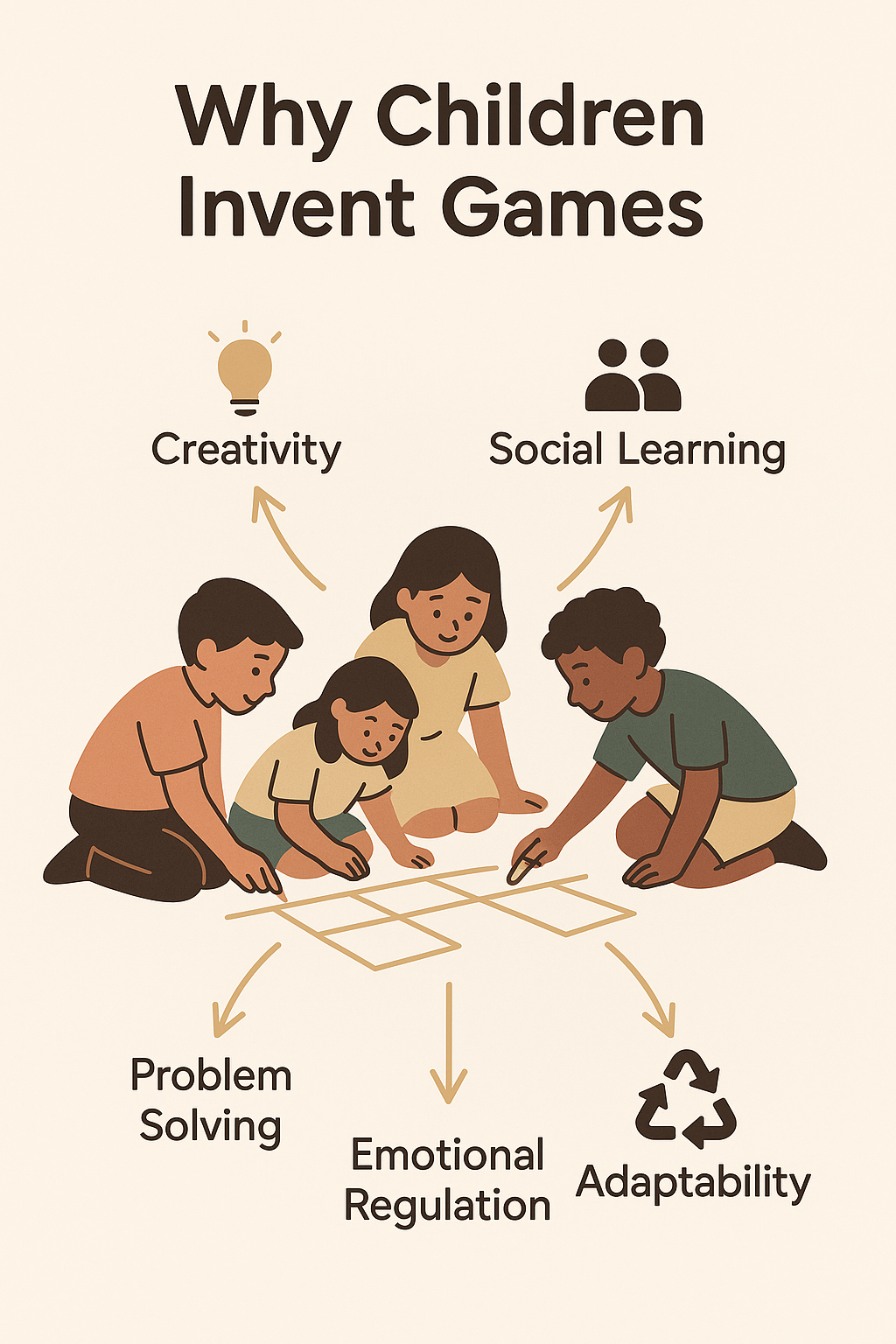
So so children, right? They automatically do this. It's a natural fall. They fall into it naturally. So, like, I've noticed my whole life, and I remember when I was a kid. Right. When, when children don't have anything to do, they make again. Die every time. Every time. Every time. You can count on. It's very reliable. Kids will get together and make up games on the fly if they need to.
Right. To, satisfy their their their brains. Like the the children have a natural. Children will be in a, a war zone. For example, and in a in a dire, desperate situation playing games. Not only just to cope, but because they they they must. Yeah. It's a natural thing that we must do. And then adults are just children with masks.
Right. So like, adults are the same way. Adults have a desire to gamify things all the time. And we do all the time, right? We just have sophisticated language that we put around it. But really we're playing games, right? And, so this whole idea of game playing, going from as you hear our children playing right now. Right.
Making up their own games, making up their own rules. Oh, you're the jailer. We're in jail. Yeah. Yeah. Just fantasy and imagination. They're just automatically going to do it. I mean, everywhere I've ever been in the world, I've seen the same thing everywhere. Kids just do the same thing making up the game. And then. So, like I just said, adults are just children in disguise.
You know, with, with, with degrees of, sophistication. So a lot of times false, sophistication. Right. But like, you notice all the time throughout all the echelons of group dynamics and everything with amongst adults, is that all these games people play with each other all the time. Right. Like some of them have very strong consequences to like life or death consequences maybe in some cases.
Right. Playing games with people and you hear another idiom like, you know, that guy plays by his own set of rules or, or those people play by a different set of rules, right? Or he, you know, goes to the beat of his own drum. Same idea. All these nods, all these, all these like phrases built in, showcasing time and time again how there's just games.
They're they're really just games. They're layers of games that people are just playing on a very sophisticated scale that we call society, that we call civilization. You know, and so, anyway, I just noticed that amongst children, they're just they're, they wear on the sleeve, but, you know, like, it's just wide open and out in the open for sure.
Right? Whereas whereas adults are. Right. So children getting together and playing is critical and their mission critical to their success in their life because they're playing very sophisticated games in the future. So the best that they can, you know, play, play games when they're a kid, make them up, change the rules, learn how to cheat, right, learn how to game the system, not vision, if you will.
The way better off they're going to be set up for. Yeah, so gaming is an intrinsic part in modern society, and I think it's always been. But I think especially now in this complex modern society, I think that, you know, having our kids be expert gamers, not just video games I'm talking about across the board is doing them a huge service.
And I'm gonna add to that and say, I think the analog gaming in the in the experiential gaming is probably more critical because it brings in so many more components instead of components. Yeah. So social body language, social dynamic. Yes. And and this gaming mechanic, the it helps us organize and explore and you know, it brings knowledge and experience you just wouldn't have if you were just sitting by yourself.
And, you know, I mean, you're right. You know, it. It is a key mechanic. It is as you introduced as the concept of homo ludus. I mean, it is a play is a key mechanic for understanding. Yeah. I mean, to what you were saying, to Chris about, you know, the, this being basic for the development of children, it is one of the questions in the pediatrician's office about the development panel, like the questionnaire, like at certain age, like the kids says, like two or 3 or 4 years old.
The question will be like, did they start doing pre template because that's going to be like pre template is going to be part of like a kind of like it is a skill that once you develop it it'll help you socialize connect to the world and such. And then children that do not develop that. Then they have you know it becomes it doesn't mean that they cannot be happy and they kind of contribute to society, of course, but it'll be bumpy, you know, because like, you will lose a tool there to connect and play with society because like, you need to be able to have that play, that interaction.
So like social is there's an element in socialization, in socializing and interacting with other humans, that there's definitely a play there. Pretend play is, you know, there's that role playing element. Yeah. And I'm Ben go ahead. And yeah. Because like then you're like you put yourself in the shoes of somebody else. Yeah. So how much does that contribute.
I mean actors, people who study acting can talk. You know, about how much that changes you, the impact of like, going deep into somebody in somebody else's shoes. Yeah. So even if you don't agree with that. But just like the empathy, the exercise of empathy is deep. Yeah. Yeah. So I guess the, the, takeaway of the entire conversation summarize it in the most simplistic way I could possibly say is that, you know, we're all we're all in the game of life, right?
Right. At the end of the day, we're all like, in the game of life. Is there. And, boy, it's what is it complicated? And does it have layers and does it have it unsurmountable rules. And sometimes the rules are just there to make it. So you're frustrated? Yeah. You're playing someone else's game a lot of times. Right.
And many times I think also that like you, you game yourself. I think that we all game ourselves to some extent, like these false paradigms that we write, like we make up things in our own mind, I think sometimes, and play little mind games with ourselves. Or there's another, idea of mind game. Right. The, the my playing a mind game here because there's, lots of sleight of hand that could be done that can trick anyone's mind into, you know, all types of ideas and thoughts waves and that and my gosh.
So like literally at the end of the day, I mean, gaming is the topic of life. You're talking about gaming. You're talking about life. Yeah. Let's let's be fair. That's got to be a true conclusion when you're really talking about the finer points of gaming. Ultimately you're talking about life. I guess a good exercise of self-awareness is asking yourself, which game am I playing here today?
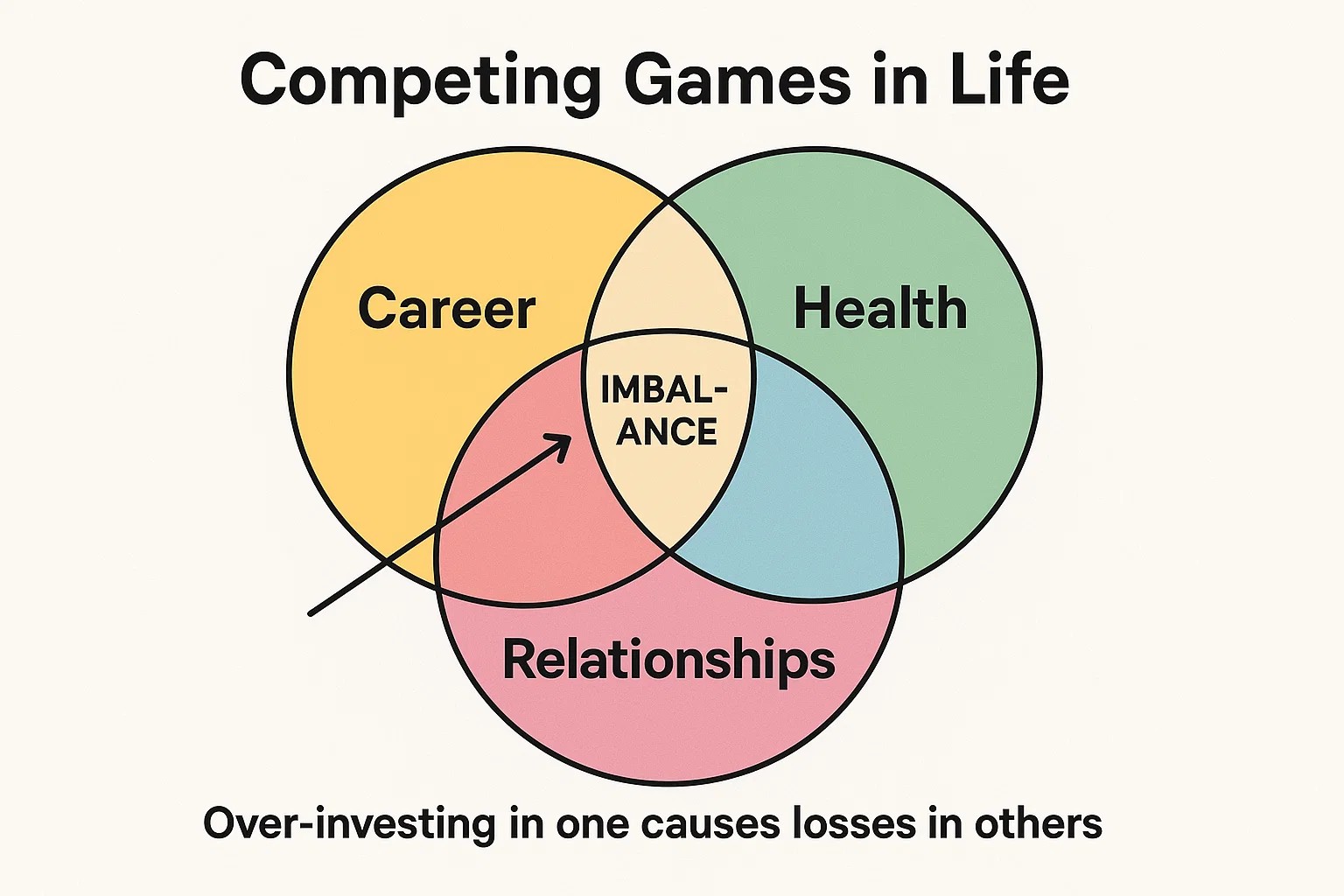
Yeah. Because, like, you might think you might be wrong. About what? About that is so yeah. That totally what you're saying there. And if you find yourself then caught up in playing, a game too much, right. That's not in your best interest. You're playing a game that's not, boosting you. That's not helping you in your life.
Right? Ultimately, then you're losing and another game that's being played simultaneously that you might not even be aware of. Like, for example, let's say that someone sits there and they're a good game addict and they're playing video games every waking moment, and they can they're playing video game, right? We're not paying attention or health. They're not paying attention to their career, not paying attention to their family opinions, their finances.
Yeah. And set of rules, a set of morals. Like I'm playing by set of rules because I'm playing by this. Our morals. I'm arguing with my wife because like I think about this, this and that, but then you're missing out on like, what is it that you know about this, this and other factors that you're missing from the other point of view because you're not being able to, like, switch the shoes that you're, you know, placing yourself into the like, which game are you playing there?
Yeah, but the man's game are you playing like, the human game? Like, why don't you just forget about anything and just try to be there where the other person is and blah, blah, blah blah with that makes me think of is the the nerds that I've lamented that haven't they've learned all about this one game, right? But they can't transfer those.
They try to transfer those same skills to life or to this other facet of like. And they just can't they fail at it. They just understand the rules of this other paradigm and they get defeated. And then they don't try again or they get crushed. You know, I've seen so many I've worked with so many people who were on various sides of the spectrum and would get I mean, I'm like, I know you have the social skills to beat this part of the game.
I'm right here with you. I'm encouraging you. And then I just see them get crushed and defeated them. They just don't try anymore. It's like, you know, and that's happened from elementary school through adulthood that I've seen that in. And it's just it's it's a terrible thing that we do to ourselves. And you know, you get so stuck in in the games.
There's another trope there too, I think, like, so many people are automatically have lost the game, like before they even started playing. They were very lost. Yeah, very lost, because now they understand that they never really a player in the game right there a year there is brought in to and or be a pawn and the pawn in B adjuster.
Yeah. Pawn is a good word. Yeah. Yeah. Like they're brought into the game just as a game a game element to another game. Right. So like, some people play games all the time thinking that they're, they're, they're really hustling backwards. They think they're hustling and doing a good job playing a game, but they're really just hustling backwards for somebody else.
Right. And you know, I'm talking about oh no. No. Yeah. So from so somebody who was in the military. So like for me like there's a lot of depth into it. You know when you're like sent on a mission, there's so much they, you know, they there's un on your mind so much at risk, so much at hand in there.
But then there's also like, you know, the fact of like, are you what game is being played overhead above all of this. You know. Exactly, exactly. And you have to on your game. No. That's right. And then like, are you set up for failure or success, you know, like in terms of like what they expect from you and what can you make sure you take with you out of this game.
Right. Rinse breathe it. Yeah. So they, they may want you to win. But is that win condition the real win condition like do you win when you win or do you lose when you win? Yes, yes. And, you know, there's another colloquialism, the idiom pick your battles. There we go. Yeah. Pick your battles. In other words, pick which game you play strategically.
Sometimes you lose a battle to win the war. You intentionally lose the battle because you know that that's going to help you win the war. Here's a story that this brought up for me. I think we may have all heard of it. It's a fairly old one. This kid, got attacked by a moose right. And he had been playing a lot of World of Warcraft.
And one of the things there is facing death. Right? And so he had large glass hunter glasses. Yeah. It's a hunter class that you can see now called Fame Dead. Yeah. And so you play dead, right? Yeah. And you know, then the predator leaves, right? The attacker leaves. Well, he trance, without understanding that this was going to work, he transferred those skills from World of Warcraft to real life.
He feigned death when he got attacked by the moose, and he survived. Oh, Slam you again. Dead. Yet you got lucky because not not all animals are the same. No, not those are the spear. Lucky. And and who knows if that would have worked. You know, and on so many levels. But he got really lucky. And, you know, he made an equivalency that worked in his favor.
Oh, yeah. Well, there's a reason why that is just like a natural behavior in certain. Yes, absolutely. That we were talking about it the other night. Meghan was talking about how, some of that play, if you saw this bat. Right. There we go. Played Ed this this bat of, played dead when, Sue and her were trying to get out of the house, I was telling the story about a lizard that did the same thing in a Burlington Coat Factory, you know?
Yeah, but but, yes, I mean, we keep bringing up these idioms and colloquialisms. Why I play dead and all these things that go back to go back to this whole thing, every type of posturing or any type of right is a version of, it's not sometimes like an animal kingdom. It's like life or death. But, you know, it's still like the posturing itself is a game.
It's playing a game. It's pretending something right to try to change the rules of the scenario. So I would all big essential ness. Yes. Right. Let's look at maximum. Look how big I am is my fur is all raised up right in my face. Yeah. Ooh. Okay. So you see, like the more we talk, the more we'll go coming up with these idioms of like so integrated into so you know really to my ultimate sadness, right.
Is like, it seems like the evidence suggests is this we're in, like, layers of these fluffy gains, and, and most of them are integrated by ourselves. And we'll never know or meet the designer of the game we're in. Right. As I said. Right, right. And, you know, to be honest, I'm like 100%, 99.9% playing other people's game and don't even know don't even know the rules, right?
Yep. Yeah they will. We're we're all stuck in games, the machinations of which were set in motion eons before us. Yeah, yeah. There's the like, there's the blurry is that I think, oh, I think it'll be useful for people to get more comfortable with the blur of, of things in life, not to make it all relative and significant, but to keep a certain awareness while still trying to, you know, assert a certain, you know, you know, firm standpoint of like, values they respect.
You know, these are not things that you should just, like, make it relative. But then, like, if you have sort of the morals and values of some Norse, keep that north. But then like keep in mind that you may not know the map like you think you know, here we go. You know. So yeah. Yeah. Like you're saying, be willing to read, to be willing to step back and be humble.
Because to learn you have to put. Yeah to to pick up more. You have to empty your hands. And so, I mean, when you said about, like, being like, you know, like people that get so much into, I mean, like, good at playing like one game or one thing in life, but then usually, like, stuck out another.
There's a term that I learned one trick pony, of was trick pony. Yes. Hundred pony. Yeah. I guess that's one point that that one term in English, the term that I was thinking about, that I learned in the German class, then German have the term idiot, which is like the idea of kind of like just one field, a German thing, but.
So it's like, it's like that. So. But he was really good at the thing. Yeah. Yeah. So like, he's an idiot, but he's like very smart of that spurt, you know, you're like very good at one thing. So I. Yeah. So you can be like I don't know rocket scientist. There's this sort of you name it. I mean you're shades of that.
It may not capture the same is the German word, the same connotations. But idiot savant. Yeah, I understand that, Einstein wasn't the greatest husband. Well, yeah, I didn't mean to, like, you know, throw shade into rocket scientists or, like, scientists and or. Let's do it like there were equal opportunities. Shade rarer. But I think like. And so, yeah, just like I shade for everybody because we all have something that, you know, we know more than somebody else.
But then like there's also an ignorance that will never completely say go away said, but you got to chip away those blind spots and be aware of them. Unlike his buddy, he was playing tennis with, he refused to protect those blind spots and improve him. It's just pedal to the metal for that guy. That was what it was.
It was like, yeah, you have a blind spot now. I want to be faster. Yeah, it's a good story. There's a lot of value. Like there's education in that story. You know he for sure it's a it's it's not as good as the boy that cried wolf. But it's decent. Yeah. There's, So the last thing I want to talk about gaming, if you don't mind, is this, idea of like, the feature of gamer.
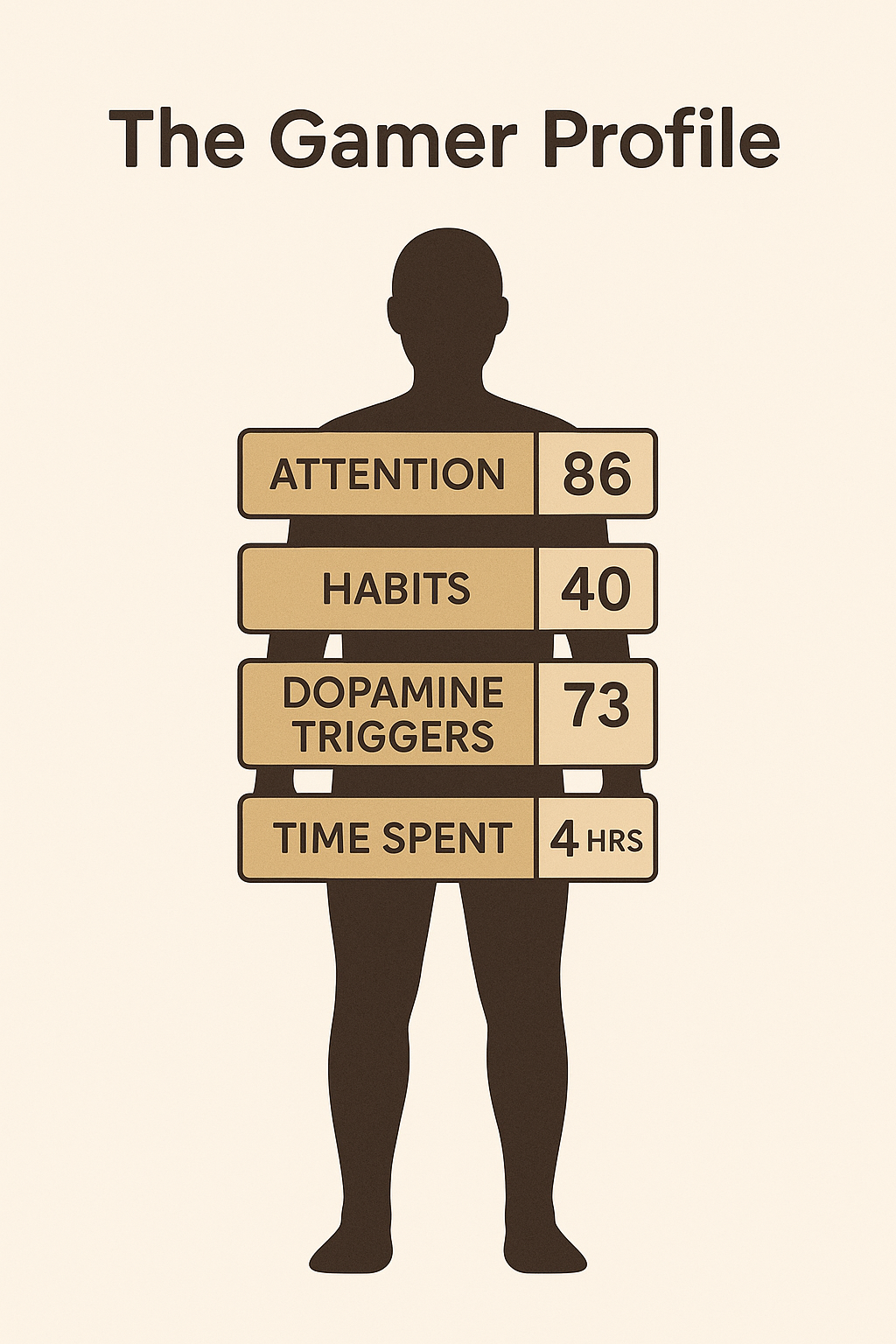
So the social media algorithm is clearly profiling, right? Right. Your habits. I mean, it's got all the data, those where you're at, geo location, what you're doing 24 seven. Right. Your ear spy device. I mean smartphone right is like gaming your life. And what it's doing is creating a gamer profile for you. Right. And in their game it's how can I seize as much of your attention as possible in order to then ultimately sell you something or sell sell your it and sell you this?
Our elitists or your attention? Yeah, yeah. And captivate your imagination and basically gamify you. And, to do so it has to create a profile on you. Right? Which is not hard to do. And this profile, which is really ironic and interesting, can then be fully gamified, right? Once you have a character profile for example, like in Dungeons and Dragons.
Yeah, you create a character profile and then you role play that character like this. You mentioned role playing games, and some people can get so enraptured. Would that role play, they played this over the course of months, and if their character dies in a campaign they, like, lose their damn mind. Like, you know, that's like something some part of them just tired.
Yeah. But the same thing is possible. So I think the future of, like, where gaming is going is gaming. I think it would be ultimately customizable ultimately to where you have really sophisticated hyper and superintelligent AI systems. They're basically creating the ultimate games for your profile. Right? Like, you can imagine these incredible game designers that are extremely intelligent.
You own a lot of these games built up by amazing game developers. Right now, these game developers are only human. They have, you know, they're most likely very brilliant people. Right? But wait until you have like a 2000 IQ hyper intelligence making your game right. I think that if we're not aware of how human beings can be gamified, I think we potentially could be about to be getting gamed like we've never been kicked before.
Oh for sure. For sure is what I'm going with the company. No, you were absolutely. What I keep thinking is like the I mean, like with this whole I think, I think like one thing that is, that is critical. It's always the humans behind it because, like, this is like the Terminator two Judgment Day type of thing.
People keep thinking about the, you know, them taking over the world. And, what I'm really scared about. And I think what some people like miss is that it's never like the AI as an entity by itself. That is the thing is the humans behind it. So like, it's not the fact that, you know, they're going to like the AI is going to figure out that it's like, oh, no, no, no, no, no, no, I should just like not follow you guys.
Like I don't think that's really I don't I'm not afraid that that's going to happen. And even if it could happen is I think from what I understand, it's too far away for us to really that is not really a fear. But while we keep thinking about like maybe robots taking over, we are being taken over by greedy people.
And then the who's deciding what game for what just to like, explore you for money. So you're stuck on the screen as long as possible and then, like who you are, you get all the dopamine you need for it because you get all the gaming tastes. You're like flipping card or throwing dice, and it'll give you everything you want with the interactions that you want, but then you're missing out a company you they're who's gaming you which is like what is not the AI those gaming what game are you neglecting that you need to be playing or you're not playing?
Yeah. Because like in this game. Right. Yeah. Because like the AI is not an entity by itself. Yeah. It can learn by itself, but it is being directed like you're putting AI. It is ground goals, functions, goals, goals that you get it and goals. The corporation that designed it get it right and they want to make money out of it.
So in the end you're not you're being game by the AI, but the one in charge is like the guy people making money for the AI. Those are that's all the time you're thinking like, hey, I like Darth Vader. Well, Palpatine is the human behind that. And also, I think, like with our gaming, one thing that is good about it is that, you are a little bit detached from that if you have eyes designing board games, that's been something that's definitely been thrown around among, about designers and people who want to be designers, like, from what I've, you know, read, online, from the community.
But, in the end, so far, the value of because it's such a, it's about human interaction and it's so key where we actually like designers will discover things in the process, seeing humans play it. So like, there's such a human element into it that I think that you can definitely I can evolve to make games that are playable and can be fun, but I think ultimately the most valuable ones will continue to be humans being surprised by humans instead of like AIS kind of like, you know, creating algorithms that take you to a, you know, kind of like accumulating information and then, you know, from that information saying like, well, this seems to be
like, what do you like? And I'm not here for a butler, I'm here for a human. And I want to know, like, hey, the butler is this game. And I want like the butler to give me a good service. But I would also like to feel a connection with the butler. And then that's never going to happen with a robot.
It can be fate, but it can never really happen humanly. So this is also an important stage. And I think you brought me to with what you were saying. Yes. The connection. I think it's going to be really hard to achieve because for so long the AI is going to be in that uncanny valley, that area where it kind of upsets us, where it's almost real enough, but not quite what also is there also with analog games, we can put them down there, we can separate ourselves from them.
We can stop with these limbs. We're constantly engaged, and they're going to want us to continue to be engaged in these limbs. And the people behind them. They make money on the amplification of our delusions. They make money by worsening or breaks with reality, whereas an analog game just might strengthen our connections to reality and strengthen our facility with reality.
Because we're role playing things that are going to happen because they were designed out of human experience. Yeah, it'll be hard to like, you know, totally. Similarly, an analog kinesthetic, you know, component game. And you just, you know, you can't like, really like simulate in a tactile way, like rolling dice here. There's, there's a, there's a, there's a thin there that's just it's tangible.
It's kinesthetic. It's in your face. It's the sound of the dice. The feeling of the anger. You can feels like it's more random then, you know, you really hard to simulate that type of overall emotional experience and that connection. That would be hard. But I think that we might be overestimating our, you know, I think we might be overestimating our sophistication.
I think that it's almost like the game of life. You know, I think that simulation where like, these really complexities come out of this really simple set of rules, I think that that is going to be what the future is going to be revealed as we continue to progress in science and technology, I think we're going to find out that the fabric of reality is a lot simpler.
Underlying rules than we know than we think, and that we think that our own consciousness and intellect and all this kind of stuff. I think we overestimate it because we have a reason to overestimate. Right? We have a bias built in towards overestimating the things. I think that human emotion might not, at the end of the day, be sophisticated as we think it is.
And I don't think human necessarily consciousness or intellectual intellect is really is as masterful or divine as we think it is either. For example, we were just in a church the other day watching a, we were invited to a wedding ceremony, and it was a Catholic wedding. And I my whole mind the whole time was thinking about just, this is one big game.
This is all circus. It's a three ring circus that I'm watching right here. And it's all just about the cash flow. It's just cash flow. It's all the this is it's so clearly playing. People are doing all these mannerisms and putting stuff in their mouths and do those callbacks. It sounds cultish. The person says something and then everyone else in the audience by cue, just mumble some utterance back.
It's just, you know, really simple cadence and, you know, right then the, you know, the, the, the box is bursting with money, you know, and that's just the game. The game is just like, put up this really facil, you know, bullshit game and get all these people playing this hustling backwards. They're hustling backwards. They're playing this game and they're giving their hard earned money to nothing, to right, to this abstract thing.
Now that's just human intelligence. Try creating this right. Wait until it's superintelligence. What the hell is that going to be able to do to us? As far as gamification, that's what I'm talking. That's the scary thing, seeing what humans can do to other humans to gamify humans, right? Behavior and actions. What happens when it's a superintelligence doing that?
I know, but again, I would say like be ready for human surprise or be ready to be surprised yourself because like, for example, there's the I would say, like I'm thinking of the military guy or saying like, well, what are the questions you're trying to answer with that game? It might be that the questions that you're answering, questions when you were saying, but maybe the questions that they're the people that are believing in it, those are not the questions that are trying to answer.
So in terms of context, you know, there's I'm thinking like, even so, there's this play that, that, that I, I read, once and that I love this play. I went and we never did it in the, in the theater class, but it's a play where there's these people that lie to the community and fake and do kind of like, play roles in the community to do good.
Like, they will like somebody will, like, dressed as a sailor and then say goodbye to the sailors because nobody was there to say bye to them. But then they will, like, say bye and then kind of like make connections, where some people needed a connection they didn't have otherwise. So, like, they're kind of like some kind of, like, hidden superheroes in a way.
But then they're like this, like secret agency and then at some point, the, the main character goes and plays a role of this strange song that was lost to this old lady. Okay. And, and then he's there. He. And then at some point, it becomes a little bit weird that she still has to realize that that's not her son, because she's kind of like old, senile and stuff.
And I'm spoiling you a little bit of the end there. But in the end, she knew the whole time. But it's the game she was playing was not the game that he was playing. She was connecting with somebody and she was getting an experience. Like what experience? What she's looking for. So she knew the reality behind that.
She knew the fakeness of it. But then she what she she knew the experience that she wanted. And there's there's been cases where people have certain beliefs spiritually. Will they can I going to tell you one specific case. But I've seen that happen even like in like stories or media, where you have somebody that says like, well, yeah, it's possible that God doesn't exist.
It's possible that all this is just a scheme. Sure. But I'm here to get this and I'm getting this experience out. Okay, okay. Fair enough, fair enough. So, like, you know, it's kind of like a matter of like, it's also like a question of, like, in what context? Who's looking to get what and then how important it is.
What is important to you to that? Yeah. That's tricky. Yeah. Yeah it is. And, you know, I mean, these are those games that, you know, we're talking about being in the grip of, in the 2000 AQ, IQ, artificial general intelligence and, and all of these things. I, I'm tending to agree with Shaddai here that we should be.
Well, I bet we're going to be surprised at how humanity reacts to that and how humanity that they triumphed. Yeah, I'm optimistic as well. I hope there's some type of X factor that is, you know, the looting, my imagination that, is what you're talking about. And, maybe it is true that another colloquialism here, another idiom is that, it's it's not if you win or lose, it's how you play the game that that,
Yeah. And that's what you're saying. You're like, what are you playing the game for? Maybe it's not very where you puzzle. Which game are you playing? Like get them. Are you playing this game? But maybe it's either you're playing the game is the actual experience. Right. Maybe at the end of the day that's the game for yourself is like, how did you play it?
And I'm gonna say, like, for example, that, that is not worth trying to like, you know, show people something where they've been deceived, where it matters for them. You definitely have people that are in course and minutes, and it matters a lot to have somebody be able to be rescued from cold, or they're being exploited. That's a reality.
So like there it's again, you know, there's you can get we can get lost in the matter of like this relative in these. So like which game are you playing. What are you trying to get out of this like. Oh, so it's fine if you get deceived. Not really. That's not, the point, but that's what whenever you, if you feel frustrated about, a system, it's it's kind of like several things out of it because there are some people that do get something out of it, but it's a matter of you have to also at the same time, even if it's like even if some people are getting something positive out of
it, doesn't mean that you're not going to speak truth to power about like exploitation. Things are getting wrong. So you might have people in the Catholic Church that for them, that ceremony, that ritual is very important to them. And that's for me, that's fine. I do care about the Catholic Church, what it's doing about this, and then and then, you know, abuses from the priests, of course, and then how they manage the money and then the honesty, like letting women be priests or not.
That's, you know, these are things that I'm like, well, yeah, I can understand you're playing that game, but you shouldn't. Right, right, right, right, right. You start looking at societal impacts and where there's the intersection of, you know, hey, the Catholic Church is pretty much one of the richest organizations on the face of the earth, and, you know, their influence.
And if you're an altar boy, you're playing a dangerous game. It's another give another idiom for you. I told you, there's going to keep coming as a right rocker. I, so that was a terrible joke. I'm so sorry, Robbie. I really don't remember this journey is the reward at the end of the day. Yeah, but it depends on the.
I would say like, it depends. Some lady saying that. Go ahead. No, no, no, I was I know it really depends on the case, but we think like it read it. We really need to like be aware and and careful of kind of like context in different people, different cases. And then also like socially like as a structure.
As a system. Sure. Like it's not that we don't question the system or we don't question the game that is being played, but there's that in the you know, there's also like what some people get out of and is like, okay, that's me. You do you get married, do that. And that's, you know, and that's what God does.
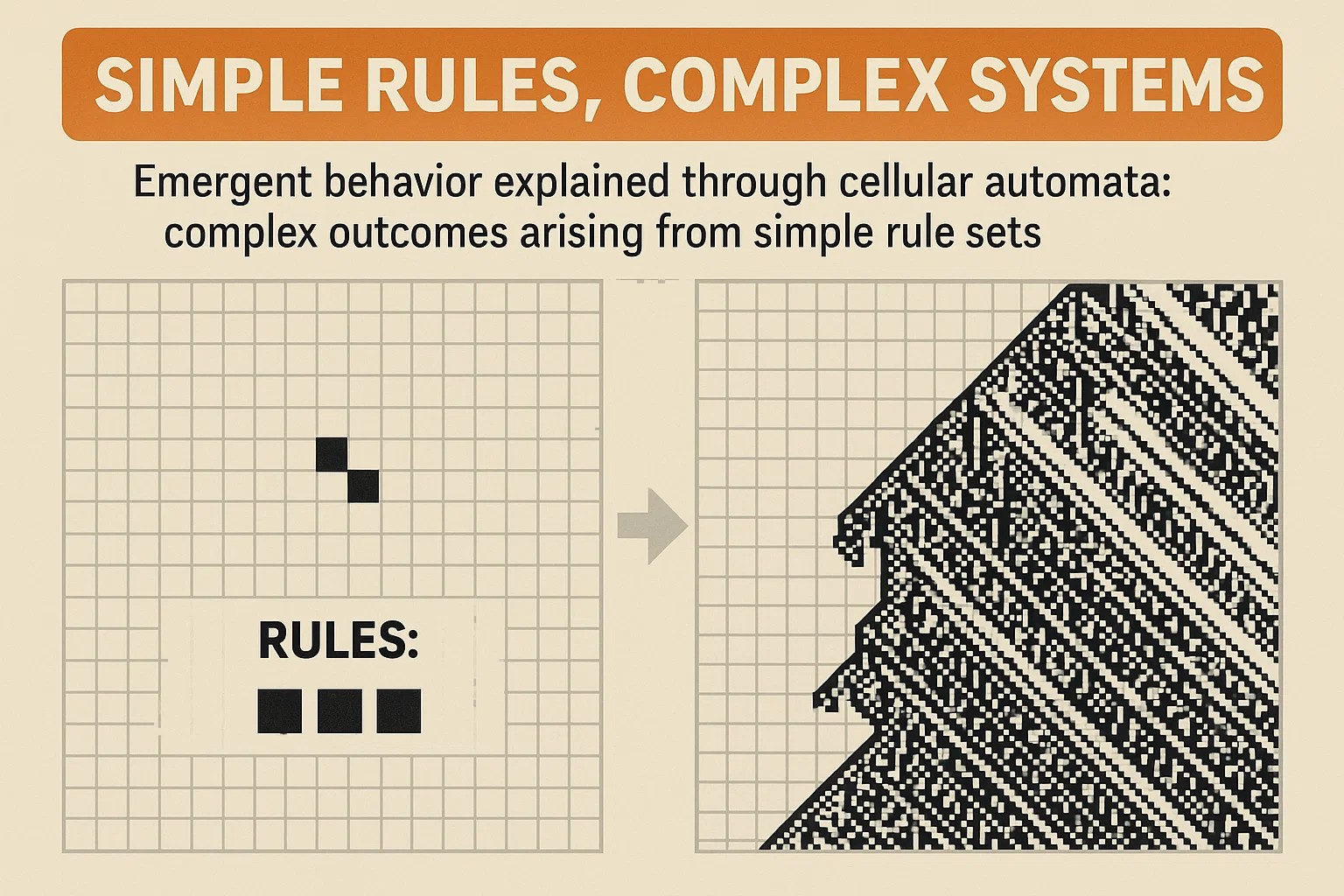
He did it. That's enough. Let it be enough. And, you know, and to circle back to something we didn't give a full treatment to when we're looking at those systems, when we're picking them apart and we see some simple rules that are coming together that create emergent behaviors. Because you were talking about emergent systems. And when we start taking these things apart and we start analyzing them more in depth because AI's creating these things, and we have to understand what the machinations of what it's creating.
Then we start seeing these simple rules, these emergent systems. And, you know, we start getting more credence to things like, what? Cellular automata. Right. So basically the idea is it's one of the simplest systems you could have to explore a, a system of life, but it's you got a grid, you got, you can toggle on each cell in that grid as being alive or dead.
And there are rules as to whether or not the cell survives the next round, if it has so many cells near it, it. But not too many too crowded out that it won't get resources. It knows if it you know when there are different circumstances that let it survive. So it's very complex patterns emerge from very simple set of rules.
Yeah, yeah. It'll be like a set of, you know, four rules or whatever. Right? Yeah. And and that's the idea. There's all these different cellular automata rule sets, the ability to explore and but yeah, that, that that's kind of what Chris is talking about. How our reality just might be made. All the games we play just might be made from these simple bedrock, tiny little things.
I'm still actually wondering with curiosity about what you're saying, Chris, in terms of like the sense of like whichever game that is that you were, that you're playing with this social structure or social, social customs, right? When you throw the wild, the wild card of the AI in there, like, what is the what does it do? What is the result there?
I mean, the or but then like my question is, will we also like how wild is that as a wild card? Because again AI is a tool. So whatever it does, AI in terms of, you know, my question would be and I'm, you know, I'm not trying to provide an answer. It's just me wondering if you put AI to try to work with the systems of society in terms of beliefs and, and rituals and customs and stuff like that, and, and or use of money, how much this has gone to be like allowed to run on its own and not be constrained by the powers that be that go like, nope, nope.
I'm like, oh, wait, it's showing up. Like like when the AI started to like, well, they were saying that it was being so woke. It started putting Nazis in black people as Nazis, like, afraid. And you remember when that happened? Then the Google had to like, backtrack of like a no, no, no, we have to make it, you know, so that it doesn't like, do whatever.
It's one because it can do some wrong things that are like that. Yeah. This is just from. Yeah. So like and then they can backtrack on that. So what else are they going to backtrack on whenever we don't. We're not I mean because that yeah that was wrong. But then what about something that is not necessarily wrong.
But they we just don't like it. Or the people in Silicon Valley don't want that or the government of sort of. So social media, for example, like people, content creators, you know, that these people are social media influencers. And I guess we're content creators at this point, right? It's like, content creators and stuff like this. And, people that post their life on social media and these platforms or whatever, if you and then consuming it, like do it scrolling or whatever, you know, consuming it in one way.
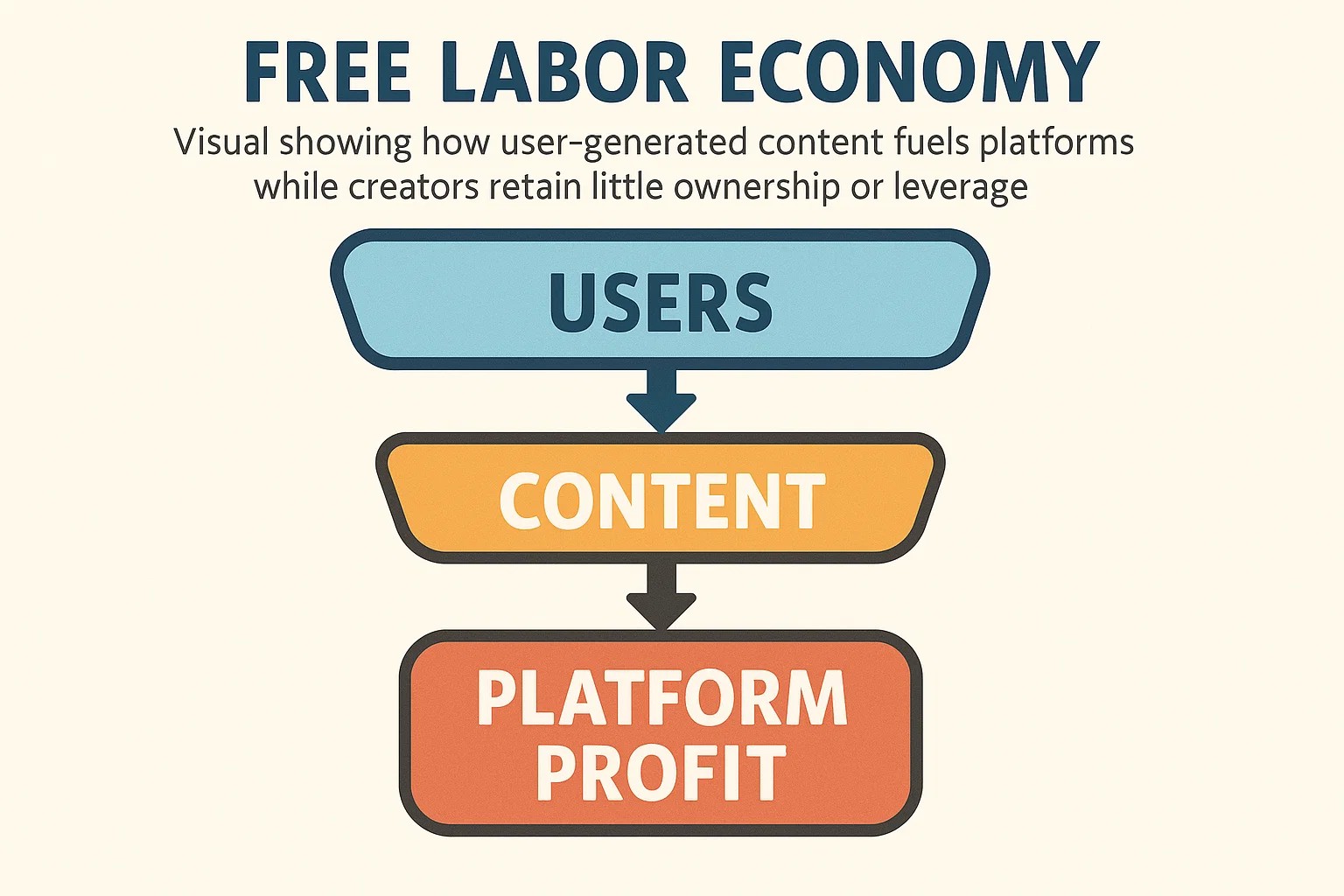
Now, what what what we're intrinsically doing, when you look at the in again, gamified manner, right, is we're actually contributing a tremendous amount of free creative resources and labor to a system that we don't even have a slightest ownership of, or any not even not even a skin. And like, we don't even have a seat at the table.
Right, right. So the thousands and thousands of millions of people that have created content for social media, that social media and, you know, delivered to all these different people, so they didn't make the product, someone else made the product for free. They distribute the product for very low cost and then get a huge reward from distributing their product, because now they have and they'll have content to which they can keep other people entertaining, amused, and then the people on the other end, they're consuming the content are also providing their labor to contribute to the system.
Right. And so the gamification that we call social media, it's just a term that describes now the net effect on humanity is that we're being gamed hardcore by now. These new, incredibly wealthy individuals have their own these companies. No offense to any particular person, but for the zuckerbergs, the masks and all these kind of people, right, are now owning are not only our time and our energy open our creative energies for free labor.
We're laboring for free because we've been gamed by this social media system with no guarantee of a payout. Well, in fact, it's it's it's negative return on investment if you do the math. Right, right. And so, that's just the tip of the iceberg in my opinion, because the people that are engineering this are smart, no doubt about it.
But they're only human smart. Now when we start any hyper intelligence, this we might not even know what the next social media quote unquote thing is. So even saying we might be subject to gamified, gamified, resources that we just can't even see at all, like I have enough intelligence to see the game here, right? To some extent, because of how much I've gamed my whole life and we've been gamed and been gamed and even and on those point, we can always exit, say, game.
We might see it. Yes. Yeah. Yeah. Right. So it's becoming it's becoming intrinsic to just daily, norms. So instead so being becoming being gamed by the system is, is becoming a norm a like is who saw it coming. Yeah. You I'm guessing you guys know about the whole structure of Roblox, right. And that is the end of the world in Roblox.
You this guy, you just got $75 of freaking charges because our kid figured out how to order robot books, blah blah. But then, like what? I it's what I find disturbing. Yeah, but what I find disturbing is what I found out how it works in terms of for the people designing worlds in Roblox. Right. The people designing the worlds.
Oh, yeah, bunch of them are kids, right? And then they don't get almost basically nothing. And there's you supposed to be able to get something, but what you get out of that labor, it's absolutely abusive. And it is like done to children. So like, what are you talking about in terms of like, you know, exploitation of creation by this tool?
And then you have these people like making like ridiculous amounts of money by just having these people engaged to like, here's like 18 to 28 year old females right now, the number of them doing OnlyFans stuff is insane. Like it's I would never but the number of them making livable money off of it is much less than the number doing it.
That's better than Roblox. OnlyFans is better than Roblox. You're better off game. You'd only chance that game being a kid, Rob, right? Right. Or being even an adult game designer. There are articles on adult game designers that talk about how cutthroat it is, and how hard it is to make money. But all the fans, yeah, you're going to make me.
And when the strippers will have a better salary. Yeah. So I guess Vegas run out Robux. That's a bit of the Robux. I whatever. Yeah. They're Roblox. Yeah. But, you know what I'm saying? Those, at the end of the day, is that like a majority of people that do start doing that kind of thing, I don't think probably end up, you know, hitting it big.
And, you know, I think that is just another, another exploitive. And this is all within the human domain. I think when we start pushing the envelope of hyper intelligence, we enter a whole new, you know, potentiality of exploitation of this now norm ified, free labor, component. It's getting a little outside the domain of the game conversation here, but I think it is the ultimate gamification of humanity.
And, so, boy, we need our children prepared by teaching them all these different games so they can see all these different angles so that when they start to encounter this in real life, they can see the game and know, you know, design. So if they want to play it because these games they're producing and amplifying delusion delusions become a renewable resource through gaslighting through, you know, it's it's much more than oil or anything else trees.
I mean, it's this AI mirrors us and and amplifies our delusions that these other games like social media games, it's all about doing the same thing, creating delusion, creating a idea of you are special and you should be creating this content. And people are on this. OnlyFans does the same thing. OnlyFans is catering to your worst elements there.
Oh, these people love you. These people are, you know, there it is. Duh. So it's like, not only do we have people, these systems competing for our attention is a limited resource. We have the manufacturing dilution to craft the gilded cage for each of us, and the fact of propaganda and marketing the the how potent. Every big company that sells a product has a massive marketing budget, right?
And propaganda we know is is is omnipresent. Since antiquity, there's been propaganda, state propaganda. Well, there wouldn't be propaganda and there wouldn't be marketing if these things didn't work on human beings. Right. Like companies wouldn't spend all this capital on marketing if it didn't create an illusion of value and get a return on that investment. And so the same thing with propaganda is propaganda was an effective nation states when do it when use it.
And so, you know, marketing and propaganda are just two derivatives of gaming people. You're gaming people, you're convincing them that you know more. Doctor. Smoke it. Yeah. You're convincing them that this is a you know, your product is dealt right. Your product is to gamify the the public sentiment, the public consciousness, to the point where they don't believe that it's dangerous for them.
Yeah, type of thing. Right. So you're gaming their intellect, you're gaming their psychology, they're gaming their beliefs. Right. And if humans are capable of doing this, I'm just saying when we're faced with a superintelligence, I think that's a game changer. Like, I think that could be extremely. And I'm not trying to be scary about it, but I'm just saying we should be aware of that.
Seeing what people already do with the tools and techniques they already have right now. Imagine when they have incredibly, unprecedented, powerful tools at their disposal. And and so what I think is we need to change the sentiments on how we game each other and start being real with with each other because of the potency of the future.
Could be so dangerous that we shouldn't go into this in gamify anymore. I think we should stop playing games, you know, no pun intended. Because like keep the games in their proper domain, keep domains in their in the exploratory humanity. Humanities like we will learn lessons from games. We learn valuable skills from games we learn like we've talked about throughout the breadth of this conversation.
Right? But then when it comes to major things for that shift, humanity, that's not to be game. Well, why can't we don't play games with that? Why can't we build the games that help create the skills to combat AI and artificial general intelligence and break ourselves out and fortify our minds? And just like this psychologist trained his daughters from four years old to be chess masters, we can train our kids from four years old to have critical thinking skills, to break out of these things, to have that objectivity and all these other things.
But go ahead. No, no, I totally, what are you saying? I'm just thinking that. Precisely. That's what I was thinking in terms of, like, you know, solutions, you know, for the future. It's kind of like, already what we're doing. I mean, like being a medical interpreter. I'm, like, interpreting for doctors always, you know, asking how of questions to patients and part of those health questions have to do with technology, especially with children.
And then, you know, there are there's certain data that we use in this real world outside of the screens that help, that can help us kind of like keep our shoulders accountable and keep ourselves accountable in terms of like, how can we, you know, not be so entrapped in like pull so much into that trap? Because, I mean, it's kind of like abstinence.
I, you know, the abstinence of technology is not going to be the solution to all these dangers that we have from being honest isn't going to help. Right, right. So how do you use it and how do you how do you select, for example, you can use your own phone to set up an alarm. You being two hours on Facebook, you know, like that's definitely enough, you know, but like over your be like 50 minutes on Facebook.
I mean like all throughout the day, you know, there are apps already that work to tell you like you being like this amount of time in this app and then that creates at least a level of consciousness. I don't think that's kind of like be a solution for everything, but also being comfortable with kind of like chicken with each other, like we are at home.
And he's like, hey, you been on the phone? A while, I where are you going to like, read a book or something. So try to be accountability partner to each other and then being comfortable with it because and not feeling guilty. So guilty about it. But just understanding that is just like we are being trapped into this.
And then like you don't need to justify yourself for being on the phone. Just just put it away. He's not you. Is the phone. He's a he's like, he's a system, so don't feel bad about it. So you don't feel like, oh no, but I really like this at all. Just like shaking it for a while and then you're stuck on another, another hour, you know, like, if we're emotionally, we can feel comfortable about tackling this, and the solutions for it.
I think we can. We can save ourselves, you know, a little bit from not going too deep into the the danger parts are there. Yeah. I think that if we have solutions, I think some of the solutions could be an array of tools that allow us to have anchor points to create our own measurements of our game, whether or not we're winning a game by our own measure.
So like, if I mean my health calls, if I'm meeting my life goals of me. Yes. Right. Like create these anchor points for myself and then has a game that I'm playing that I'm assuring is the first game that gets played right. And as long as those games are being played and I'm winning that game, then not worry too much.
Relax in the other areas. Yeah, you see what I'm saying. And that might be a way to gamify ourselves out of the whole situation. Attention, potential. You said you start by teaching your kids to play the right game first, made the right game the priority.