
Extra content pops up along the way.
Trailheads
Good places to start walking.Chapters
September 15, 2022
Cannibalism Capitalism, Control & Consciousness
Double-tap the sides to skip 15 seconds
Trailheads
Places to startArtwork explorations
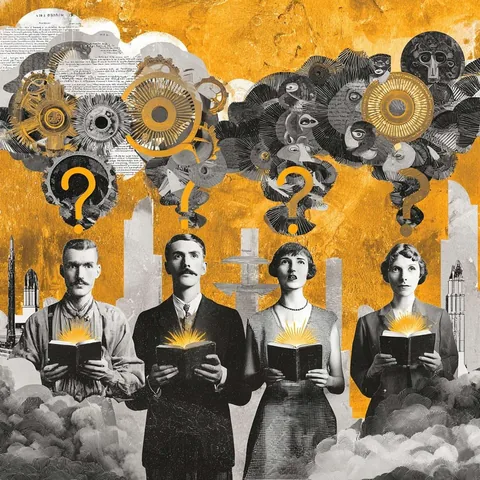
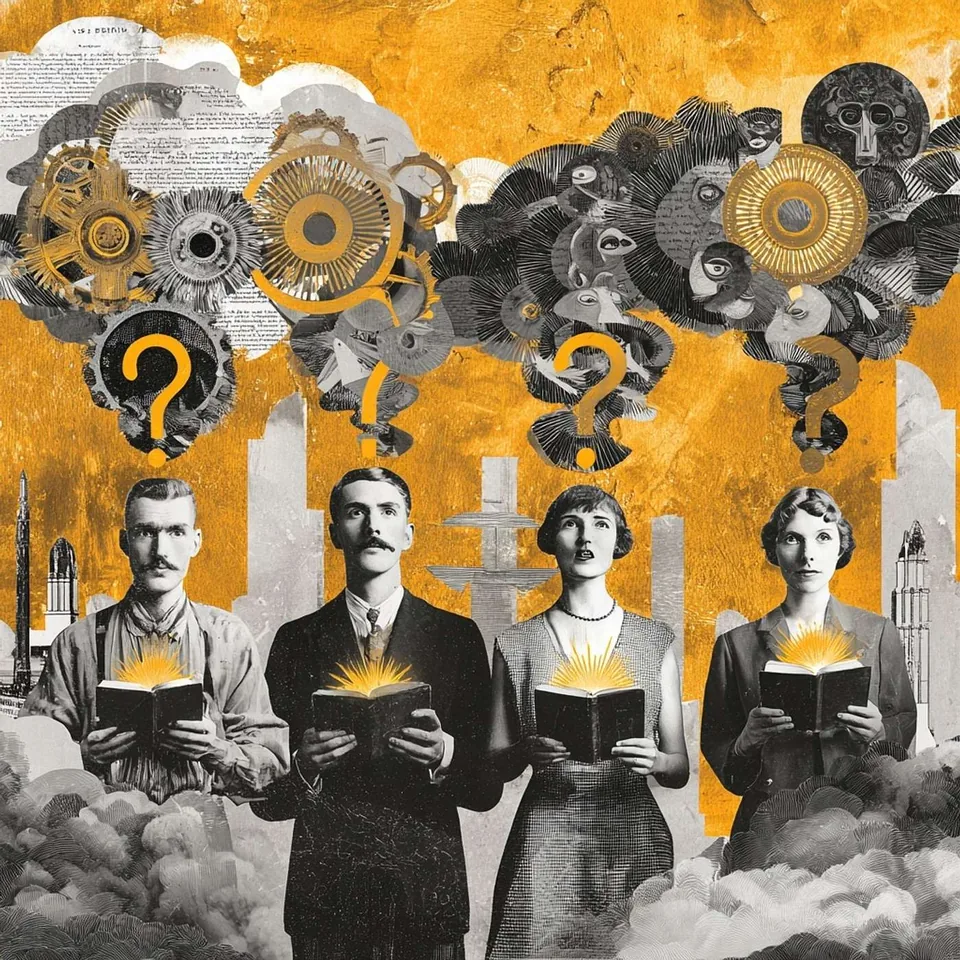
The other takes the image generator gave us, and the prompts behind each piece.
Chapters
Settings
Cannibalism Capitalism, Control & Consciousness
With Kris Tyte & Sean Snodgrass
In this reflective and deep episode of Positively Pedestrian, our hosts discuss the importance of purpose in community, the downfall of morality, and tools to identify misinformation. They question everything from transactional culture to information filtering, while dreaming of a new form of education and societal structure that fosters critical thinking skills. Join us on our journey to explore the ties between purpose and community, information diets, and finding the solution to misinformation.
Share
Detour
Episode description
In this reflective and deep episode of Positively Pedestrian, our hosts discuss the importance of purpose in community, the downfall of morality, and tools to identify misinformation. They question everything from transactional culture to information filtering, while dreaming of a new form of education and societal structure that fosters critical thinking skills. Join us on our journey to explore the ties between purpose and community, information diets, and finding the solution to misinformation.
Chapters
Show notes
Episode Art 8 pieces
Full Transcript
Yeah, it's funny how like, persistence beats beats the progress. Productivity. There we go. You pretty much anything consistently. And it'll it'll amass, quantity truth. Which I guess is a lead into a conversation about bad habits and good habits. True. But, you know, we're amassing quantity. We can definitely say quality. I guess it's up to the consumers of our product.
Yeah, it's all it's all relative. Right. And I guess also in the in the hands of a good editor, anything of it quality. You could turn quantity. You could pull quality out of quantity. That's true because if you've amassed a large amount of things, you can pull the, pull the great things out of the drawer, I guess.
Just had a random occurrence. You're going to have some profound, prolific things in enough quantity. So I know there's this gate here. I think we can get around it if you want it. Oh, now I'll just go this way. So this is the workout house from the lookout for here. Okay. And when Drive-Bys happened at the doors of Park, he's come out here and they're shooting from here.
Jesus Christ, I like I haven't mapped out.
I know a little bit. I mean, I don't know how it all works, but I'm intensely interested in it since I used to do something similar.
Yeah. Imagine if, like, people had some kind of broader purpose to work towards that was rewarding and fulfilling. How much of this stuff would go away? Right. Both the supply and the demand side. Right. I mean, really. So, I mean, the demand side would diminish if people were living, purpose driven lives where they felt like they had a function in society, but, you know, a productive, useful function in society.
Who wrote? Yeah. Who wrote a book of that title was a Joel Osteen The Purpose Driven Life. Yeah, there's something to be said for their a lot of the longevity studies. It's like not so much linked to diet, but more linked to your feeling about where you stand in the community and that you have a role in that.
You have purpose. So family ties and taking care of others. Yeah, you have engagement and you have a reason to be around.
There's people some of the people like some of these villages out in France that are like 97 plus still vibrant walking every day. You're eating fucking baguettes, drinking wine, smoking cigarettes. Right. Right. Cheese. He's like, the hell is your heart working? It's been said, though, that, they do that in greater moderation than fact. Probably so. But still, like that stuff in your diet.
Like being in your bloodstream. Yeah. Right. Right. I mean, you you start to think about high tranquilizer rides and you start to think about all those sticky fats, you know, aggregating on your artery walls and. Yeah, but then come to find out the psychology that they live, you know, they wake up every morning in a decent mood and do stuff in the community where they feel valued.
People listen to their opinions. And other key thing you said was they walk. That has been a, it's been something common in those that do have higher longevity. Flexibility. Keeping your mobility. Yes. Flexibility. Stability. Mobility. All of it. Yeah. The idea that, you know, take someone, you put them in their more natural element psychologically, you know, like walking through your neighborhood and you know, the people, you stop and interact with people, things like that.
Yeah. Like, you feel like you're a functional member of a greater society. Yeah, yeah. You've got, I mean, as you said, a purpose. You are not just anonymous. You exist. And you you do something for all of these people. Yeah. Contrast that to, like, buying all your stuff on Amazon, you know. So to where like all your commodities that you buy, there's no there's no human interaction.
It's just a transaction. You get your sex on Tinder where everything is a swipe transaction, right. It's everything. So you're really coming down to living a transactional life where everything cost has a price, has a, you know, has a certain amount of time or effort or resource tied to it. And that's how you're quantifying things. Yeah. It becomes functional.
Not not personal like it becomes a what's the word? I don't know what the best word is for it, but transactional is a good word for it, you know, not so purposeful. More transactional. Yeah. You know, and, and also the thing for buying, like. All right. When you're buying from the local French market and you also have the consumer protections that France has in the laws banning certain chemicals, you're going to also end up with healthier inputs into your body.
That baguette that they're buying is way healthier than the bad guy. I'm going to go buy from the mega chain store, more than likely. Yeah.
Yeah. But, you know, still, you can imagine if you complemented, the lifestyle with, with with a better diet, people probably even more healthy. Goddamn. Yeah. 90 would be the new 40 in France, right?
But it's funny. It's funny too. How? Like these, the access or the, the promise of this, of this unfettered access to things through the series of apps and technology layer. Right. It's like we're so sold on this idea that that, you know, it's so easily these things are so easily accessible, but there's never a disclaimer that they're just a facsimile of the real thing.
Right. There's never, like, this blanket disclaimer, you know, that are that are on all these apps and all these ideas of these modalities that create these transactional exchanges, that that's what it is. It's a transactional exchange. It's it's been stripped and devoid of the actual process. That's more natural when really the marketing materials and all of that try to tout it.
It is an interaction. It is a weight engage. And it's not. It's, all of these things are created so that it's transactional, so it can be monitored. So it can be quantified so that the company is providing it can give easily quantified metrics as to their success. Yeah. So we had that metrics conversation the other day. So it's like in the inverse square law of using metrics to guide your life.
Kind of. So when you're doing it on the tail end of something and you're just looking at the functional effectiveness of the endpoint rather than the bigger picture of what that endpoint represents. You're leaving out all this. You're leaving out from like the inverse square. As I said you're leaving out all these, higher level metrics which you're just not considering.
So like you can take pretty much anything, something negative, and judge it from a series of metric points that are favorable and get it false impression, you know, guess the big thing about misleading data. And that's the hard thing about metrics and data. The higher level metrics, the contextual metrics that really help you understand what that data point or that node is doing and what it means are hard to collect, requires some deep knowledge of not just business logic, which gets you those lower level metrics, but they require a deep knowledge of culture, of context of why the hell does this thing exist?
Exactly. I can give you a perfect example, I think is, let's say that you want to do business with the government and you get on to all this, like SBA stuff and, you know, government clearinghouse contracting, all this kind of stuff. All right. Small business administration. Yeah. Get into all that, world of government contracting. Right. And you have to learn about tremendous number ethic laws like your company has to, clear all these hurdles.
You have to be cleared by, you know, several different institutions to make yourself even eligible for this. Right. You have to make all these declarations about ethics and rules and, you know, on and on and on. And then there's these. So when you when you go to actually trying to put in for a contract, there's all these rules about how you do that.
You can't take any gifts, there's no bribery. There's no like all this stuff. Right. Oh yeah. Like these massive layers of ethic, ethics built into this. If you want to transact with the government, to try to get one of these government contracts. But no one is ever considering what it is we're working towards here. It's like you're just feeding the military industrial complex, like you're become a subcontractor for Raytheon.
Yeah. Which is making weapon systems that are selling them abroad. They're feeling the profit. It's like there's never any ethic, ethics or communication or thought about the bigger picture of what we're actually doing. So what does it matter if you're like, you know, you don't take a bride, you know, like like, you know, I never would take a lunch from the subcontractor, right?
Right. Like, I won't allow the subcontractor to take me to lunch, but let's keep working on the on the AI that that is the guidance system for this fucking warhead, right? You know what I mean? And so then there's a series of industrial complexes that get engaged, that get invoked, you know, automatically that the, the ethics and the and nothing surrounding that is even mentioned.
But yet, at nauseam, there's all these little rules about what you're allowed to do as far as like taking a junket, taking a ride on that person's yacht. Yeah. Like the optics of that is, is where the focus is. Right? So that's classic magician misdirection. Yeah. It's like, look over here. Yeah. You look over look to the left.
We're moving. Right. Yeah. Exactly. It's it's classic, classic misdirection. And, you know, it's like this, all this thing in the fucking news cycle. Now it's like this, what, that raid on Mar-A-Lago. Right. And, you know, now they have me saying the word Ray. It's not a raid. The search warrant that was served at Mar-A-Lago.
Right? Yes, exactly. A raid is something different. It's completely different. A raid is something you do when there's Rico charges or when there's a, you know, a fucking, drug bust, military operation or military operation. Yeah. So, you know, this this search warrant that gets executed, they found all these classified documents and yada yada. And obviously there's major criminal implications, all these things, obviously.
Right. And then now everyone is talking about this special master thing. Yeah. Like this, this request than usual thing and all in, in the court. It's an unbiased third party that they want to, you know, collect and collate evidence. You know, it's it happens all the time in these bigger investigations. And the Trump Organization wanted it. And the court is in essence from what I read saying, well, you guys wanted it, you pay for it.
And the Trump Organization is like, well, I want to split the bill with the with the people. Well, it's one misdirection after the next, after the next, after the next. So no one's talking any more about the fact that this dude's got nuclear secrets and, you know, tremendous amount of classified documents, you know, why does he have these things?
You know what the conspiracy theorists at work that we recently hired is saying about it? He's saying he, well, the last two presidents before, Trump took office, they also took classified documents. I was like, yeah. Bruce. Did they on that? Again, misdirection that I said about isn't Mr.. Yeah, exactly. That's what about him and that's and that's what I said.
I said that you're just saying, what about this? But did they have similar quote unquote, raids on their homes? No. Well, or where's your evidence is a good thing. And then secondary is like, well, we're not talking about what somebody else did. We're talking about what Donald Trump. And I said also in reply, I said, and if they did something similar, let them be prosecuted.
Just as this guy's being prosecuted for sure, 100%, you know. Yeah. And, there's this, like, weird kind of derivative thing that I thought of lately, too. It's like, imagine if the midterms are sweeping and the Republicans get the House, you know, get their House and the Senate. And so all Congress has gone goes Republican, and then they automatically start launching, because all the different committees that do investigations and stuff originate in the House.
Yeah, right. They have all these ethics and rules and blah, blah, blah. Committees after committees after committees that do all these investigations aka like the January 6th committee. Right. And next thing you know, yeah, I see the next thing you know, you have the next thing you know, you have, you know, 500 investigations into various Democrats. Right, right.
And then the stage is set then to for then, all these rules changes, all these, you know, parliamentary tricks. And then Trump runs out the clock on all the different indictments and everything that are facing him. Right? Gets reelected again and pardons himself for everything. So that's the debate as to whether or not a president could pardon themselves.
Well, let's just even if he doesn't, he's still now immune to everything because he's president again. Right? So he can start up all his criminal enterprises anew. Yeah. It's cycle back. Trying to avoid the tunnel for the echo. Okay. Oh, I walked through yesterday in the light. There's some really cool new graffiti in there. Someone made, like, a, a possum that looks like it's hanging from one of the metal rebar things in there.
Yeah. And, like a, a couple of patterned salamanders. At what point does graffiti become, like, kind of endorsed or sanctioned? Because it's obviously no one's cracking down on it, right? It's like, you know, once you get hit a certain level of graffiti, it's almost like it's been accepted. The I guess the quality and subject matter is probably two things.
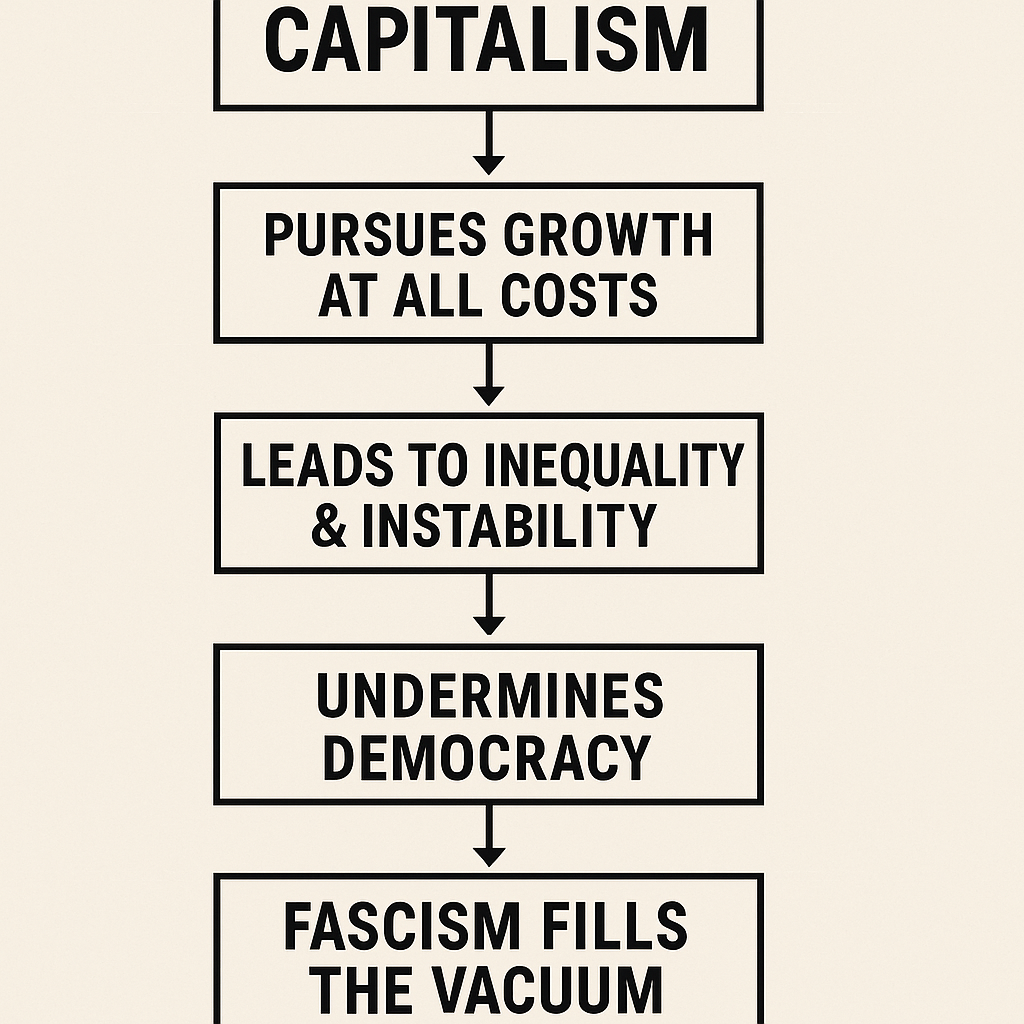
And whether or not somebody signed it with their Twitter handle or, you know, Instagram, it probably makes it the difference between a mural and street art. Right. So it's really interesting how this like, theory about this capitalism, when capitalism is capitalism, begins waning. In other words, like the it's like the vacuum cleaner that starts sucking itself up, like it can only it can't eat itself to endlessly.
No. Right. Yeah. And so like when capitalism starts to cannibalize itself. Is when fascism starts taking over. Okay. So you're saying from the from the dregs of capitalism arises, fascism. Yeah. Because people become demotivated and and will refuse to work once it becomes too transparent. That and how egregious? You know, they're being taken advantage of. It gets to the point where people will throw their hands up in the air and say, I'm not participating in this question.
Can we redirect what you say is the inevitable process of capitalism transmuting into fascism, into capitalism, transmuting into some more enlightened form of government? That's near utopian? No, because the people that are in that power position are going to do everything they can to preserve it, because it's so it's so intense. It's so lucrative. It's, it's it's so seductive that they refuse to let it go.
So there's still keeping hold of the reins. The same people are still keeping hold of the reins as it turns into fascism. You're saying. Yeah, right. So they, they turn because the they, they can no longer hold on to the mechanisms that continue to produce such lucrative results for them. They can't continue that at any kind of pace.
In fact, it's in decline. They can then see the trends, right. You end up with evolving. Also, isn't it also possible you end up evolving into all the expensive trappings that propped up the society? All of the things that, you know, the oligarchs got Ahold of in Russia and sold off for and eventually became billionaires, right? Do you end up with that situation and fascism?
Do you end up with, okay, capitalism failed, we're going to do a land grab and take all the resources, sell them, and we're going to become, you know, the richest, people on the top of the heap. Yeah. But you have to understand, like the history of regime change and the history of coup and the history of, you know, the takeover of the masses and new and new groups taking over.
You know, when you look at the history of that, it doesn't matter. Like, like, for example, let's say that you are a, 25 billionaire, like he is $25 billion in there. Yeah, okay. And some group rises up in your country and takes over and freezes all your assets. What what what is your what's your what's your net worth?
Now you're assuming assuming so you put enough pressure on the massive I mean, you're going to have a lot of physical assets. It's going to be hard for somebody to take where you realize they're going to take it. So it doesn't matter when you have a whole new big dog in charge that controls the military and controls all the, the, the top level assets that matter, you're done.
You're just done. I mean, you might be able to escape to another country. Yeah, but all your holdings in this country are now gone. Well, yeah, but because this country is under different management, it comes down to like we weren't able to totally freeze the oligarchs that we tried to punish. Right. We will. They'll had escape hatches. Yeah.
You're talking about international talking about all of a sudden you have a rise up in the country. But if you're 25 billion you're going to be international. Yeah, yeah. But you're, you're you're never going to be able to then have the same conquering command over the. Oh no no no, no. Yeah. You're going to lose a grip on whatever you had in that country and probably lose most of it.
Yeah. And, and, having a, having being established in America is pretty much you're on the Iron Throne. You know, you're like America is the place to be as far as this Mecca of capitalism and, you know, billionaires. Right. So you're somebody off and it frees your assets in America and other friendly countries. Yeah. It's just when you have, you know there's this, there's this debate like okay if we go and try to overthrow the government, let's say, you know like we like you and I say tomorrow, let's start this, you know, we're going to get some followers.
Use use hate in rhetoric or whatever we can to drum up followers. Well, I mean, you know, creator, we've decided if we were going to create a cult, hate and rhetoric would be the tools that we don't feel like gain as much traction or have as much reach. Well, regardless of what we find out, that works. You know, we we we get it working is what?
I'm all right. Okay. So you get something work. Yeah. And then we put ourselves up against the establishment that exists today, like the military and infrastructure. We would be. We would be completely fools. We would just be dominated. Right. Well, yeah. And that's one of the things that I've always thought about, you know, people are always talking about they want to cling to that Second Amendment right, because it allows them to, you know, stand up.
And I was like, you can't stand up to the war machine that is the US as an individual. I don't care how many of these militia people you aggregate. That's right. That's where I'm going. But, but but I was going to put the wild card in there and saying that don't forget. What about when the majority of that infrastructure has been converted to this ideology?
So in other words, you get you get a majority of the military on your side. Now, now you're talking about a whole different game. So you stage a military backed coup. Yes. Because but don't think the military is not consisting of people as well. It is. Right. It's it's not. Yeah. It's consisting of individuals that are going to have to make individual decisions in your favor.
And so with the right misinformation campaign convincing enough of those people internally within the military, you can create a fractional division within that or a full takeover of that. And now you have the reins. I mean, you need to take just say just us understanding both to varying degrees, the depth and breadth of the US war machine. You need a sustained misinformation campaign that really was successful and you'd have to do a full takeover, pretty much.
So look what happened with just a marginal person with with a small entourage using misinformation on January 6th. So like you have, you know, but ultimately the military ended up being the bulwark that that kept that at bay. Okay. So what if what I'm saying is that what if this this mob first hits the Capitol like they do, and they do succeed in hanging Mike pence and half of half or three quarters or most of Congress shit.
Right. What happens in that scenario? You know, now we activate the military against this civilian base and shit starts to spiral out of control. Yeah, right. And, you know, why is Nancy Pelosi, for example, and her family stock investments outperforming Warren Buffett's right. You know, the the coast has greater amounts of information apparently than one woman. Buffett.
Yeah, they're authorized to do insider trading. You know, these politicians make somewhere I think something like 200,000 or so is the salary of the congressman, you know, but yet they're all coming out with millions and millions of dollars in assets. You know, it's it's crazy. And you keep showcasing that more and more and more and you keep pointing out the top level corruption more and more and more, and you eventually get a user base that just says, I'm giving up.
I'm not I'm not fucking with this anymore. Why am I going to work for 15, $20? Well, I think you have to do more than just point out the corruption which people are coming more and more aware of. Right? You have to offer them an alternative. Yeah, but my my fear is that if all this if these people start feeding on themselves.
All triggered by Trump, right? Trump starting this war, if you will, and the the people that are, you know, historically in charge all start turning on each other. Dude, there's going to be blood in the streets like big time. Because look how easily people get activated over the most ridiculous nonsense like QAnon, right? JFK is coming back, juniors coming back, and you know who fucking knows what else?
Right, right. What? How many millions of people are activated by just these small ideas that are that are blatantly bullshit? They're just so far fetched and, dare I say, patently dumb. It doesn't matter if people believe it. You know, it's patently dumb that some invisible man is going to come and solve all of our fucking problems, you know?
Or that you should not only swear to said invisible man, but you should pray daily through this, this visible man, and be ready to go to to kill for that invisible man. Oh yeah. Man may, in very rare circumstances, communicate directly with you and seeing you a prophet. There you go. Yeah. So you're holding out for that, you know, chance of getting anointed or whatever.
Right. But the bottom line is that there's the, there's there's a huge, huge, huge, you know, massive sum of human beings out there that's a scribe to all these outrageously ridiculous ideologies and the energy and collective effort of these people. It can be overthrowing like, can be literally terrifying. January 6th is just a taste, you know? And if you keep putting pressure on people more and more as capitalism feeds upon itself.
In other words, like the rich can't ever get enough and just keep finding new ways to pinch everybody else, right? You keep doing that enough and you create a pressure, a pressure cooker situation to where the slightest thing that opens that pressure cooker and next thing you know, everything explodes. It's so volatile. You said to me, I mean, I agree that we may have a fairly volatile situation and people are rebelling to some degree by refusing to.
For a few months. There are people and it seems like it's changing. It's the penalties swinging back together way. But there are refusing to work for a pittance and for people who didn't treat them like human beings. Right. And so you have the neighborhood crack dealer, the neighbor watching it drive by shootings, all this, all these pressure gap releases of despair, right, that are unnecessary because people just don't have that fucking purpose or feel like there's any point.
Well, there's no point when you are on the grind for some asshole at Applebee's on a power trip. Yeah, yeah, I mean that. And that's what I'm trying to say, that, you know, there there is being a there there's there's an awakening of sorts for the newer generation saying, look, I'm not doing this crappy job anymore for no money.
And, and then when, when nobody's doing the crappy job anymore for no money and this becomes universal, the whole entire bottom is falling out of the capitalist. Well, it's the capitalistic system slowly reacts, but it does react to that. We are seeing things to prevent the bottom from falling out. Like from. I don't really like everything that Governor Gavin Newsom does, but increasing the minimum wage over there repeatedly, in his country of California, is a seeming to smooth things out a bit and.
Okay. And then you go and you, you go there and you find the same thing that you find in all the other cities in the United States. You have these fucking homeless people, people in the drugs, people in the drug slinging, drug use, drug abuse. You have you have things like L.A. County doing a UBI program, you know, and there are dozens of other cities that have started UBI programs to combat some of these things that you're mentioning, because we do need to prop it up.
We do need to approach it differently. We do need to fix it. Yeah. And then at the end of the day, you're just paying people. I mean, that's that's baseline socialism, right? But what the fuck is wrong with that? I don't think anything's wrong with it. Okay. It's certainly not capitalism. No. But that's what I'm saying. It's slowly transmuting into something else because we're realizing the Band-Aids we put on here don't work when people have access to more information, when people have access to when people do want a greater purpose.
Because I think that's what the outgrowth of that is, the that people are saying, look, the Gen Zers, the philosophy they seem to be more gravitating to is I want to have I want to shorten my work hours and I want to have more life. Yeah, for sure. I'll cut through the chase of what I'm actually getting at is I've been doing this experiment lately or have been asking random people.
I've been just being extroverted, forcing myself to be a little more extroverted, and asking random people, how do they know what's right and wrong? Like I have been asking random people a very simple question how do you know what's right and wrong? I mean, okay, do you want me to answer that? Well, you're not a random person. I mean, I'm talking like people that you catch them by surprise and you just ask them, like, go through the fast food line in McDonald's.
Oh, what? It's not busy. And ask the person behind the register. Yeah. Hey, let me ask you a quick question. How do you know what's right and what's wrong in your life? When how do you know when you go to do something? Is this right or wrong? You know, and head towards? He said he likes what you get when you get in response.
In general, from my basic survey here is holy shit, people have no idea on why they think what's right and what's wrong. But like like stunningly so. Okay, good. Yeah. Do you answer the question that time to think about it. How do you know what's right and wrong, Sean? Ultimately, I mean, my initial answer would be, I know what's right and wrong because of what one what I've been told.
And two, this social mores, this, you know, those things, social mores, social rules guide me. That's the that's that's it. What is the what's the current fashion for? What's taboo? That's what guides me. Okay. And a lot of times I'll see where the line is and I'll be like, fuck you. I don't think that's wrong. Let me do it anyway.
You're making a relative judgment based on what you observe. Yeah. Is in the common vernacular to a collective collectivism belief on what's right or wrong. And that's the most foreseeable way to put it. But, you know, there's other layers that stack on it, your own personal biases, the way you are raised. Because raise up a child on the way you should go, we shall never depart from that's a majority of people will will very quickly devolve into some type of idea about a Bible or about religion.
Yeah. And so, you know, that's still the majority. Answer to the question. Well, it puts it puts boundaries on you, but don't dare drill into that because you're just going to get the person. So deism confused. They're just going to want to go away like so you don't even think about drilling into that. You just say, oh okay, great.
Yeah. They move on. Because if you drill into that, you'll see that it's on the most flimsy, shaky ground you've ever seen. Well, of course, most people's relationship to religion, especially in the modern world, is very funny. They don't understand it. They haven't delve into it. They just accept the basic tenets and move on. Right, right. And so that the different pockets of society, with its different levels of moral relativism, produce a completely different array in almost an individualized case on what is right and wrong.
And so there's no collective cohesion as the bottom falls out on Christianity in America and in Europe, you know, which has been happening for a long time. The, you know, the religion amongst the youth is at an all time low. Sure, their belief in that stuff is at an all time low. Sure. And so you ask them what's morally right, and you're going to get some kind of weird derivative of a religious after epitaph, right?
Or you get some kind of quasi strange. I'm affiliated with this group, woke up and what the hell? So the what I'm saying is that collectively in our country right now, people have no foothold whatsoever on morality. And what's necessarily it's I think just like we've been talking about all these other things that are in a state of flux and transition.
This is one of those sites you are saying you don't like the collective, groupthink that comes out of religion and that that's not something you prefer people to be in the grip of. It seems like people are making a transition to something else, but they're not quite there yet. And to something else is just so arbitrary and undefined.
It's not even moving towards anything else. It's moving to what you're asking the agnostic, and you're asking people. It might not be the upper crust of our society, no, but there's the majority. That's the masses, though. So it's why the neighbor? I'm saying if you want to figure out where something is headed, those aren't the people to ask their the last people to find out where it's headed.
Come on. The, our country is governed by the Court of Mass Appeal. So, you know, not not based on philosophy, ideology, what's truly right or wrong, whatever. Sure. It's based on collectivism. And what I say determines what is right or wrong for me. The code of Massive Hill. I mean, I guess the underlying argument to all this is this foundational?
Is there absolute moral truth right there isn't. There just can't be. And, you know, it's it's the same idea where we look at any formal system. You know, there's holes in it. It can't be completely defined. So we can't come up with just some type of some type of basic framework. Maybe we can come up with something basic, but yeah, not something wholly defined.
No. We even lost the most basic framework is what I'm saying. And I don't care what crust of studying Rome. You can have this talk with them trying to tell me you're pining. You're for a time nostalgically when we had it. No, not. I'm not playing for anything. I'm saying that, there was because you said we lost it.
So that implies we had it. There was a point in our culture. There was, in fact, a point in our culture collectively, where the overwhelming majority had had a similar because they were all in the same foundational. They were all under the yoke of religion. Right. And I'm not saying that's ideal or even desirable, but what I'm saying is that it existed.
Right? And what you have now is a series of micro platforms that are that none of them are even close to being well defined, and there's no collectivism cohesion behind them. Sure. And so, you know, you're saying, out of the firing pin into the fire, like, what's the lesser of two evils at that point? Right, right. And put everything you've ever said, I would think you this is the lesser of two evils.
So what I think is that, now in the domain of society, it coupled with this new reality of misinformation. Oh, you have the most dangerous situation from an ideological standpoint ever, because you have people without strong moral convictions, without a strong moral compass, being faced with mountains of misinformation that can that they can lead to them, that can use them as a resource, as a bullet, as a weapon to affect change in whatever way they wish.
And so all these people are wandering aimlessly, looking for or meaning looking for direction. Yes, yes. Saying it. This is what I'm getting at. And that's why the neighbor thinks it's okay to sell drugs.
Because they their their mind and their mental framework and their moral framework has been displaced with nothing besides the rules in that micro society. Yeah. And that's what we're dealing with. We're dealing with a series of microcosms that each one of these people belong to and live in, because their society has been thoroughly fragmented. And so then, since illegal immigration is so widespread, since drug sales and drug use is so widespread, since all these illicit behaviors that are illegal by law, right, are so widespread and happening, like the graffiti.
Okay, you is that it becomes implied that it's okay, but we kill if we abstract it a little bit and kind of, you know, step back and look at it objectively. These are also things that are members of the shadow economy, right? These are things that, you know, vices will be catered to. Why do they exist to begin with?
Why is this? I mean, you could go ahead and say, which I think is what you're saying, that, you know, vices arise, vices, retreats and escapes arise out of deliberately is the word out the moral failing of an individual? No, I think it comes out of depravity. They're being. They're being depraved of a purpose in life, denied and deprived of it.
So it's a it's a vacuum of personal, what's the word? Esteem. Right. Personal motivation, personal ethic and virtue. So is your debt. And it's displaced by something instead. Whatever aspiration this kid had at coming of age. You know, around the age of 12, they want it to be, a dancing or they want it to be, you know, Trump driver.
If those ambitions were more fulfilled and more followed and, you know, they became something that they wanted to be and that they were investing it, then you'd end up with a situation where less of these things happened. So if we ended up in a society that really did, weren't cater to.
Propping up the to giving those people opportunities and free agency, then we'd have less depravity. We'd have less of a moral vacuum, we'd have less people participating in things that are road themselves individually as well as their immediate society and society overall. Yeah. So you're not going to be able to like, handle the piece of misinformation one by one.
It's impossible. It's the flood, the torrent of misinformation, for example, and lies that people were being exposed to on a daily basis is so overwhelming. It's a tsunami. But how do you you're not stopping it. All you do, all you can do is go back to what we've talked about before, which is really do a sustained campaign to educate people and give them the tools to hone their bullshit detectors.
And right, you have to have early onset critical thinking skills, logical, logical thinking skills programed into people like they program Sunday school into Christian. Exactly right. Yeah. Instead of that, you program young people with critical thinking skills, reasoning, rational thought. Yes. Right. And and the basics of, you know, hey, how to basically do. All right. So, you know, the idea of street fighting, being able to react, being able to estimate, being able to, quickly figure out how to how to take down your opponent.
You want to give them mental street fighting skills. You want to give them street mathematics. You want to give them street, you know, science. Yeah. Street fighting meaning tools to prepare to face the world that they're going to be. Yeah, yeah. You want to give them all these these estimation tools you want to give them, you know, a sense of orders of magnitude.
Almighty works. Yeah. You exactly. You want to educate somebody on financial literacy. It's going to be one of those pillars. Absolutely. So we have this new kind of baseline then ID ideology for a moral framework. Right? I don't know if it's a moral framework as much as okay, we're out of the fire. Hold on, hold on. If if you have a choice and you and you have to pin it to a moral decision.
Okay. Is it is it more moral to raise children to be critical thinking, rational thinkers, or is it or is it more moral to raise whatever without this? And why you're saying moral, moral, moral? Because all we're doing is giving somebody tools to keep their ass out of the fire. Yeah, it's a suffering. Yeah. If if you know that that that not equipping somebody with this particular tool.
Okay. It's like sending it's like sending a soldier into battle without body armor. Okay. Yeah. Okay. Is that immoral? Well, you get back it up and say it's the whole war. Moral. Yeah, but but that individual choice at that moment, right? You have the body armor sitting right here. Here's the soldier's like, oh, just go into battle without it, you know?
Is that moral? 99% of people say, hell no. You should give them the armor. Right? The thrust of the whole enterprise, whether we're talking about having people in the middle of whatever the hell we have going on, this idea that intellectual war or war itself or whatever, it's all amoral, I think. Sure. Let's push that aside for a moment.
I'm talking about the, the, the, the micro decision. But yeah, the micro and the decision to educate these people, everyone, the decision to educate everyone, to base them in, to root people in something closer to reality, to give people the mind tools. Right. Is it more moral to do that than not? I think most people say yes. I mean, but I'm saying that if we decided to do it, Jesus, think about the ripples that it would make and all the changes that would have to happen to actually do it, well, why can't we start a Sunday school?
And I'm with you on this. We've already talked about this. I want to start a Sunday school that does educate and give critical thinking skills a route people in something closer to reality.
I'm with it. You know, literally training the kids on Sunday start training children to start recognizing how to spot wise. Yeah. Like why is why is that not a noble cause? It sounds like it is. And we're also giving them. Well, okay, I feel like we can definitely back up the noble by saying we're giving people critical tools for the modern world, because I call it the way of the world.
Right? WWOTW way the world. So, the way of the world is outside of anyone's individual control, right? For the most part. Sure. And so you train and you prepare well. Yeah. You're in to the way of the world, right? And you accept it, and you work within the system that exists. Yeah. And you don't let somebody give a seminar on finance that doesn't have money.
Like, I'm not qualified to give a lecture on how money works. But you enlist someone who is in banking culture who has made a ton of it. There you go to, you know, you basically you yield to the subject matter. Matter expert here. That's very rational, isn't it? Yeah. And, you know, that's the kind of thing we would do.
We would partition this thing up into rough pieces and we say, who's a subject matter expert for that rough piece? All right. We need to convince someone who fits that mold to be at the helm of that piece of the education. Right. Yeah. Yeah. So that's why I was only dreamed about the social media outlet idea where you could start fine tuning these things at a, at an architectural level.
Right. The way that the actual infrastructure is architected. Very much like the way you could filter posts to garner certain emotional reaction. You could filter information to garner a certain rational, but there you start. Who controls that? Yeah. Who controls. So it's really you're better creating the platform that you speak of rather than what you're creating a better a better platform where people have control of their data and you're moving things in a positive direction by, you know, giving them a platform to remind them to do positive things or encourage them to do positive things rather than filtering their information for them.
Well, yes, I agree with that. But then there has to be some type of way to filter out the information because of the torrent of misinformation that's being generated, but you shouldn't have them. You should give filtering tools. You should maybe give classes or seminars on how to filter, but you should not do it for them. But the individual Sean doesn't have the skill set to to be able to discern between the Russian bot created information.
That's what you're saying you wanted to create? No, I don't want to create the Russian bot. No, you want to create the skill set to filter? No. But people don't have the time and the energy and the ability. Yes, but they don't need a new daddy, I they don't. Then why are there laws?
Well, you stopped in your tracks. Why are you in hell? I want you or anyone filtering shit for me. Fuck that. I would rather fucking die in the corner making the wrong decisions. But what about all the filtering that's happening right now? It is. Absolutely. But you can't say you're doing it from a benign place and that you won't become corrupt.
And what can you just say that we're we're going to, you know, make them make the infrastructure improved to where it's better than the way it is right now by a long shot. Sure. Improve the infrastructure and improve people's critical thinking skills. That's what you do. Okay. So right now, you and I. Where do we where do we get our information from?
I mean, a variety of sources. But it all comes down to these things controlled by people that we can't even fathom. We don't even know who. So we tap into sources quite a bit different, I think, than most people. Right, right. So okay, so the majority of Americans right now get their news from social media. Sure. That's a fact.
And I do not get money from social media, neither do I. So ready. We're in a big difference for the majority okay. Yeah. So we're coming at the whole thing from a from a from a bias to begin with. Yeah. So we're sitting there trying to apply rationality judge. You know, trying to apply rational judgments and rational arguments to information that we get exposed to when we're already exposed to a completely different array of than, I guess what I'm saying, and we both have agreed on in the past, is the answer is more tools than education, rather than a forced filtering or culling of information.
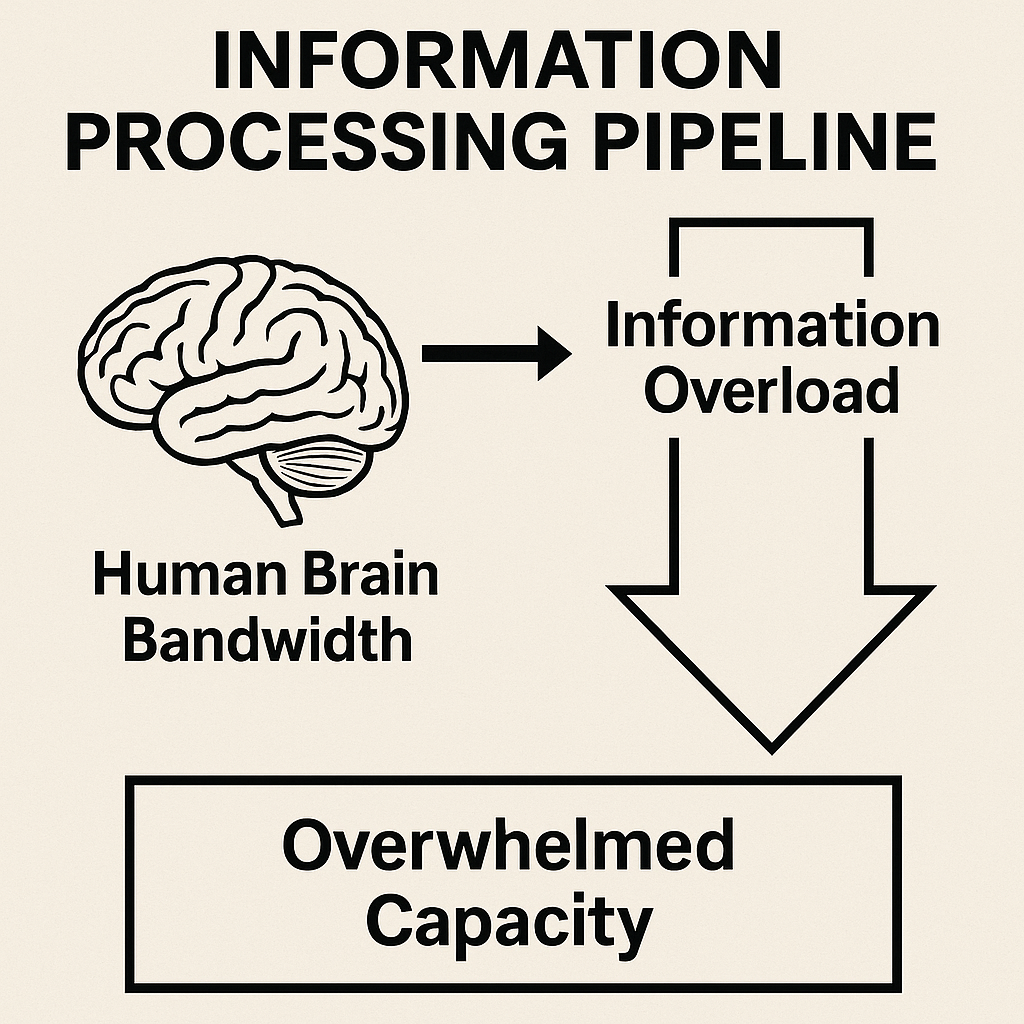
It's sure it's going to be slow. Sure, it's going to be inefficient. Sure, there's going to be some people where the ideas don't penetrate. But all right, so the paradigm is that you have any given individual mind. Right. Let's just start with a human mind okay. A human individual with a human mind. Sure, sure. And there's a there is a by default pipeline by which 24 hours in a day by which that information can go through that mind, that brain.
Right. Sure. Yeah. And there's a certain bandwidth. There's a certain amount that can consume and process. Right. So we take the problem there. We start with the givens to the, to the problem, to the geometry problem, or to the math problem or to the logic problem. Yeah, sure. So we start our assumptions. Yeah. And of course those can be challenged, but, just you got to start somewhere.
Yeah. Right. And so we start jotting down the, you know, human being. Okay. And then we put an adjective in front of that or a marker, a label in front of that. We say, okay, I'm average intelligence. American, right? Yeah. American average intelligence. Yes, sir. Intelligence in this layer of social academic strata, we want to decide whether they're, you know, you know, they're at as far as money goes.
Yes. We can say Joe average. Yes. We wanted to. Right. And so Joe Average is making 52,000 a year and is in America and has this IQ. Yeah. And so we start to make and then we can start bracketing different things off making profiles. There are our user stories.
And so we sit down to do that and you know, we just start with human being. That's probably a good, good initial starting point. Yeah, yeah. And because we know we are thoroughly steeped in the culture of America, they have to be American. So we'll say American. Fine. That's already started to chisel down. But you know we haven't talked about sex, gender anything like that.
Let's talk about, you know, just human being. Right. And a human being has a brain that has a physiological function. Right. There it is. That's.
He wants to get in. So, you know, we start with, like, average capacity for processing information. You know, which is another point we have to qualify, you know, of course you quantify, but, you know, you get into, like, sensory. How did most people take in information through their visual right. And hot bandwidth optical channels? Yeah, give them fancy labels.
So it really sounds like, you know what you're talking about. And, then, then you, then you put in the, the existing environment. This is now a huge variable you put in here. So you have all the organic metrics of a human being, like how much information it kind of most people, you know, two standard deviations of norm can take in.
So so you get an idea on what a human being is organically functioning. Right? Yeah. Then you put it on the way of the world onto that, onto that fire. Right. So you say basically this kind of brain, this kind of organism now in this environment and start to look at the, the, the, the real metrics of the actuals, right.
On what the performance of that individual. Okay. Yeah. And what, what you'll quickly find is that by God, they do remarkably well giving what they have. Sure. Right. So most people are doing the best they can in bad situations. Well, yeah. And and you know, in their, in their microcosm, they're choosing some measure of success. They're clawing their way forward.
Okay. And then we start to look at some granular, artifacts that come from this analysis. And we say, okay, wait a minute. The average person, has 30% accurate beliefs because we we live in data, right? We have information. We have this we have data and information. So of of these things when pulled okay. When people are asked questions here's their responses and here's the accuracy of their responses okay.
Like you can even do it. Basic educational knowledge. You'd say how many states are in the United States? You know, you know, what do you think about the country of Puerto Rico or whatever? Yeah. And see how many people say Puerto Rico is part of the, you know, center. You can do basic knowledge, right? Right. And then you could do beliefs based on exposure information.
And what you're going to find time and time again is that an overwhelming majority of people have very limited and inaccurate factual knowledge, and the majority of what there is to know. Yeah. And the average human brain has a majority of false beliefs. Sure. In there, you know, and they said, oh, well, it's a false belief and splitting hairs.
Right. Right. You know what qualifies something as a but ultimately false belief. Yeah. Like the like the majority of the crap they taught us in school. You could also argue these people are doing just fine with these false beliefs saddling them. With these things that, you know, with his lack of real information and real facts.
There's there's still laboring away. Okay. Yeah. There's still, you know, moving forward, so to speak. Yeah, we could, but if we I agree, if they were given better facts. Better information. Literacy in a number of domains, then hell, they'd be doing a lot better. So now you have this 20 something or 30 something person, okay, who's already has this baseline now of a large amount of information in their brain being incorrect, a large amount of their beliefs being in a correct or inappropriate or predicated on false information, that information.
Sure. Right. And now what you're feeding them is a steady diet on average, like we really discussed of now, including more and more everyday shit information. How in the hell are you ever going to reclaim or recover that person? How is that person ever going to find their way into a holistic, purpose driven life that they feel fulfilled?
I don't know, I mean, okay, so.
More than likely I would affect your fit, your first mold. In my 20s and 30s, and I'm not saying I fully transcended all of those problems, but I have moved an order of magnitude away from them. Okay, so you're saying that you're different from the norm now? Well, what I'm trying to say is if I can have a redemption arc, then others can too.
No, it's not about what's possible. It's about what's probable and what's actually happening. Well, you're right, it's possible that everybody can have a redemption arc. So what? How many people probabilistically did. I guess what I'm saying is we can increase the probability with the type of things we're talking about. So we can definitely increase the, the, the, potential for redemption by absolutely changing the diet by of the information there consuming.
Sure. 100% truth. Yeah, but you're saying not to do that. No no no no. What I'm trying to say is we can change it with tools and education more so. And yeah, we can offer alternative information sources. Yes, we can offer better, better ways, better things to look at. I'm trying to say I don't want any organization to blatantly be filtering my stream of information and me suckling it there exclusively.
Even if he even if that sucking on that tea is disclosed, that it's a much better teat to to suck from. And what that that's what they say. That's what that organization says. No. But you back it up with facts. You back it up with data, you back it up with efficacy. You know, I'm not buying. I'm not buying into this.
I don't like it. I just don't like it. So are you addicted to misinformation? Maybe. But what I'm addicted to is twice the illusion of choice. Yeah, I'd much rather have the illusion of toys than to have it taken from me. But isn't it? Isn't the illusion of choice more dangerous? It is. And I'm more likely to make wrong decisions to screw up.
But I'd rather be able to screw up and have some personal culpability, some personal restriction making ability. I don't even look at Facebook feed anymore, refused to do it right. And you don't either. But and we're doing ourselves a huge service by doing that. Yeah. Our mental health, our likelihood to be depressed. Right? Right, right. All of it.
Right. And it's because you've learned this, these how some of these algorithms work like you've learned and you've been exposed to information that revealed. We just export that instead of trying to say, we've curated this information feed for you because because the skills because you you export the skills. And then if you don't edit the feed, okay, if you don't edit the feed, you're exploiting the skills, but then simultaneously feeding the bullshit.
But we're export. What would you do? We should export skills and culture. So we we are trying to get people to think like we think, right. That's the better, more changeable thing. So I'm going to give them a scrollable feed that includes information about anti-vaxx. I'm not saying you're giving you're not giving people anything at this point. Now what I'm saying I'm, I'm, I'm trying to tell my user base, say I got 50 million users and I'm trying to tell my user base, look, we're trying to give you this platform, the skills necessary to live a better life, you know, dying on a on a better buffet of more accurate information.
Be more critical thinking. Right. Contemplating morals. We'll get out there and society and do what they do is the scoring system, just like these other services have, where you you tag it with explainers, you tag it with, you know, a misinformation tag you, you give people clues. And rather than not just exclude beta from me. Yeah.
Because there could it still has value even if it's misinformation because there might be kernels of truth there. There also might be I might want to read it to. Sometimes I read stuff. I know it's blatantly wrong to try to grab what your technique is, to try to get in my head. Sometimes I read it to try to.
Sometimes I watch marketing to say, wow, that was that was where they were going. And I either, you know, sometimes I respect it and sometimes I integrate the the knowledge of the tactic and into my own brain and, and say, you know, okay, I might be able to resist this next time. Yeah. Yeah. I, I just feel as if like you're, you're always taking your experience and projecting it on everyone else.
I mean, and because that's not fair, because your experience is so asymmetric to the majority of people in the, in the world, but in our country, they don't have to, I guess. I guess I feel like you're not in my mind giving people in US credit. So what I'm trying to do is the opposite. I'm trying to give them incredible credit by by saying that when you give them the right information, they'll make the right decisions almost every time.
Right. And so it in, in making any type of decision on how information is going to be processed in the into a, into a feed, if you will feed you going to presume to be the arbiter of what is correct and right information. Me personally or your organization you build. So, what I can do is I'll take a test about my level of accuracy of information that I have, but then no no no no no no no, I'm answering your question.
So like if I were trying to qualify myself as that Arba. Right. Yeah, I would say, okay, let me take a test on my level of accuracy of information and my ideas about morality and sources of information and blah, blah, blah, and then put that against the average. Let's see how I do. Okay. And let's say that on a 1 to 100 I scored 95.
Sure. So I'm not perfect. Well right. But let's say the average is 50. You're 95% top. Let's say. Now that enormously qualifies me beyond you know, that makes me a subject matter expert relative to the average. Sure. And so that image of itself would be a better thing to have me be that filter of information than it would be for the average housewife posting nothing.
But you create things. You'd be more molding and honing people in your own image, so to speak. You know, so we wouldn't want somebody that's in the 95th percentile or even better, a system, a system that's in close to 100 percentile, making that filtration choice. So it's not even a human being doing. It's a system. It's an algorithm.
Yeah. Right. That's, that's that's producing righ out. People go awry. They do go awry. They do. But the performance metrics metric of the of these algorithm can be demonstrated to be 99 point something effective compared to on the on the truth scale of filter. Right. Then the average human beings. Sure. Which let's say did a 50 on this scale.
I don't want it. I don't care how accurate it is. I don't want to create people in this mold. I want to give people access to a buffet of information and give them a chance to figure it out. And if they don't, they don't. There's just there's a spectrum and you need the spectrum. We don't need everybody to be suckling to the T to the perfect information stream.
We need. We need people to understand things up and down the chain. Right. Oh, I don't know. I don't know if that's right. I mean, they I think the evidence is suggesting no, it's absolutely inappropriate and it's wrong and it's causing a lot of people a lot of suffering. But I think is based on a personal set of metrics or an organizational set of metrics.
We curtail a whole spectrum of ideas and people that could exist. So if I'd get produced associativity from existing ideas, okay, then we do the creativity pool. We reduce the entropy pool for creation of ideas. I hold on if people are making new ideas because they're finding 1.5 somewhere between 1 and 2, right? They come up with 1.5.
Sure. And then they come up with 1.25, etc.. Right? 1.75 they come up with all these different in between ideas because the brain is associative. Sure. Wouldn't we briefly then as an output, a lot more quality and accurate information ideas when the the the the what, the what they're using as their base points are correct but correct information.
If this algorithm decides that, you know, beat poets are not accurate information, you know, it's you're getting into art and subjectivity. Well, I'm talking about this and subject regardless, there's still an element of subjectivity here. Even if we're talking about fat. There's an element of subjectivity here as to what's right, what people need to consume. And that's what I'm.
That's what I'm bucking up against, that the element of subjectivity that you cannot remove that. And that's where I have a problem, because I'm saying we're winnowing down what people have access to. But and so we're going down what people's creative output will be because of the inputs are you are and less so what we kind of the way I see it is you have an army of diabetics in the country and what the what the industry as a whole is doing is creating more and more buffets.
And you look at what the what the foods are on those buffets and every single one of them on the buffet, less and fatty and terrible and is exacerbating the diabetes like you would not believe. Like, okay. And so what we're saying in a broad spectrum is like, okay, we're faced with this diabetes epidemic, okay? But the market decide has decided because that's what sells, is that these buffets, Chinese buffets or whatever kind of buffet it is, you know, pizza, French fry and burger buffets, right, are what the people want.
And the market has decided. And by God, who are we to say what people should eat and put in their bodies?
I mean, so there's governmental organizations that have taken up that mantle to say what people should eat and blah, blah, blah, right? And there's governmental organizations that have made inroads into doing the things that we've talked about, but they don't go to the effort of usually shutting down an information source. And so when the people go through their neighborhoods, okay.
And they're given fliers, they're given information. Someone gives them a handout, someone's passing out in the street, write a flier, or they're university of their school or institutions, like all this information that's, let's say, 100% accurate about health and wellness and diet and nutrition and exercise and why buffets are so bad for you. Okay. And then the person says, let me take my family out to dinner tonight.
And all there are is buffets to go to dinner. You see what I'm saying? It doesn't matter what information they have in their heads anymore. Their choices are pre-selected for them at what? What they'll be consuming. Yeah. Okay. Right. And so they're faced with this tsunami of. Of hopelessness because even though they're armed with all the information about what they should or shouldn't be doing, okay, their actual practical choices are absolutely only in the opposite direction.
And so then what we're doing is we're saying, look, you have the choice. You can go to whatever restaurant you want. Well, only restaurant staff is fucking buffets, but that's not true. One take a ride. Yeah. You want to take a ride at what's available? There's plenty of restaurants that don't have the face. No, no, no. If we were to go around and we were to go to all the restaurants in Charlotte right now and do it, accurate assessment of what they're offering as far as their food choices.
And that's the full spread. I mean, you're looking at terrible. Well, yeah. But you and I have been to I mean they're horrifically terrible choices. But I guess you're using buffet as a place where for horrifically terrible choices pretty much being the preponderance of the choice, available choices. I mean, so that's what we have on social media right now.
I'm just using it as a metaphor. Is that so? Every time someone logs into social media, the only information they have in the majority access to is misinformation, bad information, or bot generated trying to get something, sell you something, or change your belief in ideology about something. Sure, I don't know, but you do know that that's why you don't consume it.
But you don't consume the Facebook feed because you know it's not good for you, right? So yeah, let's let's agree it's bad. I completely agree to that. I agree that there's probably all of those things you mentioned and more in that feed, but and I choose not to participate in it. But, I think your social hypothetical social media platform that issues that should, rather than cull the information in the beginning, should rather help people stay away from it by offering offering information sources, offering, you know, try to use patterns to direct people to.
There's a pipeline of information coming through this quote unquote, feed this terrible word. But there's a pipeline of information, okay. And so the default on what comes down that pipeline is being chosen by someone every time. Sure. And so why can't why isn't it appropriate to make to make an algorithm or some kind of mechanism to which you do your due diligence the best possible to make that pipeline be valid information?
So in other words, you're not letting bots produce it. You know, it has to be. Well, I think you need to sustain campaign against bots. Yeah, absolutely. Absolutely. You need to sustain campaign against bots. Bots. I absolutely cannot be on your platform if you can prevent it in any way. How about validated accounts? So people someone that's saying something is them saying it and you know, hey that see these are things I feel like help you be there are valid as far as arbitrating truth, getting rid of bots, validating people and accounts.
But and it may be demotion or tagging of information, but calling it completely I guess that's where I have a problem. So why not just have it to be to where the default switch is set to where the algorithm that validates the information is in play? Sure, now you can shut it off. You can shut it off. But that's no that's not the default setting.
So the user has the choice. Give me unfettered information. I want a slider slider okay I want a slider slider. It doesn't matter what the what the UI is. Yeah. Well I guess what I'm saying is I want a spectrum here. Okay. So you can filter 100% or filter. Yeah, I won't I want to be able to say I want something where hey is it is there a position on this slider where you're tagging information for me?
Like you're giving me the metadata that the filter filter thing would have? You're saying, hey, I would have just classified a declassified that or classified this as bad information for these seven reasons. Yeah. You know, and so like the default on the slider let's say is 100, the algorithm is 100% in effect. Right. You can dial the slider back to whatever amount you want.
But then as soon as you change the slider, every single element on the feed has its confidence score. Right. Like that appears once you change the. That's exactly what I want. I want a confidence score and to be able to drill down in the information. See, we have the best of both worlds. We just figured it out. Why don't we make it?
Let's do it. Let's be the next US. Social media. Gazillion errors. Yeah. What was that? I don't know, what was it called? The the way back in the day when you got Ahold of it. Skim nine. Yeah. We're coming people.