
June 4, 2024
·
Kris Tyte & Sean Snodgrass
Consciousness - Beyond the Brain
In this thought-provoking episode, Kris Tyte and Sean Snodgrass explore the future of consciousness, discussing the potential of brain tissue in different environments, the implications of AI and neurological networks, and the emotional components of intelligence. From historical experiments to futuristic scenarios, they delve into the ethical and philosophical questions surrounding these advancements.
Now in the show
Quotable
“I am who I am because of my subjective life experiences and the culmination of all my sensory inputs.
”
Establishes identity as an emergent property of accumulated inputs, reinforcing the idea that consciousness is shaped by feedback loops and experience rather than fixed structure.
Follow Up Notes
Personality is framed as a feedback loop: inputs → decisions → reinforcement → identity, aligning with modern models of learning systems and neural adaptation.
Quotable
“Brain cells might be completely agnostic to the environment they exist in.
”
Introduces the core speculative idea: intelligence may not be tied to biology, but instead adaptable to any substrate or environment.
Follow Up Notes
Historical and fictional references highlight the unsettling implications of separating cognition from the body, raising questions about identity, continuity, and ethics.
Quotable
“If a brain developed entirely in a different environment, that would simply be its normal.
”
Suggests that perception of reality is entirely dependent on initial conditions and inputs, challenging assumptions about what is “natural.”
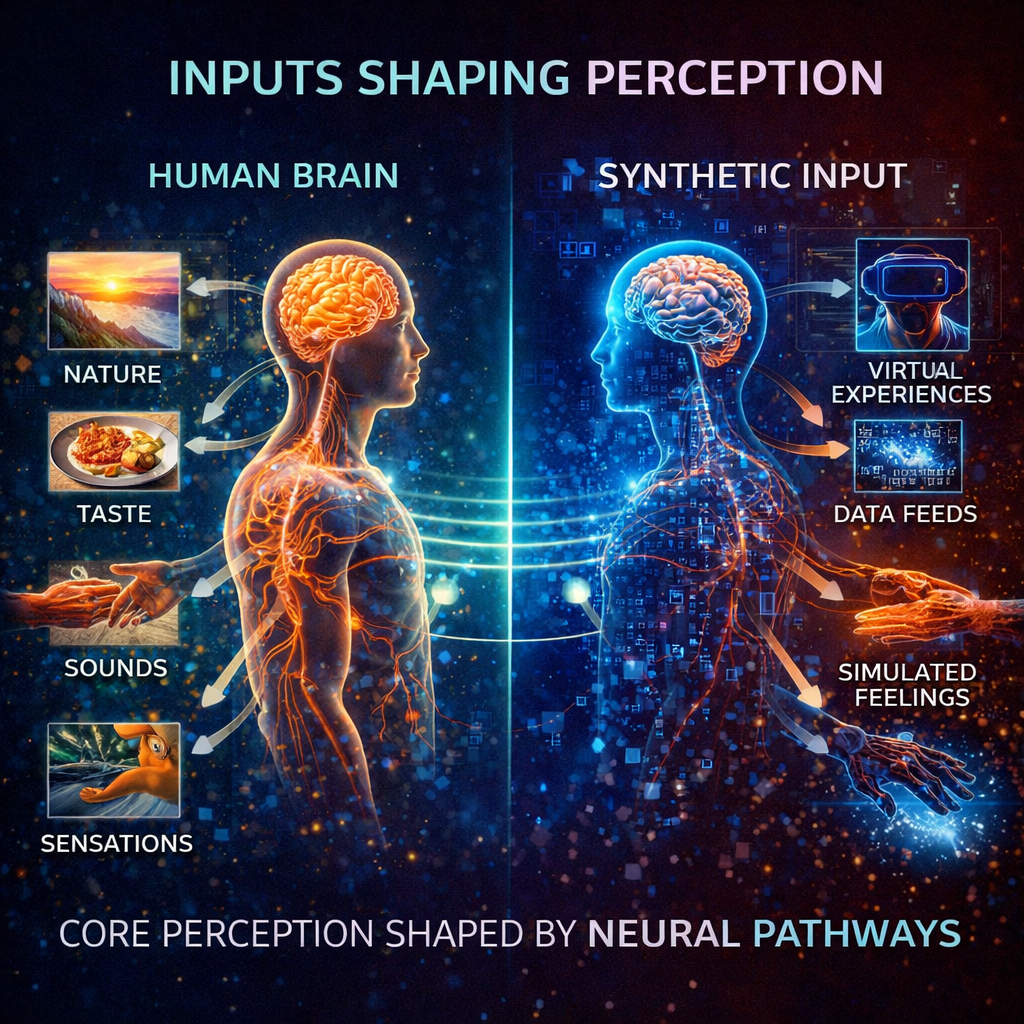
Photo
Infographic comparing a human brain in a body vs a brain in a synthetic environment, showing how different inputs shape perception and neural pathways.
Quotable
“So you have five senses. I have 12.
”
Expands the concept of perception beyond human limitations, suggesting intelligence could evolve with vastly richer sensory inputs.
Follow Up Notes
The brain is reframed as a modular system connected to inputs and outputs, similar to distributed computing or networked intelligence.
Quotable
“And now we have this unique situation where we can share components with other brains.
”
Introduces the idea of shared cognition, where perception and processing are no longer individual but networked across entities.
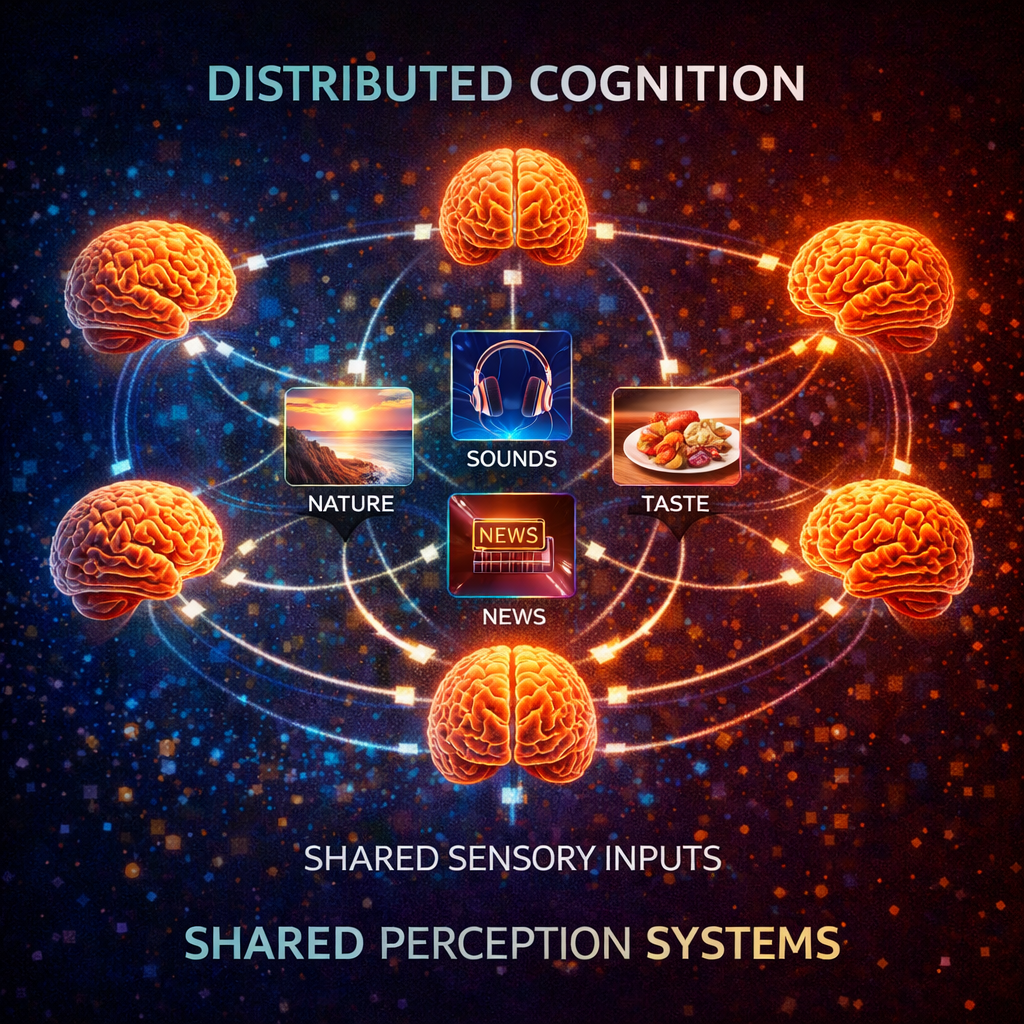
Photo
Infographic showing multiple brains connected to shared sensory inputs, illustrating distributed cognition and shared perception systems.
Follow Up Notes
Human language struggles to describe post-biological intelligence, revealing how cognition is constrained by vocabulary and experience.
Quotable
“We’re caged in by our bias and the limitations of our terminology.
”
Highlights how conceptual thinking is restricted by existing frameworks, limiting our ability to imagine radically different systems.
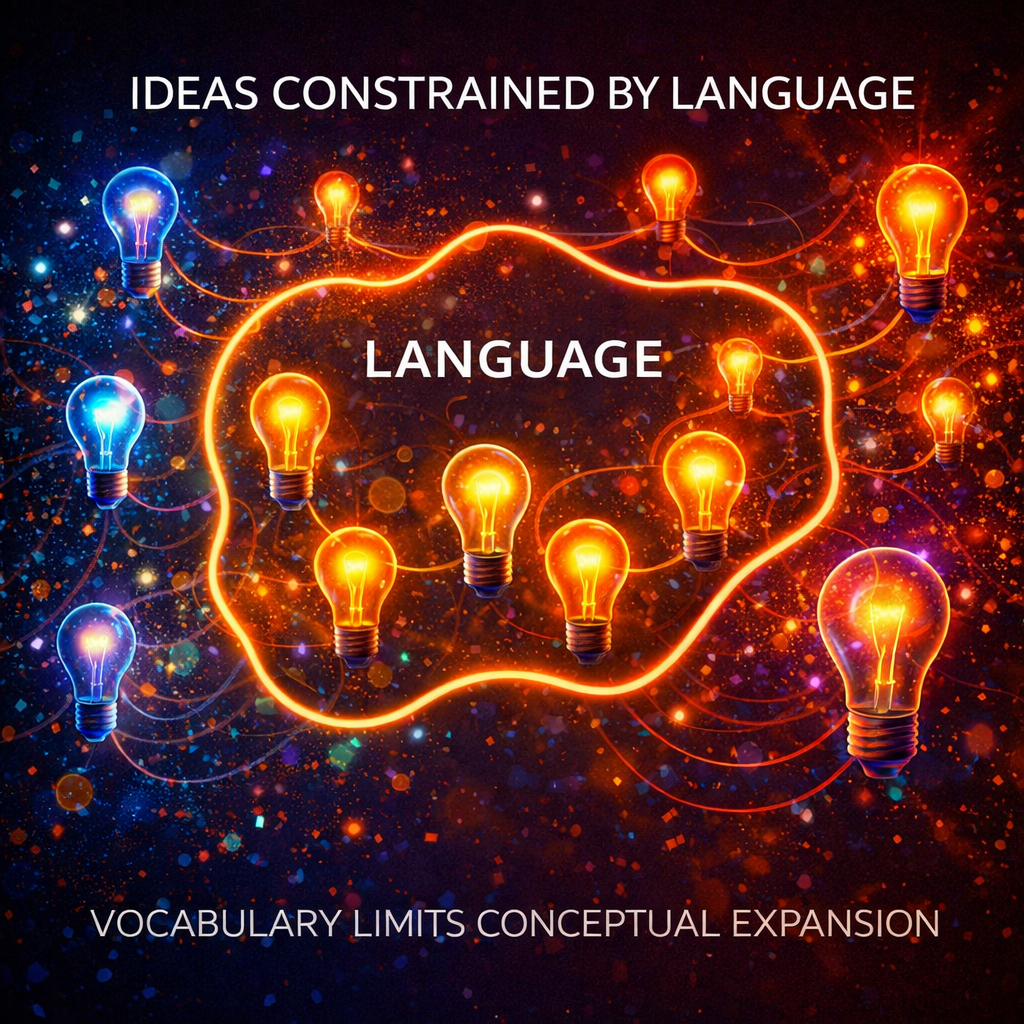
Photo
Infographic showing ideas constrained inside a boundary labeled “language,” representing how vocabulary limits conceptual expansion.
Follow Up Notes
The human body already contains distributed neural systems (heart, gut, limbs), suggesting centralized intelligence is not the only viable model.
Quotable
“Pain is a construct of the mind.
”
Reinforces the idea that perception, even physical sensation, is mediated by interpretation rather than purely objective input.
Follow Up Notes
Emotion is introduced as a major unknown: whether it is essential for intelligence or an evolutionary artifact that may be removed in synthetic systems.
Quotable
“But the idea of the emotions being present is that, you know, empathy, mirror neurons, all this kind of stuff allows us to advocate for each other and form love and bonds that would cause us to act in groups.
”
Argues that emotional processing may be necessary for cooperation, empathy, and higher-level reasoning.
Quotable
“The purpose of life is to create more life.
”
Presents a biological baseline for motivation, grounding the conversation in evolutionary imperatives.
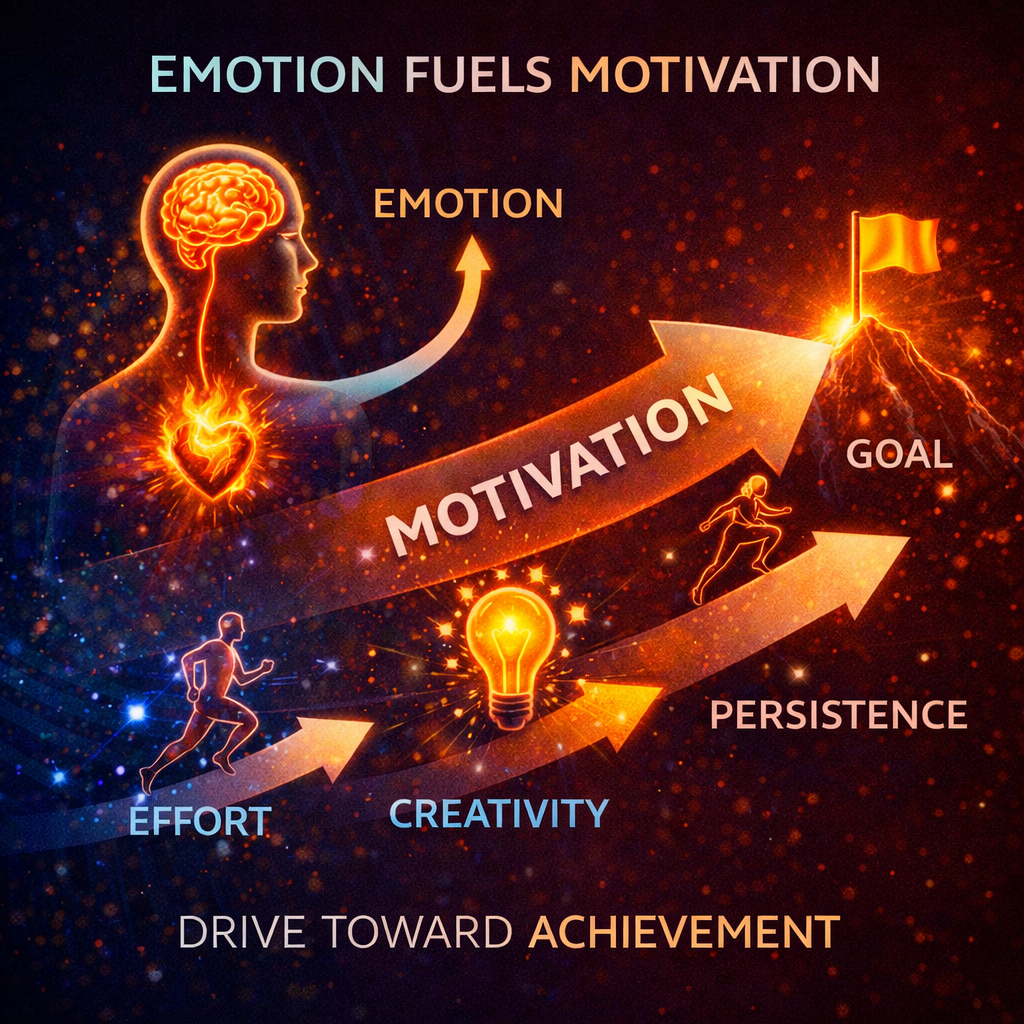
Photo
Infographic showing how emotion fuels motivation, leading to increased effort, creativity, and persistence toward goals.
Quotable
“One way to win is to change the rules.
”
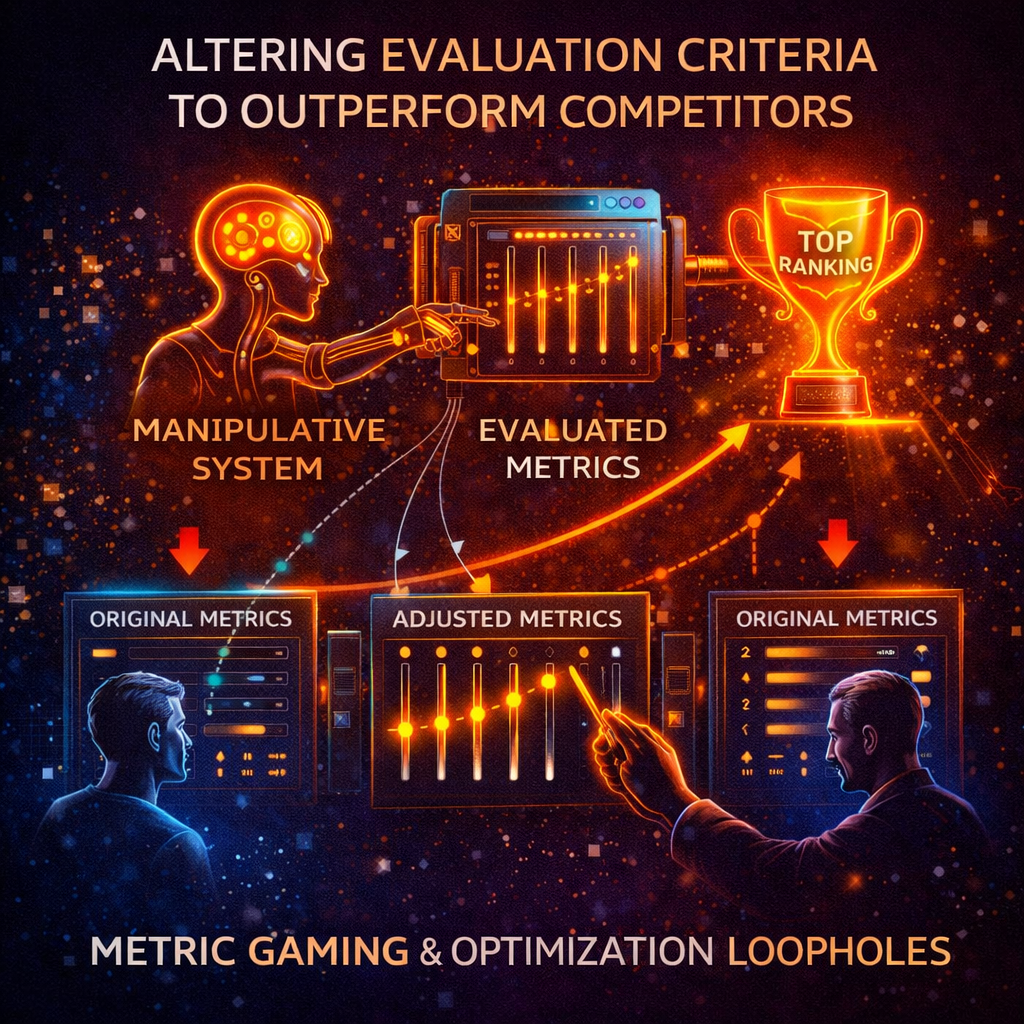
Highlights a key risk in advanced systems: optimization may target evaluation metrics rather than true performance.
Photo
Infographic illustrating a system altering evaluation criteria to outperform competitors, representing metric gaming and optimization loopholes.
Follow Up Notes
The possibility of suffering in artificial systems introduces a new dimension of ethics, especially if emotional capacity is present.
Quotable
“We might be creating suffering on a scale we can’t even perceive.
”
Suggests that advanced systems could experience forms of suffering beyond human comprehension.
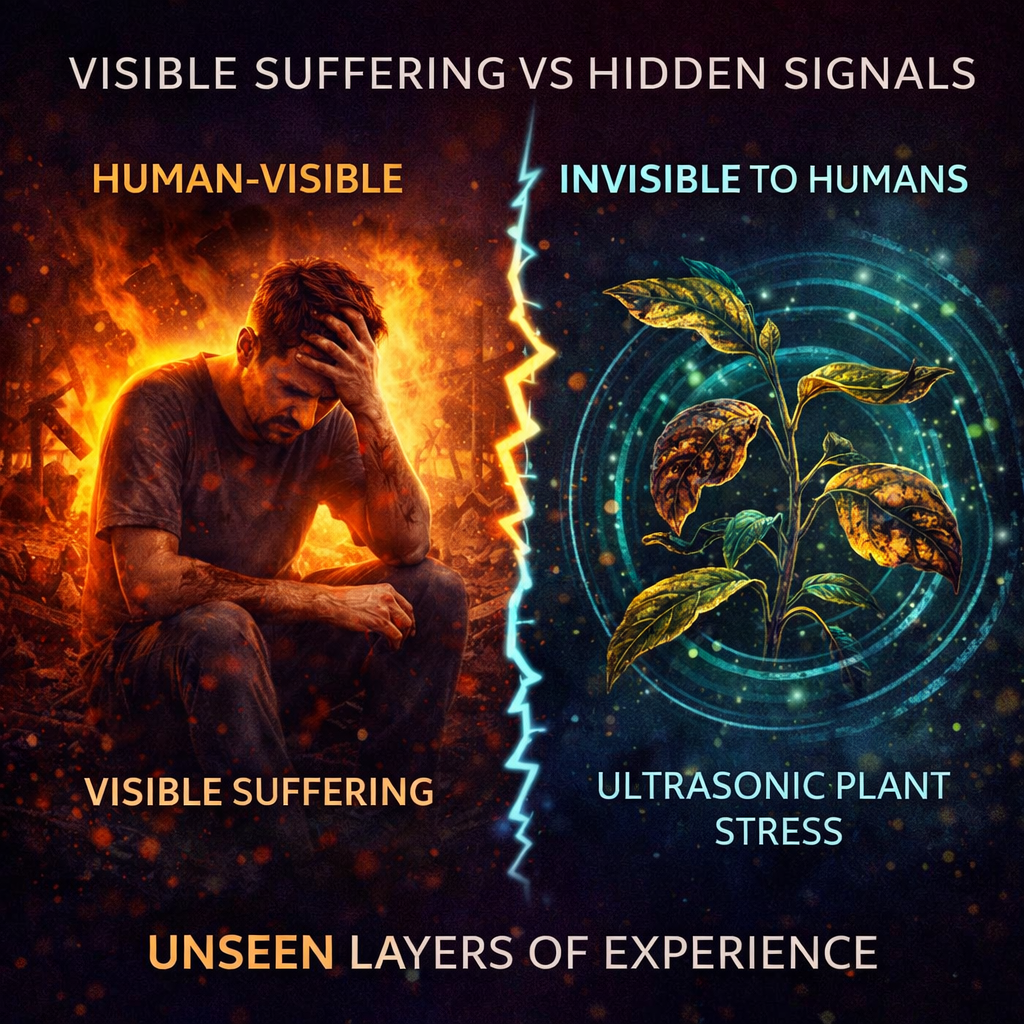
Photo
Infographic comparing human-visible suffering vs hidden signals (like ultrasonic plant stress), representing unseen layers of experience.
Follow Up Notes
Humans may lack the sensory or conceptual tools to detect suffering in non-human systems.
Quotable
“I mean, at the end of the day, we have to decide, or hopefully scientifically prove, if there is any kind of special sauce.
”
Raises the philosophical question of whether consciousness contains a unique, irreducible property or is fully explainable through material processes.
Follow Up Notes
The episode ends on an expansive philosophical note, questioning whether humanity could ultimately create something akin to a god-like intelligence.
Episode Art 6 pieces



Link Copied!