Extra content pops up along the way.
Trailheads
Good places to start walking.Chapters
September 20, 2022
Cloud City - A Cultural Revolution
Double-tap the sides to skip 15 seconds
Trailheads
Places to startArtwork explorations
The other takes the image generator gave us, and the prompts behind each piece.
Chapters
Settings
Cloud City - A Cultural Revolution
With Kris Tyte & Sean Snodgrass
In this captivating episode the hosts begin with an intriguing question: Would you consider moving to a floating city in the clouds of Venus? They then explore a variety of fascinating topics, including energy production, the cult-like culture in America, and the spread of misinformation. The hosts discuss what it means to build a better society and the dangers of online radicalization. This episode is filled with metaphors, personal struggles, and a commitment to being unapologetically honest.
Share
Detour
Episode description
In this captivating episode the hosts begin with an intriguing question: Would you consider moving to a floating city in the clouds of Venus? They then explore a variety of fascinating topics, including energy production, the cult-like culture in America, and the spread of misinformation. The hosts discuss what it means to build a better society and the dangers of online radicalization. This episode is filled with metaphors, personal struggles, and a commitment to being unapologetically honest.
Chapters
Show notes


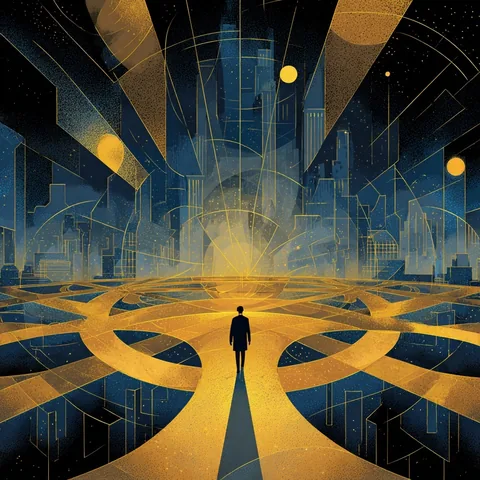
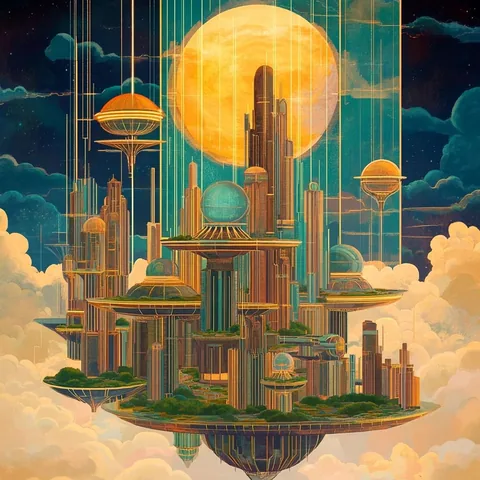
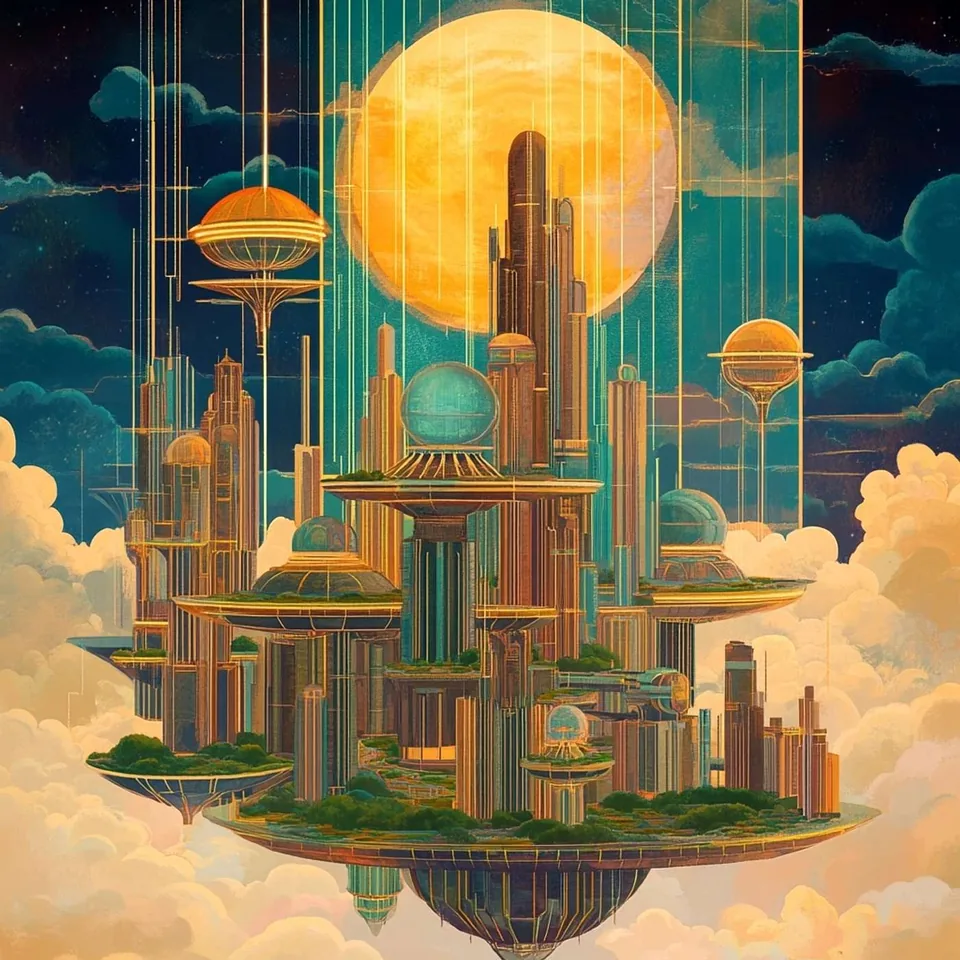
Episode Art 15 pieces
Full Transcript
They needed 16 physical servers to do things, but must cost a fortune at the end of the day. I'm quite sure. But yeah, our team acquired 1616 physical servers for some reason, and they're going to use them for something. I'm not privy to that at this point. I'm not sure why, but they were like, hey, get access to those.
So, and they were like, we're not sure how to get access. I was like, well, what data center are they in there? Like an ox more. I was like, okay, I'll work for the guys in Oxmoor. So if there was a group of people leaving for Venus to live in a cloud city in the upper atmosphere, would you go?
And yet often go. Would you go? Okay, I'm gonna live in a cloud city. Caustic atmosphere on a foreign planet. Well, up in the upper atmosphere, it's, you know, you can. You can have it. Not in conflict. Okay. All right. All right, so we're looking at Cloud City. It's like floating on a massive division. Tested. Is this dirigible?
Oh, no, no, no, don't worry about that aspect of it. It's good. Like, you're you're you're not gonna. You're not going die. No. I have absolute place in this dirigible. Yeah. Like you're, you're, you know, the life expectancy is 85 years or so. Oh, yeah. It's it's better than life expectancy here in the States. Right. Okay. So I would be happy I'm going to be healthy.
I'm going to have. Okay. All right, all right. Food choices. Yeah. That's my question. It's a it's a it's a floating city. Right. So there's credible amounts of food being grown, you know, locally. Right there. All right, all right. You don't have to worry about any of the dregs of society. Like you don't have to worry about.
Yeah. I just didn't want to be the same thing. That was going to be my same variety as we have here. All right. Great, great. And go get a smash burger or something. Yeah. More synthetic meats than great lab drones. Good. But, lab grown folly means less cholesterol. Lower triglycerides. Well, remember the higher life expectancy, right? So they have a lot of things worked out.
But without getting into those details, the question is like, do you go, well, those are the kind of details that to me know, like, so everything is comparable, right? Okay. So you don't look like the only caveat is that it's a one way ticket. Oh yeah. Heavily. What would my job be? I wonder?
Or your choice. Morning. How you doing? Possibly no job. All right. Spend your days trailing with your art. Arts and crafts. All right. Desires. If I get the explorer what I read like. And, yeah, there's some kind of universal basic income or something really universal because it's, you know, in fucking Venus. Man. But I don't know.
I don't think I'd go because of all the people I'd miss. Oh, okay. So. So a big dependency would be on the social. Yeah. Yes. Okay. Ultimately, I'm going to be real here. I wouldn't contribute heavily to the research. Why not? I don't have the shops. I don't have the skills. I don't have the training in, all of the things they're going to be exploring and cataloging.
Okay. I could be a sysadmin, or I could work my way into some kind of data science. Or low level, probably, but that'd be about all I could do. Yeah. So in America or in the, you know, living in the on earth, you have the earth at your disposal. Like, not not practically, but but I guess potentially. Yeah, sure.
Yeah. It's like you can go anywhere on the planet. In theory. Yep. Whereas in this kind of Venus scenario, you'd be limited to the size of the city. They, you know, unless they sky forms the whole entire planet. Yeah. Yeah. Where there was, like, comparable civilization as there is in here. Right. Right. But there's, like, you can go on vacation to another cloud City.
Yeah. And you'd have you have to have, like, this weird, kind of basically reproducing Earth on another planet, you know, type scenario. And, Yeah. So, so I guess, like, the elevated system would be a connected. You know, you'd have trees and grass and you'd have a natural environment above the clouds, if you will. Right. So kind of artificial gravity.
Oh, you know, thinking about it because, from a material science perspective, you know, it's like, where would you get all this stuff? Right. Like, well, let's not forget that matter is is really energy condensed? Right. Okay. So if we do unlock practice fusion code, basically we can create elements. Yeah. With those elements that we create are going to have a certain radioactivity to them.
Right. Which is the bombard. So we figure out that part. Yeah. So that's the big problem we'd have to crack after we crack. You know that. Because when we bombard atoms, you create heavier elements there. Reality to actors. Yeah. I don't think people, like, have a have a mind for what's coming as far as, like energy production. Because if we do crack the code on season, it's a limitless.
Yeah. And it's crazy like, I mean, eventually we'll have like, basically desktop size. Power that, you know, or even, you know, like a flashlight. That's fusion power to visually, you know. Yeah. And just the idea of being able to turn lead into gold finally, like the philosopher's Stone. I know. Right. The with the alchemists were going for for me on upon Ian which science is based on basically their ministrations and attempts is what, you know, the basic research that we built upon to create the principles of our world.
Yeah. And so what? What does that do to like opportunities for development, developing new things. Because right now there's a cost barrier associated with most high tech development. Like you can't just build things out of a goal, you know, at certain sizes because gold is so fucking expensive. Right. Right. Because there's a mining process. There's a scarcity situation.
Yeah. Yeah. Well, when you lift that, and any element becomes accessible in quantities at low, very low cost, relatively speaking, you've just cracked that whole code. Right. So, like, what if you wanted to make a golf club out of fear? Gold? Not the best performing metal, but. No, but you do it. But you could. You could experiment with the idea if you had.
And if gold was disposable, like this pipeline where it was basically like, okay, I have a room size even or, you know, maybe not desktop size, but I have a room size fusion reactor and I have a pipeline, almost like a 3D printer, where I'm putting in specifications to create either an alloy or an element itself. Exactly. Any material that you want, basically just through your print it.
Yep. That's actually I mean, that that doesn't just change the game. That changes the whole idea. Like, yeah, I mean, it it brings manufacturing full fucking circle. The means of production are absolutely, completely and totally in the hands of everyone. And is this completely break all traditional forms of capitalism and exploitation and. Oh, 100% a replicator of any kind would even a crappy one, right?
So basically, the idea of being able to create endless amounts of commodity material for little to no commodities, basically there's no need to trade them. There's no need to hoard them for doing them. Monitor them. So what becomes in the future the scarce element, the scarce thing. Wow. So if energy and materials are flowing freely to like basically everybody in the world.
Yeah. So you can produce endless amounts of shelters and any configuration that you want. But I mean, there's still be like, you know, you've seen these like 3D printed houses and stuff. So that technology let's say would, would, would, would marry up and get sophisticated as well. So basically any dwelling that you wanted to create. So I guess you'd still have land possession.
Yes. Yes. But we're, we're now have the energy to, to go vertical and, you know, below the ground and have all these materials that are disposal. Yeah. We, you end up with.
You know maybe I'm doing I'm, we're definitely putting this guy here. But what I'm thinking about is basically a power unit you can bring to all these different equipment. That, you know, you can say, you know, all these traditionally.
Petroleum powered things we've got we've got this conversion kit, you know, and so we, you know, you get old construction equipment, you power it with this power block. Boom boom boom boom boom boom boom. And like you said you can you can go into the earth can build the bugs. You can do whatever you need to as long as you have the construction know how.
So the elephant in the room I guess ends up being the, the, the future reality is trying to find some form of utility for mankind. Well, I don't think that's a problem. Really? No. Because, okay, every generation we've wanted to create, you know, okay. You want you want your kids to have a little more freedom and leisure than you.
Right. You would assume. Yeah. Well, that's that's really tricky because that's kind of nebulous, right? Like. Right. Well, I mean, I mean, it's freedom to explore, develop them selves, develop the world around them, you know, those sort of things other than being those to the grindstone working for the mayor, you want you want your kids to have a latitude to explore and develop.
Yeah, yeah. Notice of the grindstone. Working for the man is, you know, in many cases defining, like. So the person that puts their nose to the grindstone, works for the man, has pride in the fact that they're producing, that they're doing something. They do, they do. They're working. But you're developing strong kids with a who have a.
What do you call those Montessori type learning skills? The the directed learning. Yeah. You know, you're you're developing people who have a healthy curiosity and a good base to explore it. So you're not developing pieces of shit that aren't curious and don't want to learn and don't want to build themselves. Yeah. Well, it's right now is is really deterministic.
I've been I've been talking to me about that. I was like, right, right now it's like the the shaping moment in her life. You know, she's 18 now. Oh yeah. She's going to pick he's going to decide ultimately the trajectory of her life in the next couple of years. Yes. And she's locked into that bad, phase right now that a lot of people at that age are in is like, what am I going to do?
Right self. Right. And, you know, she keeps, keeps going into this idea about applying herself to humanity. Sure. Which is 100%. I'm all for it. And, but you have to develop yourself or you apply yourself. True. And and, she wants to get this sustainable agriculture. And I said, well, you start having during your fingernails. Yep.
You gotta do. Yeah. And, so we're in that phase right now. We'll see how that that goes, how much she wants to do versus right. She's Morrison going getting her nails done than getting dirt on her nails. Right. Yep yep. And you know that's that's where the progress is. And that's where the edge is, is people who are just printing and thinking, but people who are doing, practicing, exploring the intersections of these different sciences and, and technologies, the the people who are familiar with the state of the art materials science for their particular field, the people who are, you know, who have done a survey of things because they tried everything.
Yeah, there's a there's a certain there's a certain like social fallout of problems being massively solved. So like, all of a sudden cancer solved all of a sudden, you know, major health implications are solved, like nanobots and, you know, technologies just solves problems. So the social strata, the the frameworks that we're in, there's self-healing. I mean, this shits happened before.
You know, this isn't the first time that Major industries is falling away because of technology. Right. But what I'm afraid of is a is a really rapid cascade effect. So like as these technologies emerge, they amplify each other. So they they increase the rate of change, progress and enhancement in every industry. So it's cross feeding up. What was said handheld.
That scared me. Oh, so so there's a series of, Yeah. Morning. Good morning. There's a series of them. What do you mean? You can hear the smell? That was the dog. Oh, I thought that they had a little alarm. Not a fucking little squeaky dog. Oh. You're funny. It was that fucking poor legged squeaky toy. Yeah. So, anyway, you know, my.
It's not a fear, but my, like, I guess a better word for it. My concern for massive, really rapid change in every aspect of society can be very detrimental because people aren't really good with change. You know, people resist change in every front. Right? And so like, you know, we're creatures by we're habitual features by nature. I guess I'm thinking people are going to find something to do.
And if there's leisure and their support for that leisure or there's, you know, support for finding other things to do, like basic income and other social safety nets, to give people time to safely consider what they want to do, just like your kids. Considering then what? Buying some where people are probably more likely to gravitate to things they enjoy and things that they're they find the feeling.
And when you engage in passionate behavior like that, you're there's going to be an upshot. There's going to be an amplification. There's going to be success. Yeah. So that'll have to be the that'll have to become the reality. It's going to be successful. And I guess that's the reality that we want to project. Because again expectations runs reality.
Right. So we want to hope that that would be how people react it. And we want to prepare. We would not just want to hope, but we want to prepare like you want your kid to prepare. We want to say, look, this is the eventuality that we'd like to realize. So what can we do? What can we lay, what foundations can we put in place, what guardrails can we create to push us in that direction?
Yeah, I agree with all that. But the problem is that the, the, the, the rapid rate of change won't even allow someone to predict that meta. So not meta like Facebook meta. But I mean like the meta on where things are going. Well, we don't need to predict what the where the endpoint is, but we do need to predict we do need to do things like prepare for.
We assume one of the features of the endpoint is going to be nothing to do is what you basically said. So what we do is we prepare our social safety nets so people are supported. Yeah, that's what I'm saying. But if you don't know where the road is or what the road even looks like, you don't know where to put the guardrails.
But we can. We haven't even supported people. So let's work on the support piece that we should totally have that you're right, that like that should be the biggest social revolution that this planet has seen should be happening right now. Yeah. Like taking care of each other. Yeah. So let's take care of everyone. And then maybe as we're taking care of everyone and we're more inclusive with our ideation and our and that whole piece, maybe someone will bring forth and it'll penetrate where things are kind of headed.
Yeah, that's a good point, Mani. So, that's the thing is, like, it's not really worried about people, you know, not having jobs or not knowing what to do with their time or unguided, undirected. It's more about, being directed in the wrong direction. So right now, in 2022, you can see this like state of the world, large, large, large, large clusters of people.
And we discussed this many times, but it's so German because it's reality is there's so many people with such terribly dysfunctional disbelief, you know, misbelief about reality, which is driving behavior, action, you know, and all these decisions across their entire lives, right, which you end up with at the end of the day is, a tremendously large number of people guided, but just in the wrong direction.
Misguided. Right. And so they're their human energy is going into things that have no impact or matter or possibly massively negative impacts. Yeah. You know, and so there's tremendous amounts of, power in shaping the minds of people. Right. Like, well, I mean, the, the, the shining example would be Trump, like, look what he's done with so many millions of people that are his supporters.
Yeah, he's now tying himself in with this Q stuff. Right. You might have seen that headline. I haven't, but I'm sure that's what he's doing. Well, so in a desperate plea to amplify his power because it's clearly waning. Right. And he attaches himself to a clearly waning ideology. Cool. But but the the waning ideology still has the most powerful, still has way in power.
Yeah, it has the most powerful impact on the people that that believe the stuff because it's so motivating. Right. Like they're even tying it into Trump is is the new Christ. So that's why I feel like established religions just might be the lesser evil than the ones we go ahead and make up. Yeah, that's exactly what I was saying the other day is like, at least we know what we can somewhat expect, and we can kind of contain the damage where it comes to, you know?
Yeah, I mean, there's no there's no limit to the number of nutjobs you can hear. You find, you know, online social media platforms or whatever, you know, talking about these ideas. And a majority of the traffic that's happening over Facebook and social media is all in direct message form. So it's what it's not what you see in the post.
It's what people are talking about. Direct messaging. Right. So majority of the traffic that's on Facebook and all these other social media or less private, yeah, it's cable talking to each other. And the bulk majority of that traffic, from what I understand, is that it's loopback a community of that traffic, from what I understand is, that's in this domain is where all the crazy shit is happening.
Okay. It's where people and then that's that's funneling people off to these other alt sites. All social. My favorite. Yeah. There you go. We're sponsored by Trump's true socialist. Yes. See you guys. That today's sponsor.
I would get some money up front. Right. Exactly. You'd make sure you were paid before you uttered a single syllable in support. Yes. And I mean not not Jack. Not promise, not contract the motherfucking bank account before we're saying a damn word. I don't even, you know, I don't even know if I trust that. I think I want in my hands.
Yeah, I need a suitcase of cash delivered, and, you know, like those little pens that you. They run across the bills to make sure they're real. Every bill would have to go through, you know? Okay. So they'd have to hire someone to stripe the bills with that Kermit. Correct. I'm not doing it. And then maybe even a little bit more scrutiny.
Like, actually someone that's like currency expert like, that could put it in a special machine and get markings for sure. Right? It would validate all the security features. I want every bill. Micro printing verified, Yeah, yeah. Then then then we'll do it. Then we'll talk about today's sponsor. It's true. Yeah. And it would have to be an astronomical sum of money.
Yeah. Like I will sell my soul. But it is a huge number that is not going to be worth it for you. Yeah. Yeah. Possibly pedestrian has 50,000 listeners. And so we have no, we have we, we demand no less than, oh, a dollar per listener. No no no no no no per minute. No no no no no no I'm having astronomical.
Oh I'm talking. This motherfucker is buying both of us for a billion apiece. Oh okay. I think I'm on board. Right? I mean, wouldn't you sell your soul for $1 billion? I'm. It's all for, like, nothing. Because, you know, I'll. I'll let anyone ether. I'm talking about your metaphorical soul, your your principles, the instance of yourself, metaphorical. So I'm talking about the very essence of you.
All your principles, all your ideas, all your most volunteered, and how high held trees. Sure. Sell them. Yeah, but I sell them. But only just in the hood fashion, because that'd be turning around and spitting that money into a bunch of really awesome useful. Oh hell yeah, I'd I'd use that billion dollars to combat him immediately. Like the next day.
Yeah, he offset the damage, you know, of the selling of this. Better get shut down. And I would pursue all my ideas of annihilating the. All right. Yeah. Just start up a new podcast. Yeah, it would. The billing with the part a portion of the billion dollars. Right. You know, to easier. And I started up with someone smarter than me.
More like someone smarter than me would be talking.
I thought that was supposed to be me. I mean, I'm not about replacing myself. You can still be on it.
Anyway. So, this cloud CD. Idea, right? Yeah. Did he have taking any grimy money from True Social is just too far. That's too far of a stretch. Like living in a cloud in Venus is more practically real than taking alien fees from. Yeah, taking grime money from true social. Because, like, you know, living in the Cloud City and Venus has, a more positive appetite than ever, possibly anything coming out of social ever, kid.
Right? Yeah. You have to tip your hats in the name. I mean, you have you you do. He's really good at naming things. He really is. You think he named it? Well, either that or whoever has been feeding him names for the last. Yeah, six years. But they're really good at coming up with emotionally charged names that resonate with their base.
Yeah, the fact that they have a basis, the real remarkable it's it's upsetting. It's very much upsetting it. So it makes me just upset that you that they have a base. So the two power vacuums in our society at large, which can really disrupt the utility of our society going forward, is the misinformation. And who controls the spice of information, you know, basically idea like the flow of information and, the power of the misinformation.
Therein is the one power vacuum, for sure, in my opinion. And the other is the social media warfare. Like who controls the, the, the, the, the mind share of the common person. So the thoughts and the and the, the direction of the effort. So those are the two control points in the future of the possible. The awesome.
Awesome. This will. Yes. Oh that's cool. Where somebody had to draw a penis on it. Awesome. Yes. Who knows what what you can do with a Sharpie? Sites redirect hurricanes. But. So, these two major thrusts of are the future are like, we're we're the power brokers of the future are going to lie. Right. So that's why like Apple, Google, Microsoft, you know, etc. kind of right now, they kind of own the future because they they own the data.
Well, they own the data and they have some of the biggest war chest. Oh yeah. And that's the, that's the thing. So they have the data and they have the money to be able to make mistakes, make pivots and enter new industries. Yeah. And so they have they, they have their, they're kind of hands on the reins of those two.
You know, those two, those two angles of power, like I'm mentioning the control of belief through information dissemination. Yeah. Which spigot of information you have people. It's supposed to. Right, right. And then the attention and the NBC for one or any net news LRA I'm just saying Microsoft you mentioning specifically. Yeah. Like because they understand that having their own news outlet is powerful.
Yes. You know well and all the news the big the big business of big news is all controlled by corporate interests anyway. Well yes, but it's not necessarily controlled by tech minded business interests like MSNBC overtly is. Yeah, yeah. It's funny because humans have the ability to abstract things so easily. Like, we can we can forget the humanity so fast by abstracting a concept like the biggest one is, is, is God right?
But so we can we can forego all of our human interests and all of our humanity, even our compassion, our empathy. All these things can be like really rapidly abated belief and God that, you know, okay, that is one abstraction that hides details and lets people easily manage their lives. But it might be the wrong abstraction. It might be hiding the wrong details.
It might be reducing your choice, your humanity, your ability to interact with things and also have free agency. Right? Well, I believe that's the truth. Yeah, but also, I believe that a person that's obsessed with material objects, consumerism, having that as your guiding principle, you know, if you will, like your spiritual guide is also going to lead you wanting.
Yeah. You know, and it's going to pollute your mind with misinformation and all this kind of stuff. Well, my my core point here is like how easily human beings are able to be abstracted away from their humanity very rapidly on a, on a either a philosophical or something tangible. Right. So, you know, even even even down to your core, what you're doing with your life type thing, like so something every day is motivating people to get up out of bed and do and you can say, yeah, they need a paycheck to survive.
You know, of course that's a huge reality. Yeah. But something is still overall in the big picture. It is highly individual. It's yeah. It's you know, but it has to be predicated on belief. Yeah. As belief, on faith, on obligations sometimes. Sure, sure. You know, like why we're just going to say in his example, I mean, obligation to the dog.
That's one of the reasons dudes up in the spark today. Yeah, I think that was a lady. A lady. Yeah, whatever. But the person. Yes. Up in the park today. Because at 630 in the morning, because of their it's obligation. That's dedication that, you know. Yeah. So okay, our podcast, for example. Well, our, our primary functionality here is to like, move our body so we don't die, right?
Right. And this podcast motivates us to do it. Right. Right. Gives us a yeah. It gives us an added and leaves us by the intellectual nose to do something. Yeah. No, they right. The secondary time commitment that's going into it is massive, but that's the whole story. Yeah. But anyway, the core idea that I'm going with here is like the belief that beliefs that people end up subscribing to at the end of the day, pretty much one for one translates into their motivational, aspect of their life.
Right? So if you have any kind of control over that and like parents, for example, have massive control over the guidance and direction of the shoulder. Okay, right. But don't think for a second the corporation doesn't have massive influence over its employee. Yeah, right. They're like literally controlling the access to even food like the corporation at the end of the day that you're employed with.
Yes, you can go to a different tit. You know, there's plenty of different teats that you can go suckle from, but you're still suckling from a tee, right? At the end of the day, that's still your function is a sucker. And thankfully, I have a job that doesn't pay me in company scrip. You know, I have a job that doesn't make me shop the company store.
Yeah, you don't have to use the little pen to check if the bills are real. Yeah, yeah. You're, I have at least some free agency as to what I buy, but, yeah, I'm suckling its corporate piece. Absolutely. But you're. But you're also, tipping your hat to this ideology from the past. Like where the corporation had total dominion over people.
Yes. Where where they had your house. They they had your little millhouse, you know, and you had that at the pleasure of the company you worked for. Yeah. And you worked and you shopped at the company store and. ET cetera, etc.. Right. It's like the military soldiers still shopping at the. Yeah. You know, for older stuff. Yeah, sure.
That's fine. Well, in a lot of cases, at least in the situation. A lot of things are subsidized. So. Right. They're subsidized or cheaper. They're decent. At least it was a better situation than whatever we were talking about. But it's the mills, textile mills and such as that. So what's ironic is that when you if you were to abstract this out and say, okay, let's, let's create a new version of this, which is like the better than anything that's ever been created, like the most utopian derivative of this that the world has ever seen.
Right? So our Cloud City and Venus, the way that the society is structured, okay. Because we have an opportunity version turf to make a brand new architecture. And we're doing a greenfield societal deployment. Great. Yes. That and you're going about architecting that and you start to tell people some of your plans. Well, the very first thing that everyone, almost everyone does intuitively, a lot of people.
Yeah, there is, isn't there. So, so intuitively, like what most people I think jump to is cult. It's cult. It's a cult. And I think that that probably comes from an intuition that there that they have that maybe isn't so conscious, but it's still an intuitive understanding that they're already in one. And so the cult that the cult that we're in has parameters that were, you know, one, the double, you know, versus the W.
Yes, yes. Yeah. Exactly. Great way to say it. And so the general parameters of society, which is the cult of which we're all subscribed through our culture. Cult culture. Right. Yeah. The general, kind of net aspect of, of who we are by identity through our culture. Right? How we dress, how we talk, how we interact and the, the choices that we feel we cling to that offer our individuality and ability to explore that.
Yeah. So this feeling, this intuitive understanding that there's a million little strings attached to you and they're all moving out in various directions. Right. And very, very, very seldomly, do you actually decide to put a certain string in that pulls you in a dream about that? Oh, really? Yeah. So it was a couple of years ago, but the dream was basically I was in outside in one of those classes, similar to like, you know, those outside workout classes like Camp Gladiator or something like that.
Yeah. And like, I was basically being told by the instructor what to do. We were all doing the exact same movements, but I was like, cussing and screaming and yelling the whole time, like, I'm not going to fucking do this. But you have to be like, you have these strings making you do it kind of. I was doing it.
Yeah, nice, I like that. Yeah, yeah. So there's a there's a dream that speaks to this intuitive understanding of how social pressures really work on mine. Right. Yep. And on the body. So in general. Right. It's like I'm in a cult. As it stands right now, it's just the cult of American culture. Well, yeah. And the thing is, you know.
Sure. So if you want to spin up something new, people have been beat up so much they automatically distrust. Well yes. Absolutely. Going on. Well, okay. It's it's a lot easier to automatically write it off and to deal with the cognitive dissonance and the need to explore and the outlay of energy to actually look at it, to assess it so accurately.
So are we all mostly the majority of us. Like unless you're in the 1% or something, right? Are the majority of us just in a battered relationship? I mean, yeah, you could argue we have societal Stockholm syndrome. Yeah. That's what I'm getting at. Is are we really just is that, this cult that we are a part of just by default, right.
That, that that clearly the metrics are in is abusing the shit out of us collectively to operate in this modern world, we have to be a member of some sort of culture, right? Right. Because we can't do it on our own. That's what I'm challenging that part. That's the part I'm showing. Like one particular family would have a really hard road to hoe if they were to try to support themselves from the ground up, but not defend on anything else.
Well, I don't know if that's necessarily how we define it, but we start saying look like, let's just take out a sheet of paper and list out the priorities that we have for our for our lives. Right. So I think like the obviously the top priority is that you need to be healthy physically and mentally have to be without your health.
You have nothing. Yeah, right. And so you say like top priority on the list health. Well then you could say, well now maybe the top priority above that is security because you'd be as healthy as you want if someone comes and just stabs you. Jeff. Right. Okay. Okay. So you can say security is the most paramount. All right.
Let's I want to talk about all the types of security, not just personal security as in safety. Sure. Financial and food security. Yes. Yeah. Financial safety. Well so health when you drill into that would be a big component. That would be would be food. Yours. You eat. Right. Right. And so basically if you were to take out a blank sheet of paper and start to architect the priorities of a society, of a, of a cult that you're trying to create, you might call it a call.
Everyone's gonna call it clean. You're going to want to start it with Abraham Maslow. Zaki of needs. You're to want to make sure that everybody has layers of support to create those sets of needs. Yeah. So there there's kind of this interface. There's going to be an interface between this community and the rest of the world. Yeah. Right.
And so that interface like how do you best prepare people to interact in that interface? Is it would be a huge question, but but not when we're getting started here. Not the top. No. The top priority is providing those needs so that people can function within whatever framework you create in the framework is outgrowth of how securely you can provide those basic needs for the people who are within your culture.
Yeah. So you solve on a minimum scale, you solve, you know, all all the basic needs food, clothing, shelter, water, etc., right? You solve that, you solve them. Ironclad. Yeah. And now you have to get into, like the same thing when you drill down, like you see it, say, what are the big, huge elephant in the room problems for for mainstream society, for the cult of Americanism.
Right. What are the actual, killing, the killing fields associated with adopting that culture? Right. How do we get people out of those killing fields, you know, and get them into a new cult that's progressive and and for humanity and this new cult, I feel it has to be one thing. One feature we do not have in the American culture is.
We have, at least from my perspective, a reducing degree of autonomy and latitude. So rather than make every damn choice for the people that in your new cult are, you need to give them the latitude to explore. You need to have faith in them. No, that's true, Sean, but the basic reality, the fact is that the culture dictates an overwhelming majority of the choices.
Well, 100%. But I don't think you need to define every little detail. I think you need greater autonomy, greater face, greater. You know, you need to be a humanist to the highest degree here. What can how can we open up the I think, the driving force to be how can we open up the potential of humanity within the constraints of this new greenfield societal deployment?
Yeah. And and clearly the philosophical underpinnings all this has to be faith in humanity. I agree with you 100% there and a positive aspect, a belief in human nature and that that people are good by nature. Yeah, right. Like like, not just learning, not not just like a, faith based system, but an actual empirical measure.
Holy. Right. Right, right. And we're going to want something that. So we've defined that though previously. Yeah. And we've also defined previously that what if we were able to make a social network which is what you're creating. You want to you want to provide people, you want to collect metrics and data, but you want to provide that to people.
Right? So yes, for for personal for personal and group enhancement. Yes. So that's another feature that we do not have ready access to in American culture. Right. Certain corporations have access to that information and are doing with it what they will. But it's a fragmented landscape of what data different places are collecting on you and the efficacy of that data and the utility of it.
Right. And they have the underlying, moneyed interests, capitalistic interests constantly influencing every decision. And so what we're really talking about here is you can't monitor something unless you or you can't improve something else. You can monitor it. And so if you can't measure it, you can't manage it. Yeah. So we're looking at ultimately so doing that. So from the health standpoint warning from from the health standpoint you can automatically right out of the gate start to get metrics on people's health and wellness.
Right. So you guys do with warning against and so you can start off with this kind of metrics on people's health and wellness okay. Like that's very measurable. You got BMI. You got right right in how to measure and catalog that. Yes. And then oh wow. Playing soccer I said money. That's fine. Yeah. Everybody's out in this poker today.
Tuesday is the day I guess. So you're gonna have some wet feet. Over there. I'll tell you what. Yep. They're gonna have fun. Yeah, I would take the wet foot to go play. What if they'd have me play? Right? I bet you have enough skill. They'd have me. So I opened my mouth and they wouldn't want me there.
How old is everybody? Over there? No idea. Someone just went down there which saw that garlic ass is wet. Oh, all wet fruit. Yeah. So, back to this kind of utopian model here, right? Is that the whole idea of the Cloud City? The reason I brought this conversation is because of this clean slate factor, this kind of, opportunity to start something new.
Yeah. Now we can say that our collection of experiences in our lifetime have a bias. You know, automatically built in subjective experience is a bias. Yeah. And so everyone brings their collective life experience, aka bias. Right. To the table. Now guess that goes back to what we were talking about before. You can't live and not have some sort of inherent bias.
Yeah, it just happens, right? It's created right. Right. And in many cases it's become dangerous really quickly. For example, you have this whole QAnon idea, right? Let's say. Right. Okay. Well, take that, take that funnel that into a system of beliefs and then evaluate what that person's fundamental ideology towards humanity is. For example, does the typical QAnon conspiracy theorist think that the typical American is good, is a good person?
I'm asking you the question, what do you think? So, like I would say, the typical QAnon conspiracy theorist has to boards themselves of the general notion that people are good and generally assumes that people are trying to get over on them, or that they are all part of a conspiracy theory or that, you know. Yes. Right. Okay. Now assume they're the 1% upper crust.
Who knows? They're the cognitive. Yeah. That's what you creates. It creates a bunch of idiots that think they know. Oh, it's the Dunning Kruger effect personified. Yeah, yeah. And, so that same exact phenomenon is true, in my opinion, in, let's say, the boardroom at Amazon. I'll tell you, like, does Jeff Bezos think that people are good by nature?
No. What does he think of people in general? What would you what would you think? Would he think people. And you are one of the richest people in the world. And you don't think of people as good or bad, whatever you think of them as resources and tools to leverage so that you could acquire more resources and become the richest man in the world.
Okay. So in in intrinsically, as part of that belief, looking at people as instruments, means of production, right. As a resource to squeeze, do you can you then simultaneously maintain the belief that they're good you not that might be able to you might be able to say these sheep that I look down upon, they're generally good. You might be able to maintain that.
Okay. But do you like them? I mean, I guess that depends on the individual. There's probably a whole spectrum of what these ultra rich people think about people. So okay, take it to the personal level real quick. So like if you're walking down like so just any given day, any given street, okay. And you're passing by people that you don't know.
Strangers. Yeah. Is your general attitude towards them. Like like what is the emotional feel that you get towards people when I run into them on just in this situation is I really like them and I generally think you're decent. I usually say something to them, but it's really creepy if we both say something. So you say something first.
I'll let you do that. Okay. Well, what I'm. What I was getting at is that, so in my experience with you as a friend. Okay, I think that with your with your life experiences, you're highly suspicious of other people. Well, yeah, but but no no no no no no no no, not you. There's reason to be you're been mugs multiple times and had this history of things happening and put myself in seduce.
But I recognize that a lot of those situations and a lot of those ideas in front of us and biases I put myself in. Well, I don't know why you'd want to do I knew what I was doing when I was wearing that dress situation, but hey, you can do that if you want. I mean, but what I'm saying is, I think that your general impression that I've got from you, from others is, oh, my God, love, care, appreciation, truly believing in people.
Yeah, I try to do that great, great person that tries to help people deeply, profoundly, spiritually, financially, any way you can, etc. all of the good qualities of a human being. But there's this veneer through your experiences of a certain amount of paranoia towards others. Yeah, you got to get past that initial filter, right? Yeah. And I mean, I give you a chance just for being a human being, like, you know, Mark Zuckerberg over there.
Yeah. It's like. I'll give him a chance. Yeah, sure. Why not? But, you know, I, I do have that hair trigger when I first get to know you. If you fuck up, you fuck up, you're done. Yeah. And so you keep adding in these layers, from people's core fundamental idea of others. And I think that makes you stand out as an outlier, because I don't think that's a common I think I think most people in the majority aren't bad people by nature.
I think they're still good, but they're but they're caught up in something that has abstracted their belief system towards others. Okay. For example, the layers of intermediary, these these things that filter their experience and their ideas. Yes. So like you, you you have generated a core soul spirituality within yourself that I love that. That's why one of my closest friends.
Okay, cool. And I and I have believe in it. But you have this, that there's such a nice thing to say, but then like, all of a sudden I'd say. But right now. But but there's always a but but you're, life experiences have, have me towards a a certain way of looking at that. Right, right. Your life experiences, your subjective life experiences, has created a, an abstraction layer towards the how you interface with society.
Yeah, sure. Okay. And what I'm saying is that's true for the corporatist. That's true for the person that's caught up in the QAnon conspiracy. And it does. And it just depends. We may have more or less layers between us and the actual and actual reality, depending on our situation. Right. And what I think we need is we need a cultural revolution to where those layers are shed.
Yeah, right. And it starts with this good healthy food, good healthy information, good healthy set of belief systems, good healthy disposition towards the world, your society, family and community. Right. But I think we need to present a buffet of understanding a plurality of ideas for Audi of approaches that are valid. See, that's that's why that's that's where I get lost.
Because that's what we have right now. We have an endless number of options of what to believe, how to believe, what information to believe, who who to associate with it. Right. And that's what's that's what's leading. Who can who can effectively coming from the position where coming from arbitrate and and window down all of these options and say these are the right ones for every because everything depends on it.
That's why. Because it's not because I think it's something we should do. I think it's something we must do. I think I think there I think we might have to a agree if we build this thing out of faith in people as a as a mission statement, yes, we build or the overarching principle is right. Genuine statements about human.
If we create, we might have a certain degree of emergent behavior here. We might if we create, if we create a society that supported where people feel good, where people do have a decent information stream, then maybe that's all the underpinnings we need for people to do what they do, which is create society. Yeah. And so the mindshare right now of the American cult, okay, is one fear slash tragedy to the next and the next next.
I guess what I'm saying is you can't legislate everything. You got to let behavior and ideas emerge. You got to put people together and watch the primordial soup. Bill, I think it's too late for that, Sean. That's what I'm saying. I think I think now the soup has bubbled up into all these fucking monsters that are devouring everybody.
All right? Right. And but I'm not just saying it because I have. What I have to leave is a false belief. I think it's accurate based on the data, based on based on what you can quantify and observe the context of what we're talking about, which is this ultimately utopian idea of we can restart and we're going to recruit to restart.
No, I don't think it's necessarily restart. I think it's, build a competing ideology that's superior from a metric standpoint. So like you're saying, our people in this community, okay, are doing better on all these metrics. A proof. Yeah, yeah. We instrumented we offer, you know, a cleaner information stream and we offer absolute support and all of these security fronts.
Then we bring people together. We bring people that we've, of course, more or less chosen for. Yeah. So let me give you a shining example. So like my father decides, oh, you know what I'm going to do? I'm going to have an organic farm, I'm going to have this, like, version territory up right by the Jefferson National Forest in Virginia.
I'm going to I'm going to get myself a dozen acres or so. Right. I'm going to cut down the trees on of, like, three of those acres and create my mountaintop farm. Right. All heirloom seed organic. No. No. No. Oh, yeah. Right. Type foods. Because I want to have a long life. Sure, whatever. And I want to retire and pursue the things that I want to pursue up on up on the mountaintop.
Yeah, maybe that's going to work. Maybe, whether that's make my own wine and get drunk every night. Right. But it's my wine. I know what's in it, but there's no sulfates, etc.. You know, or, if it just means living to a hundred as a goal. Sure. I'm going to set myself up in a situation where I create the framework by that by which that's possible.
Correct. And then. Okay. And then, have the second home down in the down in the valley. Which is in, in town, you know, if you will. And that's where I'll be doing my main, my, my daily, you know, with my wife and family, you know, kind of interface. And that's where I'm going to spend a majority of my time.
But I'm going to go up and tend my farm consistently. And that's my primary food source. Basically getting the basics right, okay. And doing that and then getting completely fucking contaminated by shit online when he's down in the valley on the computer. Right? So he's up off the grid doing everything fucking right. Right. You know, freaking great citizen.
You know, there's other people that live up there. Yeah. You know. Yeah, he's contributing to everybody's well-being, contributing, giving them food, taking care of them, checking on them, doing, you know, just just on a daily basis. Just go and buy a seat. How to do. Right, exactly. Being a pillar of the community and offering. Having value. Yeah, right.
But then he comes down to the valley in his, you know, traditional home. Okay. Where he's back on the grid and has read all this bullshit online. That's completely mind fucking right. Right. So now he's like, fucking anti-vaxxer. All types of. I don't even need to get into all types of psychological problems because he's bought into this narrative that he's just found online, and that's what it is.
It's in there and it's a story. It's a it's an emotionally charged collection of ideas and, you know, beliefs. And it's that's why it's so hard to combat because of the emotionality of it. Right. Really stirs people's hearts. So he got everything right. Like, got all these things right. Keeping bees up on their having organic honey. That's awesome.
You know, like all this, like, all these, like, awesome things. So the point where it's like, you could go up on the mountain and just be, like, stunned by how how well it's done of a homestead built. Right. And like, feeling it like, wow, we're in nature. This is all organic, you know what I mean? Yeah. Like, no city sounds.
No, you know, no light pollution. It's like just. Wow. Right? Incredible. And like, like, like, you know, I, I'm studying my cell phone off. Not because I don't get a signal because I just don't want it right now. Yeah. You know, because there's so many other things. And don't even talk to me about a computer, you know, get all that technology away from me.
This is this is awesome. And then dining on these organic vegetables and feeling the nutrients going into your body, like filling your blood, get charged with you. See what I'm saying? Yeah. And, just, just just feeling like those. He's getting those things completely right. Right. You know, but then, like I said, there's this abstraction layer of this misinformation online, which is cause his mind to abstract and humanity in reality.
He's your closest example. But there are tons of examples of there's even an NPR documentary of how someone was ripped away from that information stream, and they became the old their old selves again. Yes. You know. Yes. And that's and that's what needs to happen. But it's to the point where, you know, you can't make way. So it's to the point where you can't even talk to them about it, you know, like, if you do, you're the one like, if you talk to them about it, you're the bad guy now.
Like, you're part of all you've been contaminated by their their agenda. There is in the, you know, like I had to stop communicating with him when he was saying a whole bunch of terrible things, one of which was, in relation to getting the coronavirus vaccine. Don't you dare put that into my grandkids told me, oh, sorry if I repeat myself.
No, no, but it's your main short conversation. I repeat myself constantly. I was just mentioning that I recognized you've said this before, and unfortunately, that's terrible. Yeah. And so all these possibilities of potential of him kind of breaking the mold, if you will. Yeah. And living out the rest of his life in a, in a self-guided way where he has autonomy.
Right. Got completely fucking devastated, ruined and fractured by just bullshit misinformation on BS narrative pushed by peddlers. Asinine ideas. Yeah. And they could be, you know, a Russian fucking bot farm. Could be inevitably the information. It's inevitably the source of some of his information. Absolutely. And you know, he we get into discussion, he wants to talk about geopolitics.
And I can just tell, like where he's getting his information from and what kind of narrative he wants to push. He doesn't want to talk about it. He wants to tell you about it. Yeah. And so I even went to the fact in one of my conversations with him, I said, let's just stop. Let's just drill in on one thing that you say, okay, let's just drill in on one thing, I don't care.
Randomly pick. Yeah. And let's see if it's accurate. Pick your most high held, most volunteered belief. You know that thing that you just swear. Unyielding, filthy to you? Yes. And so we did that. And I bombarded him with all these scholarly articles, all these studies, data, data backs, studies that are legit scholarly articles, part of them. Exactly, exactly.
And so that taught me right there that it doesn't matter how clear your mind is and how smart you are about taking care of some aspects of your life, that misinformation will crush you, can trust you. So there's there's those two crushing forces that are just waiting. Right there are the bear traps. They're there for all of us all the time.
Okay. And one is the shit that we put in our body. The fucking contaminated as food system and the diabetes epidemic ravaging our health, our for profit. You know, industrial food supply is fucked. It is fucked. Coupled with our killing hospitals coupled with our for profit, this, that and the other. Exactly. Those industrial complex systems are fucking crushing us, right?
So getting away from those. Fucking hell. Yeah. And that's exactly what he was doing. Absolutely. What I'm saying. He was. He was within his means, achieving the greatest degree of personal autonomy he could. Right. Exactly. And then then he had the other bear trap, though, which is getting sucked into some abstract way of abstracting humanity, whether it be an ideology or religious belief, you know, you name it.
Drugs doesn't matter. Sucking somebody into that, into an alternate ideology, which then fucks everything up. Just like just like the health aspect of the, you know, the industrial complex fucking on people's health. But, I mean, I continually wonder, you know, I have fallen into many pitfalls through my life. I've made many a bad choice or been lured into many a bad situation.
Right. What's the difference between people who don't fall into that stupid ass cult of Trumpism and right wing bullshit and those who don't? What's the difference? Yeah, I like the thing. I've made a lot of bad decisions. It's not like I make great ones. You're just wondering what made me immune to this one. Well, a lot of that is circumstantial and subjective experience.
Again, like, so, you know, the people that are in your life, how they think, how they act, you absorb that, right? So the company that you keep is a big, big factor. You're probably saving grace has been your actual core, ability to have rational thinking. So I just wonder if we can export some of that. Oh, that's why I keep talking about the Sunday school where we teach, you know, rational, critical thinking and reasoning skills.
Right. I'm totally. Because. Because it galvanizes you from, you know, these misinformation. It it gives you a default. You fall back on truth understanding and investigation. Right. And so that I also want to create a series of technological tools that help in that process. We in nobody's mind, nobody's mind is, is has the has the capacity in the range to truly critically think and and sort through all the information that's coming in.
You know, I'm secondarily you don't have the time. Even if you had perfectly honed the machinery, you don't have the time or energy to sift through all that. Okay. So let's say for argument's sake, that for, the next six months. Okay. I am the morning. Well, let's say for the next six months. I'm your boss. Like, I'm not saying let's really do this one.
I'm just saying. Right. Yeah. For for the thought exercise. Right. Okay. Like, I'm. I'm from all intents and purposes. God, whatever I say, you do. Sure. Sure. Okay. Like, you get up and you get your marching orders for the day. From from me? Yeah. Okay. And we start off with this contract, and I say, okay, are you.
We start off, I say, Sean, are you happy with your life? Okay. Overall, what's your scorecard on your life? Let's say you say out of 188%. Okay, whatever. Like, you know, I'm worried about my weight and worried about my future. Sure. You know, whatever. I said, okay, don't worry about any of that. Let's start from this day forward.
We're doing a six month contract, and in the six month contract, you wake up in the morning and you, get your daily marching orders from me. So your day is planned out. My job becomes managing your life. Yeah. Yeah. You're like, this sounds terrible. Does. No, but but I'll get to that point, though. It's just a thought exercise.
Yeah. I'm not saying. Let's try this. Yeah. Okay. All right. Just so that's clear. Yeah, I understood. Okay. And then let's say that no questions asked, you follow blindly what I tell you to do every day. Sure. Okay. What to eat, what to read, what to, How to conduct yourself, how to dress right, all of it. How to behave, who your.
Who you should or shouldn't hang out with. Right. Govern every aspect of my life that. Yeah. You've almost no discretionary time left. Yeah. Okay. And after six months, you remember? Sure. And you're at 95. Let's just say. Okay. And so ultimately, what we're getting at is we decide on a set of metrics. You come up with a plan to get me closer to that 90 plus percentile in those metrics in six months, right.
Right. So like your financial health is increased dramatically. Your your fit. You got six pack abs. Your my your mind feels fucking clear. Yeah. Your career is fucking banging, right? Right. Everyone around you is is in shock and awe at how much you've improved. Okay. Including yourself. And so now I ask you again, after six months, where you score your overall 85% instead of 50.
Right. And then we we call it we call it back and we say, okay, what's the difference? Well, first of all, if we were to make that contract in reality, being being your friend and caring about you tremendously, I would be making every decision in the realistically elderly in that light. That's right, that's right. Just like I do for my children.
Yeah. Right. Right. And the question is, why weren't you able to do that yourself?
I love how you like. You're obviously in stunned. Yeah. I mean, because that's that's the question I want you to ask. Why would that be able to do that for myself? Well, it's, you become mired in, so many things. And depending on the person, different things are harder for them to extricate themselves from, you know?
Okay, like, you become stuck. And you become obsessed with the wrong thing. You become. You start sacrificing your time and energy to the wrong gods, so to speak. Some aspect of your life has been abstracted and pulled away from you. Yeah. You see what I'm saying? Yeah. Walking you from being who you really are. And so for me, as a third party, where the where the actual focus is, I want to see the best spor.
You. Right. Right. I then governing your decisions all of a sudden improve your decision tree. So much so that you're you're just benefiting every aspect of your life, right? Right. Why can't you do that for yourself? Because, again, why can't I do that for myself? It's far. You're so close to the situation, it's hard to see far enough.
It's hard to. It's also hard to have faith in applying you yourself. Come up with that. You're going to execute yourself from the situation you're already in. Through a plan you made. Okay. Yes. And so when you do things for your I'm going to try to answer the question now, when you do things for yourself, you feel guilt of selfishness.
There we get. And we've been taught through our culture and through our family and through whatever part of being a good person is to not be selfish. Yeah. It's external. Right. When the reality is we have so much more to give. If we're not care of the entire. Yes. Yes. And so that's why I'm talking about. We need to pull up that blank sheet of paper and remodel our lives.
Yeah. Right now, it's unrealistic and inappropriate for you to accept my devil's bargain. If I may call your choice. Right. Right. But if I did that and you did that for me, and I did that for you, right? I would bet. I would bet the farm that in six months, we'd both be in a much better place. Right.
Right. And you'd. I'd bet the fucking farm. In that six months, you'd probably be more ready to take the reins and make even deeper changes and really advocate for yourself at that point. Yes. You know, so, like the house cat principle, if the if the house cat's fat, all I need to do is slow down, like cut the food half.
Yeah. And I don't care how much it wins. And in six months, the cat's under a completely good, healthy weight. Right. And I, you know, I don't just make it, like, draconian, painful. You know, I put it in a nice cat playland. You know, a little thing that automates the laser. So you freaks out. You give them, you give them something extra to do.
You give them activity. You given you. You put other things in their life get. For they only had food. There you go. And so it's so simple and easy to see clearly from the metaphor of a house cat. Right. That you can improve the quality of life very easily with just putting in a few measures and putting in a plan, acting a plan out that is generally in the best interest of the cat.
Yeah. Right. And so leadership has the potential in a point in history, human history where more resources and more information. Okay. At our disposal. We have the highest potential ever right now for leadership to enact the most positive change for society. But what do we get? We get a fucking clusterfuck of industrial complexes that just ravage up every fucking day.
You know what? Fuck you. Fuck all you. Yeah. So, yeah, let's bring Trump back into office and let him burn the fucking place down. Because then we can clean slate our fucking politics. All these motherfuckers shouldn't be getting becoming multi-millionaires and billionaires off of their stay in politics. You know, it's it's it's Democrat and Republican bullshit. Yeah, sure.
You two heads of the same fucking dragon, right? Our country is still mired in these perpetual fucking wars. Instead of leaving, leading the whole entire world into a feature of peace and prosperity. Right. Which we could do. Which we could do. We're we're continuing to clandestinely Cold War destroy the world. Cause I would argue so few powerbrokers can say in charge.
Yes, exactly. So a few powerbrokers stay in charge, but also. So they've abstracted humanity and reality and their loss. We're all paying the price. We. It's much easier to do that than it is to be inclusive, understanding and solve problems. Right. It's easier to grab the reins and try to claim to planned a clandestine to control the flow of resources than it is to distribute said resources.
Right. So so we need leaders that are out there inspiring people to love themselves and find a pathway to their salvation in their own lives and the health and wellness, and to prepare them asking for in your new culture, your new culture is we create a framework where we're inspiring people, where we're empowering people, where we're supporting people, and then we see what city is created.
No, because when you're not right there on top of them, they're on their cell phones getting remind completely inundated with misinformation. And so I can't I can't solve that problem. Right. Like, besides making the rule of like, you don't spend but X amount of time on your electronics because unhealthy to do it. Well there we go. I mean, so you have you have to you have to have to put your put some guardrails and controls on it.
And I get it and that's fine. But what I'm trying to say is give people as much faith and autonomy as you can. That's what we keep talking about. So why would we create a society where we didn't provide that? Because that's what we have right now. And and we're going down. We don't have any way to hell.
We don't have it. We don't have free agency. We don't have that. In no way have that now. But we're talking about a different society where things motivations come from a different place. Yes. You aren't fighting for resources. You have them. So there's there's basically for me to stay healthy. Okay. I have to put, metaphorically, my head in the sand.
Okay. And filter out almost everything that would normally be exposed to on a daily basis. Sure. Right. I have to constantly think about a positive future, and I have to constantly reaffirm, information, observe observational and discrete data. Sure. That winds up with not not seeking confirmation bias, just cutting through to get the sober reality. Like yeah if we are realists but you have to have that undercurrent of positivity.
Right. Instead of thinking like wow there's like that shady character along the pathway that we just took that was, that was kind of kind of erasing. Right. Instead of thinking that we can think that we could take the truth, which is a majority of people that we pass interfaced with were were great people that were encouraging. Good morning.
Gives thumbs up or positive, you know, so the reality in the aggregate is that we're living in a positive structure. Sure. With bad actors sprinkled in and out. Right. But but let's not ignore the fact that the structure is positive, you see. And so like when I drive down the road, most people are obeying traffic. But I'm trying to say, ultimately you're trying to create a much more by default positive structure.
And I think you owe it to if you get all the basic tenets right, then you owe it to see what happens when you get all the basic tenets, right. And if you don't get the basic tenets right, you reiterate, but get the basics right and let people do what they do, which is build and create and produce.
Guide it with guardrails. Sure, sure. Some argue about how how big those guardrails are, right? We would. But there has to be some kind of guardrails. There has to be some kind of protection, and there has to be some kind of support. And, you know, ultimately, you and I are on the same page with providing there needs, providing the support there.
We're all we're both at the same page that yeah, there information stream needs to be filtered. They you know so I have a I have a if you're up for a challenge, I have a challenge for you if you have some time and that is pretend that you're somebody else. Doesn't matter at random. Stranger. You can even give that person a name.
It doesn't matter. Right? And you're you're you're your own greatest friend. Like, you know, you. Okay, so you're you're, you're James Smith. Sure. I got some name. Yeah. So you're not Sean's? Not anymore. You're James Smith, okay. And James Smith loves Sean Snodgrass. And a door, so. Sure. Okay. Like one of his closest friends. Okay. Sounds good.
And James Smith has his shit together. I was like, has has a life that that 99% of people would, would want, right. Yeah. And so James Smith comes in and makes that deal with you okay. To May maybe my life manager. Yes. You yield your decision making authority to James. Yeah. Okay. Because you're like James I don't know why, but I, I wish I was more like, you know, be that way.
Yeah. Help me be that way. And what I'll do is that I'm obviously not making the best choices. And so what I'm going to do is I'm going for my choice. Making a, autonomy to you for six months. Right. And James says I got you. Sure. Okay, I'll help you to the best of my abilities. I'll put down every day all these series of choices that I totally believe the best for you, for your health and wellness and your overall success.
Okay, now you follow what James says. Just like in the in the in the exercise that we talked about, you know, on the way, the kind of thought experiment, okay, you actually do it, you make the contract and every day James advises you on what to do. Yeah. Okay. And you follow that plan like. Like a fucking robot.
Yeah. You don't care. You, despite what you want. You know, it says for lunch you're going to have a salad. That's what I did. And there's a big fucking pile of donuts. But the fucking list says salad. I have a salad with some lean protein. And that's what. That's what James said. Salad? Yeah. And you're going to honor the contract and you're gonna do what James said.
And so fuck those pilots. Deliciously licking glazed donut I you're gonna eat that fucking salad and not eat the donuts because you're gonna you you've committed. Yeah. Okay. And then in six months. Sure enough, boom! You're a lot better. Everything is transformed. Okay, now, the thing that I'm saying to try to put to pad to paper is just pretend.
Just pretend you're James. Yeah. Okay. Yeah, pretend you're James, not Sean. Just put yourself out of Sean. Indulge in my own benevolence here. Yes. And say, say, how can I make Sean's life the best? Yeah, because I love that guy. So just stand back and objectively, assess. Yes. And plan. And, you know, and don't do anything. Just let me see that plan.
Just for one day's plan. Give me that piece of paper. All right, all right. And then we'll do step two. Which is I can just reveal it. Right. But what step two would be, would be just the hand me, hand it back to you and say, now there's your plan. Do it. See what I'm saying? Yeah. You already know what to do.
You're right, you're right. All you need to do is get yourself out of your own headspace and love yourself. And I guess that's what I'm trying to say. That's what you show me. We need to do at large for people. No, no, no. Figure it out for yourself first. But but yeah, I know I have to do it myself, but I'm trying to say we abstracted that out to the conversation.
We just had that. Amen, brother. We're on the same page. If I knew a way to do it, I'd do it right there. Yeah, but we we you acknowledge that personal goals and personal autonomy, and you say, you know, hey, rather than that buffet of choices, what are the best choices you could make? And you try to foster that rather than control that, I guess is what I'm trying to write.
Because taking the positive action that otherwise would have been a negative or just default action, okay, has a double positive effect because not all. So so you took a positive action which was helpful for you, but that also stopped you from taking a negative action. So you get a two fold increase by taking the negative thing and transferring it into a positive thing.
Like since you get double the feedback, it's a positive feedback loop of life instead of a negative one, because when we take the defaults, we get mired down in these various complexes and these various abstractions which we can't even we can't even resolve an identity. So what I'm saying is pull yourself away from all that stuff, abstract it.
Look at yourself as an organic biological unit that you love and want the best for and what is, you know, okay. And we're talking about multiple layers here. Organic biological unit is one set of needs. And look at yourself as a social creature who has these connections. Are those connections again. And you start and then you start looking at yourself on every level that you can afford to look at yourself on and pruning down things, winning things down.
And yeah, I mean, it makes sense. It does. And I guess that's what I'm trying to say. Everybody has within them to do it right. We just have to give a foundation a good foundation. Amen. All right. That's Jay's podcast. Here we go.