

Extra content pops up along the way.
Trailheads
Good places to start walking.Chapters
February 24, 2022
Moral Failings of Our Time
Double-tap the sides to skip 15 seconds
Trailheads
Places to startArtwork explorations
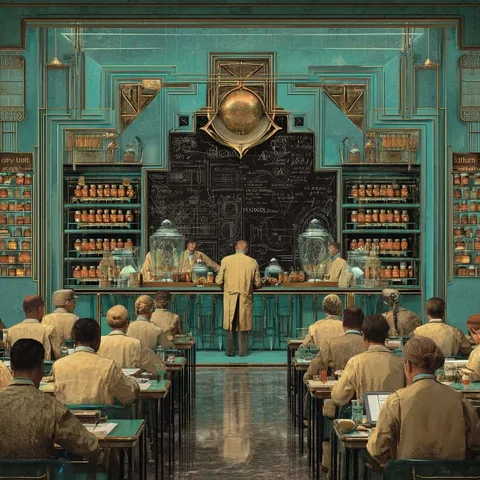
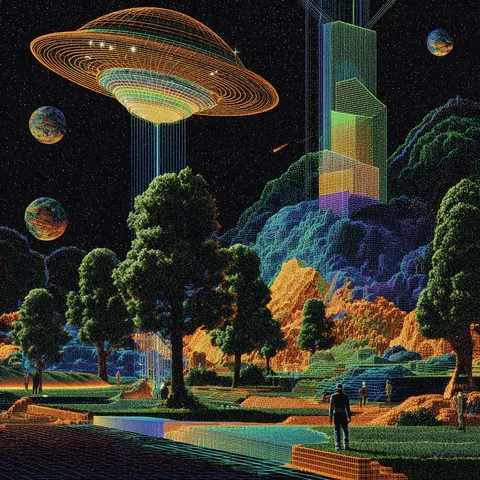
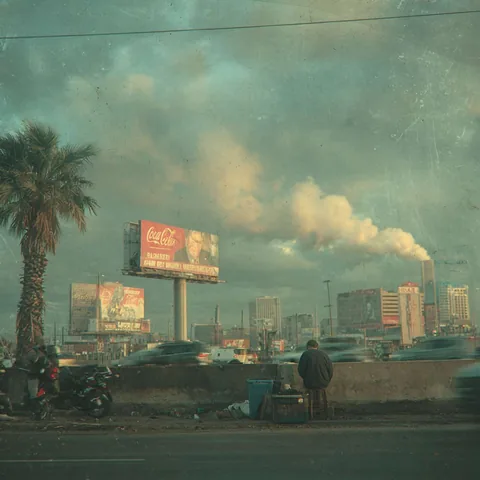
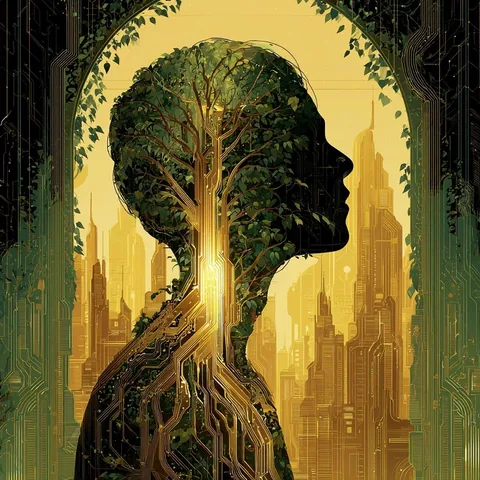
The other takes the image generator gave us, and the prompts behind each piece.
Chapters
Settings
Moral Failings of Our Time
With Kris Tyte & Sean Snodgrass
In this episode of Positively Pedestrian, we discuss the Moral Failings of Our Time and try to consider what aspects of our culture are ethically wrong, even if normal. We investigate the past and can easily judge the actions and beliefs of our ancestors as being highly immoral. But what things do we do and believe in contemporary society that we believe to be moral, but are in fact, highly immoral, but just don't see because they are socially normal?
Share
Detour
Episode description
In this episode of Positively Pedestrian, we discuss the Moral Failings of Our Time and try to consider what aspects of our culture are ethically wrong, even if normal. We investigate the past and can easily judge the actions and beliefs of our ancestors as being highly immoral. But what things do we do and believe in contemporary society that we believe to be moral, but are in fact, highly immoral, but just don't see because they are socially normal?
Chapters
Show notes


Episode Art 10 pieces
Full Transcript
Right. So like, there's been a lot of time for software updates. Yeah that's true. But like, you know, adding adding in fog is like completely unnecessary. It wouldn't really make any me many significant difference. Like it doesn't in fact make it convincing. Right. In fact the opposite. Right. It makes it makes it less convincing. There's no, at least there's no apparent reason for an ecosystem to, you know, foster it or have it.
Exactly. So if I'm some abstract or retarded shit comes out of my brain this morning, it's because of no sleep. Oh, well, if some abstract tried to shake comes out of my brain this morning because I gummy last night. I still feel like I have. I'm a little bit high. What do you mean it's not foggy, right?
It's wrong with you, man. It's like you have cataracts.
In your ears.
So, the topic today is. I thought it would be interesting. One to go over is like, what are the actual moral failings of the modern era, like 2022? Like, so what is humanity like? Kind of in general really got fucked up. But it's like mine because, you know, we're standing in that kind of arrogant space of, you know, we're contemporarily brilliant, you know, and we have moral clarity.
So, like, what is it that we think we are getting right, but we're horrifically getting wrong? And, you know, there's a whole bunch, but I'll go first. Go for it. So kind of an easy one to cherry pick right now is what we're doing with our youth as far as making them contemplate their sexuality at a really young age, like at a premature age.
Yeah. Kind of a social alignment to where, right, young, young children are legitimately like spending long hours thinking about their sexuality and feeling compelled to make proclamations about their sexuality to their peers. I am I go by they and, you know, I'm I'm 12 years old. And so therefore I have a knowledge of my sexuality at this point.
Don't even have haven't even really gone through really any of my, what are you going to call it, hormonal transition through puberty. Right. But I'm going to have to make my peers are demanding that. Yeah, yeah, yeah, society has somehow gotten to that place. So they start off with that lead off with that one. I mean, my personal opinion there, it's it might be nothing more to play devil's advocate here.
And then really just.
Children have had to make different decisions and have had different things poisoned upon them depending on what's going on in society. You know, like, I'm sure we've got like songs from the 40s and 50s saying things like, you're 16, you're beautiful in your mind. Yeah. You know, you got people getting married off at 14, 15, 16, just a few years, just a generation or two ago.
Right? Yeah. And how do we view that? How do we look at that today and, you know, retrospective and putting our values on that. We think it's gross. We think it's weird. We think it's but pedophilia but it's pedophilia. It it really but it goes to the same sort of idea that people were making those sexual decisions then.
Now there was some societal pressure then to. Yeah. So I don't know. Yeah. And so I think it's it's kind of safe to say that that has some pretty significant lifelong consequences to a lot of especially females. Oh, yeah. You know, being being a mated and bred extremely young age, right before they had really had a chance to become people or experienced any kind of life.
Yeah, babies. Raising babies is never really the right answer. No. There's some there's some, I think physiological health benefits to young gestation. But, you know, body recovers a lot better than when you try it in your late 30s or something, right? Right. But thanks to medical science. Yeah, yeah, well, technically shifts the shifts, the moral, you know, shifts the ethics through for sure.
You know, which is like 90% of what we talk about. Yeah. But, you know, so through the lens, looking, applying the same standard, if you will. Right. Say, hey, look, we look at just like you said a generation ago, we look back at 15, maybe in 13, you know, kind of age. Kids getting married or breeding or getting, you know, getting into an adult relationship.
Right? With consequences like children and family and social pressures and all that. Right? Well, we look back, like you said, just a generation ago, and we kind of highbrow that and we say, you know, so it was kind of wrong. Yeah, yeah. So with that same standard applied to what we're doing today, to the kids, you know, having them have to do all this contemplation about their sexuality at a young age is a similar in a similar fashion, you know, on the same ethic thread.
Right? Is still messed up. You know, it's messed up. I think I think it is from maybe, maybe we are outmoded. Maybe since values have changed, not necessarily in a way we agree with. But, you know, maybe we're the old guys shaking, arcane to the sky, I don't know. And of course.
But it's but it's during a thunderstorm. And it's not just a wooden cane. It's a metal rod for some reason. Yeah. Or anything like a golf club, because some jackass cut me off in traffic. And the gods from atop mount Olympus will strike thee, you know. Absolutely smoke. I mean, you have to. If we were made in their image, then, you know, they have to have some kind of a sense of humor.
What better time to smite me? I mean, really, though. Yeah, when you be the crazy old guy in the community and it'll, it'll make everybody else calm down a little bit, make them easier to manage. That's so funny. Because, like, my my level of aggravation and responses to problems in traffic, you know, like, yeah, people cutting me off, someone not paying attention to someone in their cell phone, etc..
Yeah, my it seems like my my response to those things is directly proportional to like how shitty my life is at the moment. Yeah. All right. It's like if, like, the more you shove down that pressure release valve. Yeah. And there's this. There was this point in my life where I realized that's a great measurement. Like, you know, maybe there's some things going on that I'm not calling my finger on, you know, like, not quite sensing, but like, someone cuts me off in traffic and I literally blow up.
Then I'm like, wait a minute, something's going on. It's like, it's time for some introspection. Yes. You know, maybe some care. Exactly. Yeah. And, you know, just just to bring that into focus yesterday. Yeah. This lady cut me off in traffic, like, you know, Creeley really bad. Like crazy way, like, oh, like one of those. You can't be that stupid moments, man.
And I found my hands flailing and, you know. Yeah. Getting really animated in the car. And then I was like, yeah, I've been under a lot of stress.
You know, there's no accident. You know, I did have to react. And it was that thing where it was a close call, you know, that. But, Yeah. Yeah. And he was injured, I think. I think I might have scared her a little bit with my menacing hand-waving. The wildest from a car.
And, you know, I probably had a that day. Probably had, like, quite a testosterone surge from the traffic moment. Probably. It was like that. Like that. Negative reinforced dopamine hit, you know, like. Yeah. Where are you so freaking amazing. But you did the wrong thing to get there. Yeah, like we joked before. Like Anakin on the young wings.
Yeah, yeah.
You know, he's right. He's right. You know, the the Jedi are arrogant and the Jedi were had did have problems, right? Like so he's right, you know. Right. But the little kids, you know, they might not have been really done anything wrong. Yeah. Yeah. I mean, and that's that's it. Maybe we also have to give a.
Take that same approach and say.
There little the little kids who are feeling it is incumbent upon them to make these decisions are probably going to make that decision again later. Exactly. So maybe it doesn't matter. It's just we're it's so high profile and in our face that they are forced to make this decision. We forget to think and change their minds. Sure. Yeah.
So definitely a moral failing of the time, I think, is the number one that I put on. The put on the list was like still major problems with sexuality. And yeah, society's ability to talk soberly and properly. Sex and sexuality. Yes. We I guess in my opinion, we've always sort of had that number one just being the first item on the list, not necessarily the biggest thing.
Okay. There's a thickest telephone pole I've ever seen. Yeah. What the hell? Yeah. Wow, that is a beast. What is it? The whole day in the world wanted to do that? I don't know. That's like an old growth tree. That's like a 200 year old tree. That was the the. That was the extinction of a species that relied on the canopy in some shit.
That thing had to be like the daddy of the forest. That motherfucker is you.
So. So, for for for all of our listeners, we just saw a telephone pole. Without exaggerating, was probably in diameter, something along the magnitude of 18in. And I mean, okay, the size matters. To put it in perspective, though, if it was a dildo, it would have probably left you empty like a manger.
It's got enough power going to it. Yeah. So probably yeah. So he has the thing has three speeds low, medium. And who needs a man.
Damn. So that which brings us in. Which brings us to our second moral failing. You know, because I think probably both of us were probably had in the tip of our brain some type of brown joke. Oh, yeah. With the thickness of that pole. Oh, yeah. But neither of us went there because, you know, we're sophisticated gentlemen.
Oh, yes. Yes. And definitely would have been talking about anything. Yeah. And so why would we. So. So we are, you know, sophisticated in the sense that we know that it's a finally crush racism. Even these, like, things that are actually funny and probably get at about 15 minute, you know, laugh about, and, and so just just to be clear with that one, I was on the basketball team and I was like the only one.
There's me and one other way, dude that, you know, I don't I don't really like talking about race that much. No, but I'll tell you what, that's serious. Hate was a bunch of bullshit because we had those open showers. Yeah, yeah, I'm old enough to wear, like, the open shower where every dude was in there together after the game was.
Oh, yeah, like, just completely normal. Oh, yeah. Totally. And, from that, from that small, small from that size. Small sample size that that shit one true at all. And I'll say in the Army. Yeah, I had the same thing there too. Right. And now, of course, there were some outsized people, but they tended to be of any race.
They just happened to have a big dick. Exactly. And you won the genetic lottery. So to speak. The biggest one that I encountered in my life, in just a observational side. Peripheral vision, unfortunately, thing exists at that time was from the short, stubby white dude that was like a would have been a great, like one of those Worf characters in one of The Hobbit or Dad or Lord of the rings type situations, right?
So that was random. But, you know, so he would have been an ax wielding barbarian or something. Yeah. Which brings me to a great joke. There's a guy, a guy in an airplane. He's sitting across from sitting next to this really, really, really gorgeous lady. And, he's, like, really desperate to to talk to her and get to know her because she just looks wonderful to him.
And. All right, so he keeps, like, trying to find a way to strike up a conversation. And, he notices. I applaud him for not being an instant creeper and get her on social media. Yeah, right. Right, right. He didn't, like, pieced together from the boarding pass that was like, somewhat hanging out of her purse. You know, enough information to all of a sudden a friend request.
Yeah, yeah. And he happened to notice that she was connected to the airplanes Wi-Fi, and they wouldn't even have to wait. Oh, Jesus. So, like, of the eight hour flight, seven and a half of him fantasizing about joining the mile high club and totally creeping. Yeah, yeah. So it wasn't that guy. He didn't do that. He wasn't. Thank God.
Yeah. And so he, you know, he's just going to go. He's gonna go for it. Check out the conversation. She said there was a Cosmo magazine, right? And she. And he goes, oh, what are you reading? And she just one word answers him. Cosmo. So he's like, oh, great. That didn't work. Yeah, right. She's a little cold.
Yep. She's like, fuck it. You know, you only live once. What's the article about? And she actually starts to blush and she goes, well, I'm actually a little embarrassed to say he's like, oh no, no, no, come on. I'm really I'm really, you know, I'm, I'm I'm cool. Right? Like, yeah. Don't be embarrassed. Really. What is it now?
You got me curious. She goes well said. Article about, different men from different ethnic backgrounds and the sizes of their penises. Oh, right. And he's like, well, there's nothing to be a very simple. What does it say? She goes, well, it's very interesting. She says that since you're that Native Americans, tend to have the longest penis is measured through all ethnic groups in the world.
It's a really, really interesting. What else does it say? And she goes, oh, strangely, this is odd, but, men that have Jewish heritage tend to have the thickest. Right? It's like, no kidding, really. Free from, massive toehold. And, he goes, yeah. So that is so weird. I never would have guessed that. What's your name? She's like, oh, I'm Cindy.
She goes, what's yours? He looks it right in the eye and goes, Tonto Goldberg are.
Oh, man. Yes. Yes. Oh, that's too good. No mixed message there. No, no, he was directing to the point. So, second moral failing of our time is, this inability for for human being kind to, like, get over the fabrication of race in the day is not a fabrication, is a societal construct. It is a it's a way to divide and conquer people.
No adult that I know that has had any kind of world experience with human beings. Is actually a racist person. The only people I've ever met are insulated, jackass, which I would say is a problem with America in general, because we travel some of the least of any industrialized countries. Fair enough. Fair enough. Yeah, there's reasons for it.
But at the same time, I know, you know, I mean, I associate with lots and lots of people, right? And nobody that I associate and get to know at a deep level. White has any time in their day for that bullshit because it is absolute bullshit. It's it's a way to control and subjugate people. It's a way to, you know, it.
It works handily. When colonists were on a new island and they needed to control people. Well, how how are you? Yeah. The closest to white you are. The more 30 and power will give you. That's right, that's right. And we don't raise any of our kids in any kind of way, you know, whatsoever shaming any any minority or race or different amount of melanin or whatever, freaking the way you want to carve people up.
Right. You know, black, white, male, female, you name it. We don't even ever even in our personal conversations, like, you know, when it's just you and I and and and the walls, you know. Yeah. There's like, never, ever any derogatory towards, you know, and taking the race or anything like that just because it limits the ideas that you can take in.
It limits the, the people you're willing to listen to and really hurt you. It's us. Everyone. Just totally, totally. And, you know, it's just it's just gone from from my perspective, it's gone from any, any rational or emotional. It's got no foundation in either. And the hell is no unconscious bias bullshit, you know? Yeah. It's, it's seriously deleted from the common vernacular.
Oh, and, the emotional side of it as well. Yeah.
But society, everything is still framed in terms of. And this is where I think the moral failing is everything's still framed. And in terms of like, you know, during Covid, you know, men have really suffered much greater than, than females as far as, you know, work or whatever, how they break it up. And black men have really, really suffered.
So here we go. But there again, everything has to be in the language parsed into those groups. I mean yeah, normalizing. So.
Whether or not it's normalizing it or maybe it is actually declaring some facts because like you've said, a lot of people.
Our government even included, we divide things down along race lines almost because we have to, because that's the way it's been done for so long. And there you can equate often your Cecile economic status in the city you live in with what's your ethnic background is. Yeah, I think that I think that that ship is going to I hope it's because, you know, you can have someone of extreme privilege, have a lot of color and there's a lot of melanin in their skin.
Absolutely. And be a person of extreme privilege, you know, then getting additional advantage in society. That is completely when you take that individual, right, compared to this individual over here. And it's inappropriate. But yeah, absolutely, Biden says, I don't want to give people a, you know, scrub people student loans because of the Ivy League students who would get a benefit to this.
What is the I feel like the numbers that have the Ivy League students that would get the benefit are also the numbers of whenever we look at privilege in the South and we just filter on race. Yeah, the number of people that would have that privilege would be the same sort of number of Ivy League school graduates, you know, not very many.
Yeah. Self-reported race, that is true. And race that doesn't have any kind of basis in any kind of true genetic. It's like when, you know, Hitler tried to figure out what what makes someone a Jew, right? You know, how many I mean, really the the census questions are based on how brown are you or what kind of brown are you?
And many people don't even, don't even have even a, you know, real strong understanding of their family even. Right. You know, and that gets into that whole leave them with 23 and me. We don't have much more of one. Exactly. Yeah. Because people like swapping their cat's cheeks and it's coming back. Oh, you're from Ukraine.
Like my first podcast. And you know, for his like a YouTube channel. And he said, next week we're going to do The Wizard. Yeah, because we got that YouTube money and all of that. Exactly. And all that shit. It gets put into the pool of things that I'll be related to if I do 23 a minute. Yeah. Next thing you know, you're 23% reptilian and they've just proven David height.
Correct. Nice. Yeah. Oh, indirectly. Because some jackass with a YouTube channel, like, completely.
So my my mother believed that she was, you know, strongly had a strong belief that she had quite a bit of Native American, you know, genetics. Right? Dark skin round, you know, roundish face, but in the right areas around. Right. You know, and like, had the long hair that looked very Native American, right? Long, straight, dark brown hair.
Almost black hair. I'm guessing not a lot of body hair. Yeah, very little body hair. Nobody here. Actually. She never had to shave her legs. Anything like that. Nice. And then, Yeah, her grandfather was named Amos Woods and came from a tribe that was, you know, for all the records that we've been able to obtain came from a local tribe down in Florida.
Gotcha. So it looked like, you know, my grandmother, if I showed you pictures and like, oh, my gosh, got it. Yeah, there's got to be something there, right? And then the genetic test that we did, now it came back as like, if any. Just a trace, you know. Gotcha. But nothing to look the part. Yeah, definitely look the part if you're going off of, like, appearances.
Yeah. And that leads me to exactly what I'm talking about. It's just ridiculous construct. It's based on appearances and, you know, to the extreme. Right. So, you know, it's another one of those major moral trappings over time that people just can't get out of the identity aspect of race. Yeah. Right. So kind of both things we've talked about so far.
Identify based but still. But still. Right. Yeah. So here's here's one. And I don't know how you're going to feel about this, but, the amount of narcotics that people take.
That has gotten to a credible enterprise, I think it's terrible. I think that the machinery that supports it and doles it out to our society is just a massive people on a massive scale and getting them addicted to a machinery that, has way too much money and power. So I had this thing over the years. I call it the active ignorance.
And it comes from three major sources consumerism and all of its derivatives. Right. It's one kind of angle. Yeah, right. So people's brains being focused on materialism versus, you know, living. Yeah. Right. And humanity, things like that, creating all kinds of ignorance amongst society. So consumerism, religions, religion and specially in the extreme right, of course, all these things are, you know, in, in quantity.
Right. So any kind of religious extreme is just mind closing and numbing. And the third leg of that stool, the tripod is a, you know, drugs. Drugs, psychoactive drugs. Right. I'm not talking about need thyroid medication. Right. Yeah. Yeah. You're talking about something that changes the operation of your mind. Your perception is affected by it. See? Like it.
Consumerism. Even like the the periphery. Things like the diabetes associated with overconsumption. Right. That's that would be part of the consumerism model, right? Like all the suffering and, you know, disease and disability that come from that is just staggering. Right. So drugs I think is third on our list. I keep on making the list here for some reason, but, so, like, you know, psychoactive drugs and all the, all the things that come with that, you know, and, the culture that we have even built in now around it is very profound.
There's a certain kind of element of people that that are in it or in the, in the scene, if you will, then start to think of themselves in a certain way as like just from society, not only from the effects of the drugs, but from their, their actions. Yeah. Which they know are wholly criminal. Yeah. Especially if they're, dealing in some heavy shit.
Yeah. Yeah, absolutely. So there's like that disassociation that people have related to that, that carries over. And that's an, indirect consequence of like being a dealer, if you will. Right. Like if you're a dealer, you see, you start to see yourself like not necessarily in a cool Breaking Bad kind of way. Yeah. You start to see yourself in a, anti-social light.
And you, you have to be to maintain that to, you know, it's, it's a job. It's something you have one foot in society and one foot outside of it. That's exactly right. That was perfect. That's exactly what I'm talking about. That was the perfect description. That's how I should have said it. Yeah. And the emotion that comes with that.
Right, right. Because you've got isolation on one hand and you've got, you know, needing to connect with and understand a cross-section society on another. And you're also alienated by the fact that you're doing something. It's widely decried as immoral and illegal. Yep, yep. And all the all the complex interactions psychologically and sociologically. Yeah. You know, that. Come with that.
Definitely. And then not to mention the, you know, poor choices that people make when they get addicted to some strong. There we go. Some highly addictive things. And, you know, that's addiction is definitely a nuanced thing as well. Oh, yeah. You know, there's people that are addicted to, you know, things that aren't typically known as being highly addictive.
Right. Because for them, it became just that thing. Right. It's weird how generalized you can be towards society and get a lot of result like make, make broad, sweeping generalizations and have them be true. Like it's really least, at least to a large enough degree that you can talk about it. Right. And then at the same time, how there's such incredible individualization in certain things.
Right. So in the outliers, right, there's the bell curve, but then there's the outliers. Yeah. With any of it it's more of a spectrum than a than a bell curve really. I mean it's there's all sorts of places you can head along the line. It's, it's a gradient. Yeah. And so if you on enough metrics are starting to fall into that outlier category, you're then automatically getting all the social pressures and, you know, normalization cues that come from.
Yeah. You know so so there you go. There's your actual minority. Someone that on the top 20 metrics score as an outlier in many of them. Right. Okay. Like there's your true modern day minority if you will. Right. Like so you know someone that has lighter skin. Let's take it to the screen like, you know vino, right? Yeah.
Is that the Beano is so white, they're not even like they're this pinkish mouse, you know, color, you know, type. Sorry, Danielle. Words again in mind and so different in skin tone that they stand as a major outlier. Right? They're not just like a light skinned dark person or a dark skin, you know, whatever. Right? They're like, out of all those groups.
And so they're really an outlier on that curve. And let's say they came from a trader incredibly, you know, poor socio economic, generational, economic. Right. And let's pile on. You're from an island. There you go then. You have a mental danger there. Yeah. So now we're talking about someone that would really need to supplement in society like like and that would be equitable.
They need the boost to catch up. Yeah. You know, it's like this person can't be out in the sun like the other people. This person is definitely melanin challenge. And there comes a lot of things intended with that, you know, susceptibility to skin cancer and that's it. Exactly. And so to make just these broad sweeping generalizations like, oh, this person self-identifies as being quote unquote black.
Yeah, right. Yep. And whiter than me. Me looking at them. Right. Right, right. Yeah. And that's a that's our level of verification. We really are. Well, you look black. Yep. Right there you know, and they're they're in lies. The complete fallacy of the whole thing. Yeah. And therefore a huge moral failing of our time. Well, I mean, does it come down to the fact that we are.
We are but creatures we, come to, we gather the simplest of data and we say, well, that's what it's got to be. Perhaps. But that's inappropriate in a highly technical, scientific society. I agree, wildly inappropriate decisions based on appearance, based on superficiality, whatever, no matter what the criteria, then we really assume all the scientific advances that we've created and put in place.
We need to use them. We need to make them daily tools. We need to make them accessible to not just the citizen scientists, but the the everyman. Yeah, exactly. And in in, in in a lifting way, you know, like a, like in a, maybe, maybe, maybe passive but uplifting, you know, so, like, if I had a fault, it's a, it's a, it's a, it's a boost.
Okay. You know, so like, it can work in the background, you know, it doesn't even have to be active. So not so not necessarily like people are carrying around their drive order, but whether it be ambient information to at any time. Exactly, exactly. And then recommendation engine based on that that you can get as detailed as you want to know why that recommendation being made.
But you could also be as passive as you want and just say, okay, I'll take that recommendation. So knows it knows their current society. If we had ways of providing ambient information and people would also try to provide ambient ads. Yeah, yeah. Like what falls back into the consumerism domain, right? It's like the idea of of buying and selling something perpetually, you know, regardless of what it is.
You know, we even call it a side hustle and have all these terms for, you know, everyone trying to leverage in. Yeah. Chisel into an angle, you know, get get that fixed, put the fix in on some kind of situation and you know, it's like Ferengi or something. Well, it's I think it goes kind of back to that wired article we were talking about is that the internet and social media have created a puzzle out of all of these things that we need to solve to feel comfortable.
And the all those pneumatic things like side hustle, the, the means of go on social media and become an influencer, the right, you know, all of those things are.
Coming out of that. Yeah. And part of like the common vernacular now which means they're part, that's part of the normal flow of society everyday parlance, I mean everyday conversation. They, you know, some version of it gets brought up all the time. So which brings us to what I believe is the number one moral failing of 2022.
All right. You look at global globalized, society, right. Look at the global community. Now this is hard because it stands in direct contention with the military industrial complex, but agro industrial complex, the way that we have a relationship towards animals in the way that we use land is, I think, probably bigger than military, because that's the thing that is going to inevitably, unless something which I you know, I'm not a not much of a person that prays much.
But if I were, I would pray for some technology to come out to save us from this climate disaster that we're seeing headed towards on a one way street. Yeah. It doesn't we don't seem to, at this point in time, have the technology to stop that freight train. Yeah. Even really mitigate the effects because we know they're coming.
The climate refugee situation that I've had nightmares about is going to be incredible. Gut punch to all of humanity. Like, you know, we we're really tackling some of these metrics, you know, infant mortality, poverty. We're getting immunizations out where they need to be eliminating certain disease vectors. But if we create conditions that create another dust bowl, hey, you know, our technology is still not great enough to leapfrog that.
You bet. And you still need the land to grow things. You bet. And right now, the land use that we have to grow. Basically, what's science is clearly shown as luxury products. You know, basically meat is really not a luxury. There's just so much evidence now that, you know, if anything, a tiny supplement of only once in a blue moon meat is more than enough to, you know, if there's even really any trace minerals in there that we need certain amino acids that, you know, and we can get.
But that's been proven otherwise. Acids we need from complete proteins like quinoa. Exactly. And all and all proteins originate in plants and all that science that's out on that. Now, it's pretty damn convincing that, you know, there's there's people that have been vegan for 30 years and like yeah, Delphi is they're careful and understand the what their body needs to be given from those parts.
You know, your average Joe, if they just got thrust into veganism would get fucked.
Yeah, maybe. Maybe they, you know, because they're only eating, you know, certain certain things that have no idea. But that's with everything, right? If you're uneducated about a system. True. Headed for trouble. Yeah, right. You're right. Yeah. Don't implement something you haven't, tried to steep yourself in first that way. Right? Yeah. Cool. Not that we're trying to hustle back.
Just. Yeah, that's all right. Well, let's go this way because we need some time. I can think of, like, three more things that need to be discussed. Oh, right. I didn't come here to burning issues. No, it's not necessarily I came prepared. It's that, I've been thinking about this. Yeah. Yeah, dude, because I was, I was interested.
I was thinking, like, you know, all this talk about looking back over, like, slave times or some other draconian activity that we, you know, through today's that we now feel is obvious was wrong, right? What is obviously wrong now that I could get ahead of the curve as far as the human being, you know, like, how can I improve myself now you're looking at you're being a taking a moralistic view upon the present and future.
Yeah, right. Like, not to not to gain advantage, but to, like, try to see the reality of my moment. Okay. You know, because I would like to think I would really like to think that if I were alive during slave times, you wouldn't be an abolitionist or. Exactly, exactly. Yeah. I would like to think that. Yeah, so do I.
But, you know, it could just be delusional. And so then I wonder, you know, what kind of thinking would be required if you were at that time to kind of see the light, if you will. Right. And, well, certainly the first step would be to be a non-religious person because every church was like, oh, slavery is God. That's how God said it up here, right?
Right. It's like these people are animals, subject, subject to us. That was that was one of the ways of thinking that, you know, God gave us the, you know, animals and these are animals. Yeah. There you go. All you have to do then is just classify this group as animals. Yes. And it's it's all part of God's plan, right?
Yeah. The dark skinned people were the people that didn't take the side in the holy war between Satan, and they've been scorched by the fires of hell. Yeah, that's their mark of shame and punishment for their ancestors in decisiveness. So this is a this is a minor. I'm going to get back to the food and a second. But this is a minor thing.
It's pets. Oh. Keeping them for our own use. Selectively breeding them. You know, I mean, it is like a breeding them to disease, you know, to to genetic ability because they've got all these, you know, Oh, gosh. I can't think of the word, but basically inbuilt genetic defects because they're a gene pool. So small. Right.
Right. Yeah. You know, hit this place, you know, this or that bad skin. Yeah. You name it. You like the dog with the short snout, and therefore it's got all kinds of sinus issues. There we go, etc.. And that's just one aspect of it. But, you know, dog bites are a real issue. The sanitation is an issue. Invariably, it does give us a convenient comparison for the genetic diversity of human beings to say, hey, look at all the different kinds of dogs.
They're one species. Look at all the different kinds of humans. We have genetic diversity, y'all. I mean, you know, there's there's a there's a pretty clear distinction is that if there's interbreeding as possible, it's the same species. Yeah, exactly. With some, like, you know, caveats. Right. You know, that would find some weird things in nature. But in general rule of thumb, that's not true.
That's not that inappropriate to apply that basic litmus test. No. Well, that's what I'm trying to say. Is that right there? That one fact that's not hard to understand. Should the spell race. There you go. Yeah. Yeah. You you hit the word two should. That just requires a little bit of rational capability. Yeah. You know, and there's on the bell curve.
Many people are, you know, just don't have the intelligence necessary. Right. Or the information, they may be just holding it. Correct. True, true. Or inexperience? Yes. Inexperience can lead to a lot of those deficiencies. It really can. Because you cleave to that what you were raised to believe. Yeah. And it's also like that whole built into humans thing where you know, to try something new.
We're creatures of habit because that's the safe. That's the safe route. Right. We've been there. We know the results. So it's like battered battered women or battered spouse syndrome or is better than anybody syndrome. You know, a lot of people are in those relationships because even in those environments, they still know what to expect. Right. So like, yeah, I might get that beating, but you know, I it's comfortable.
I yeah, I know I know what those limits are of it and I know what the boundaries are. Yep. And you know.
That just made me think about how I've been advocating consistency with my girlfriend's kids. It's for the same idea. So they can build the mental model like the battered woman. They know what's going to happen if they do this or that. They know where the boundaries are. It's like, yes, I will take my lumps. Right. You know. Right.
Right. Yeah. So we can always wonder to what what form of cycle of abuse are we in that we don't see because, you know, it's been normalized and that's it. I think we have to look at all these things. We consider them moral failings, realize they are on a continuum that, you know, they might actually like, you're saying, it might have been normalized for us.
Do all these factors in our particular lives as individuals. And, you know, you have to question even what your stance is on this, if it's if it's right or if it is my Opic and, and Ferrovial, if it is really just that very if it's a narrowed mindset unnaturally. Yeah. So what what cultural for example, you know quote unquote norms are victimizing people.
And it it's not even, I think all of these things to some degree that we've mentioned are victimizing people. Yeah. Now.
It might be that most of that some of these things, it all comes out in the wash and that person ends up being okay. Hey, you know, maybe at 12 they felt victimized, but at 27, they're fine. Maybe. Yeah. And they kind of like get over, you know, they, they, they, they finally see through it. Therefore it does no effect on any more.
They understand it, move past it. But then there's others that just pass it down to the next generation and it continues. There we go. And culture has such a strength. And like anything that we're mentioning that and that we haven't mentioned that limits choice, anything that limits the ability to explore and understand what your own philosophy of life is is probably an abuse to some degree.
If you reduce someone's ability to do become or explore morning then that's bullshit. You got it. So we just walk or walking by four individuals that work for the city and are wearing reflective vests and are clearly blue collar people. Right. And they're all, oh, horrific, morbidly obese. And two of them were eating cake. Literally. Yeah. Yeah.
And, you know, this is this is par for the course of what we're talking about right now because we're talking about food. Right? Like socioeconomic access has to be talked about when we talk about that. Like, you know, a food deserts and and things along those lines. But these guys have a have a government check and they're, they can get they can shop at.
But where do they live and what is convenient for them to get. I don't know, but built into that culture of that particular, you know, line of work is definitely unhealthy foods. Oh, no. It's like, you know, crack a beer at 5:00, you know? Right. Oh, I've earned it. I've worked my ten hours today. And, you know, you can see, just without having to see, you can see where their lives are headed.
Right. You know, when they're when they're dealing with the really bad diabetes and the really bad. All the all the health consequences of obesity. Right. You know, so that is definitely massive failing every time talking, you know, everything. Oh, dude. Just diseases that just ravaged the body. You know? You know, and that is a huge, huge moral failing of our time is that, you know, society and government and all the actors and institutions not getting together to help change the course of this.
You know, where this is going. It's not just personal choice at this point. It's epidemic proportions, disease. And therefore and that's and that needs to be controlled by subcultures, right? And perpetuated by some of the lack of choice and some of the governments in some of our states. That's right. And there's this really kind of like, we want to call it like externality or a way that that the corporate and institutions get away with it built into the culture, too.
And that is what people suffer. They suffer alone with quietly at home amongst their families. Because we're not a collectivist society. We don't take on the plight of others, but only to a degree when it is extreme plight. We, in essence, leave you to that. You're leave you to your own devices. That's right. You face it yourself. You might beat it yourself, but you need to.
You need to face it yourself. That's right. And so we society doesn't see or hear. It's not part of the it's not raised. It's not like the squeaky wheel gets the oil type thing. You know, there's not enough people out there. They're suffering. No. And so people then don't understand the magnitude of the suffering because it's not broadcast.
Empathy is something you have to practice and have and be courageous towards. Yes, Jeff. Courage to keep your empathy intact. And so if if we aren't hearing about people's plight, if we aren't hearing about the daily struggle, then I'd wager to say rather than being fatigued, if we heard more about it, I'd say we'd be more empathetic overall.
Definitely. At least we least we would start to desire some social change. Yeah. Once we know the magnitude and once we stop basically victim shaming because often that's what we do. Oh, it was their fault. Oh, they got lung cancer. Oh, they got this. They got that. Well, really it is a lot of it's a societal problem. Yes.
It is a moral failing of our time. Yeah. I mean, you know, the way we ostracize people who have all sorts of different. What are terminal diseases now? Right. And the thing is, we've always done it. You know, The people who had polio and are still around, there's only a few that are still in iron lung.
Yeah, still still alive. But they're marginalized. They're pushed to the edges. They might be an ever to indolent group, but it's an example of what we tend to do with suffering. We push it to the edges. We put it into our prayer field vision. We don't want to look at it and confront it. Exactly, exactly. Yeah. So again, a huge moral failing of our time.
Yeah. So, Well, I'd say it's across history. We've always done it. We're kind of wrap up. I want to wrap up on the on the on the agriculture and food and land use, but, I said that that is like, you know, a contender with military industrial complex is that that one is going to be really, really binary because it's either going to fuck us or it's going to go away.
It's going to tail off. Okay. Right. And we're going to and we're going to like dodge that bullet literally, you know, no pun intended. So demand is either going to have a major event where basically the nukes go off or, you know, whatever dreadful weapon of the future, right, you know, goes off, creates a worldwide disaster like a nuclear winter or some kind of human suffering on a, on a level that it's just not even imagine, it's just unfathomable.
Or that, like, maybe it is imaginable, but you don't want to type situation. So the military industrial complex could could definitely very well be leading us, you know, humanity into that, into that. That might be the Great Filter, if you will, that you've heard people talk about. If you heard of this great filter, I have not. So the Great Filter is this cosmological, concept that perhaps once species or any kind of intelligent life anywhere in the galaxy or the universe for that matter, hits a certain level of, technological sophistication?
It's a self eradicating phenomenon. So it's kind of like I may have mentioned this before, but say bacteria growing on a GA or something like that, and someone's put a ring of antibiotic around a certain area. They only want the bacterial culture to get so big. Yeah, yeah, sort of like, maybe the idea that the whole Earth was made of agar and start dividing and, you know, consuming all available.
Yeah. The consequence of that is just there's no more food. And now there's all these organisms feed. Yeah. And so then they collectively and nearly instantaneously die. Yeah. Once they hit a critical well that that that idea. But technology technologies has this explosive exponential growth. But then we have the limit that we will reach and we'll spit in essence self-destruct.
Exactly. So the idea is that could be like the great cosmic filter, the reason why we don't see billions of, you know, intelligent species just flooding the galaxy and the universe. Okay, that might be the reason why we haven't heard anything from that, that, you know, star system that we should have heard something from by now. Right? Because they're all dead.
Yeah. Just a natural consequence of of an intelligent species. Once it hits a hyper intelligence mode through technology. Self eradicates. Right. It.
And I mean, that's a it's a big assumption to make that no life that the universe evolves could move fast enough socially to keep up with these technology. Right. So the technology becomes an end unto itself and it outpaces. But I'm saying that's a big assumption to make. Well, there's at least there's data for it more. Right. But our sample size isn't all that big.
It's not. But but the size and the magnitude of the universe and the age that we think that it is. Yeah, there should probably be something out there. So you're saying the universe should be replete with life? We should see it. It should be obvious. Yes. Or it takes on a different form. Once a certain level of technological that that no longer, no longer no longer recognizable is kind of for at least a generation, people have talked about the idea of beings who are pure energy, right?
Yes. You know, have transcended DiCaprio. They are a it's a great sci fi line. Yeah. It's been done so many different creative ways. It has. And, you know, I like that. The next form and, you know, even some movies have come out recently like interstellar explored it. Yeah.
Yeah. Like all of a sudden you can have a subspecies like in a, you know, near black hole orbit, come out a million years later into a completely different future. Yeah. And, you know, 20 minutes went by for them, you know, type time that thing. That's fine. That's really fun to talk about. It is so, you know, huge failing at the time, this military industrial complex, this idea that, you know, the, the power brokers of, of war and those that create the nation of war, those that create the means of the material and intelligence to to conduct war, right then having extreme power and influence over government, which then in turn asks for more of
that stuff. Right. It's a we have a feedback loop. Yes. That's what these complexes are, is they're just complex feedback loops. They're they're machinery that keeps themselves running. They're, you know.
And growing and growing. Yeah. It's, it's a perpetual machine, like, could never exist in any other in it's, you know, being the political machines of, like, Tammany Hall and all these other places, you know. Yes. Yep. And then all the stuff that, that then that leads to. Yeah. All the lies, deceit, death, destruction, false flag operations, you name it, all imbued in that system.
That are just part of its nature. Yeah. Yeah. So that and then finally, since we're getting close to being back, is this idea of this, you know, what we're doing with animals in general in land use. So the amount of the amount of agreeable land that's been converted to just grain for feeding animals is, you know, immoral by any standard, by any measure.
And they're in the soil depletion, erosion and desertification that we're getting with this is creating a global event. Yeah. The global event is definitely fast tracking us towards. Oh, shit. I'm. Your timing's off.
I could have probably crossed the street twice by the time the things I got there. So the collective efforts of humanity to live this Western consumptive diet of, you know, lots of animal products, right? Because it's considered luxury. And, you know, to some standards, it's considered like, you know, that's a that's a measurement of I'm, I'm improving my status in life, you know.
Right. I was able to get a ribeye this week. Yes. And the cost of that was China and India entering First World Nations status. So then now you have the majority of the population of the world wanting to be like the Western. You know, to some extent, yeah. The pressure that's putting on the land use and the animal agricultural feedlots, I mean, so deep is so beyond a moral failing of our time.
And of course, this is directly or indirectly, this is where the whole pandemic came from. It came from the intermixing of species infections, right. Or from a lab leak where they're doing gain of function research to try to stay ahead of the curve of having all these animal interactions. Right, right. And way. Either way, it's from the same source.
Yes, yes. Our relationship with these. I don't think it's worth arguing about. I feel like it's such a big thing. We really just need to focus on the symptoms, because we can never really narrow down the cause. Because either way, it's endemic to our world. Yes. And so that could be the number one moral failing of our time.
Is our is our, abusive nature towards other sentient creatures. You know, inevitably that the desire for that, because it tastes good. Right. And we've been told by at least one major religion that we have dominion over it. It's ours to use. And that ties into the culture, which religion, again, which is one of the trifecta of ignorance, as I call it.
And so the moral, those are like at least a good five moral families. You could probably do 3 or 4 episodes about this because there's so many, there's so many smaller, nuanced ones. They no doubt. And but I think we also came up with the idea that, hey, this could also be down to not necessarily the Triton ever used concept of unconscious bias, but the like you said, we are, it is incumbent upon ourselves not to just think about moral failings of society, but to think about why do we our arrive at those moral failings as being the things, those touchstones that need to be spotlight?
Maybe we are wrong or need to widen our mindset. Maybe we've got strictures, yes, and narrowing that need to be fixed as individuals. And I have direct experience evidence that that to this, to this phenomenon because when I was, like completely unplugged from television and no cell phone everything when I was in Iraq for about a year.
Yeah, right. When I came back to the United States, I felt like I was in la la land. Wow. I mean, disillusioned people beyond imagination. Yeah. I could not understand the acclimate to that dude. And it was so bizarre. And now and now I have that sense, right? I have a new I have a new sense that I came from that.
Right. You can have it and stand back objectively and see that. Well, I wish what I was saying is that I have consciousness, that I no longer see it because now I'm so entrenched in it. All right. So I but I know that it's there. I remember the, the nuance of, of of being, being unplugged from it, from so long and coming at it almost with fresh eyes.
Yeah, right. But for a moment, seeing it for what it is and being like, oh fuck, right. But that did, in essence, give you a new sense because you can go back into that mindset. You can explore that mindset. You can have a you have a maybe a maybe, you know, a lens to filter something through. You can say, look, cloudy, but it's still there.
It's like that, that old spyglass, you can still see through it. You can't quite make out the details of the white right on the ship approaching. That's a really good way to look at it. I mean, you know, that's going to say that the winds might be chipped and cracked, but it's still there. Yeah, it looks cool as an epitaph on my, you know, as an icon on my on my on my broach.
Yes, yes, it's definitely a conversation piece.
Is that a spyglass in your pocket? Are you happy to see me? No, it's just my. It's just my local telephone pole. Dude, that thing was ridiculous. I've never seen a telephone pole. That thing. Yeah, yeah. I mean, normally they're pretty standard. Well, I guess not. You look at those two, that one's thinner, but they're about the same.
They have the general consistency of what, maybe like 12in diameter. Yes. Not that one is like 18 to 24 range easily 18 to 24. It's like the they make these mostly from what I understand fast growth pines. Yeah. Yeah. And on on these renewable kind of huge farms where they, you know, selectively harvest and then come back and they plant and it just keeps it going.
From what I was saying, that's where they come from. That makes sense. I think that one was like on the corner of the lot or something. They forgot to harvest it. They said, hey, get that one for it gets you. Yeah, exactly. That's massive. Jeez, that one had to cost more. They had to just be like the extra large one.
We're gonna charge you, like, three times a month. Cool. All right, we're out. All right. Dude.