Extra content pops up along the way.
Trailheads
Good places to start walking.Chapters
April 30, 2024
Artificial Horizons - AI & Human Knowledge
Double-tap the sides to skip 15 seconds
Trailheads
Places to startArtwork explorations
The other takes the image generator gave us, and the prompts behind each piece.
Chapters
Settings
Artificial Horizons - AI & Human Knowledge
With Kris Tyte & Sean Snodgrass
In this episode of Positively Pedestrian, we embark on a fascinating journey through the interplay of AI and human creativity, pondering the possibilities of archiving our collective wisdom before AI reshapes our knowledge landscape. Join us as we explore innovative preservation methods, debate the role of AI in creativity, and discuss the philosophical implications of AI as a dominant force in knowledge generation.
Share
Detour
Episode description
In this episode of Positively Pedestrian, we embark on a fascinating journey through the interplay of AI and human creativity, pondering the possibilities of archiving our collective wisdom before AI reshapes our knowledge landscape. Join us as we explore innovative preservation methods, debate the role of AI in creativity, and discuss the philosophical implications of AI as a dominant force in knowledge generation.
Chapters
Show notes


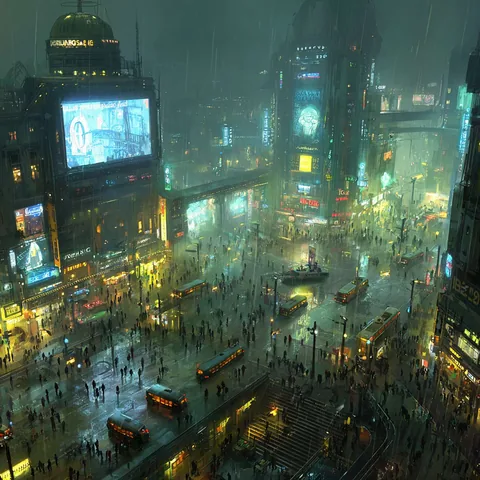
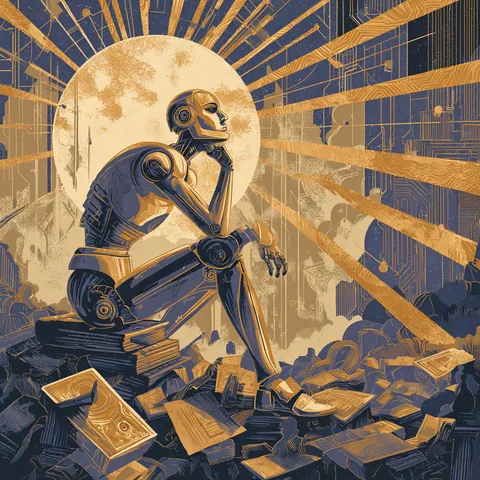
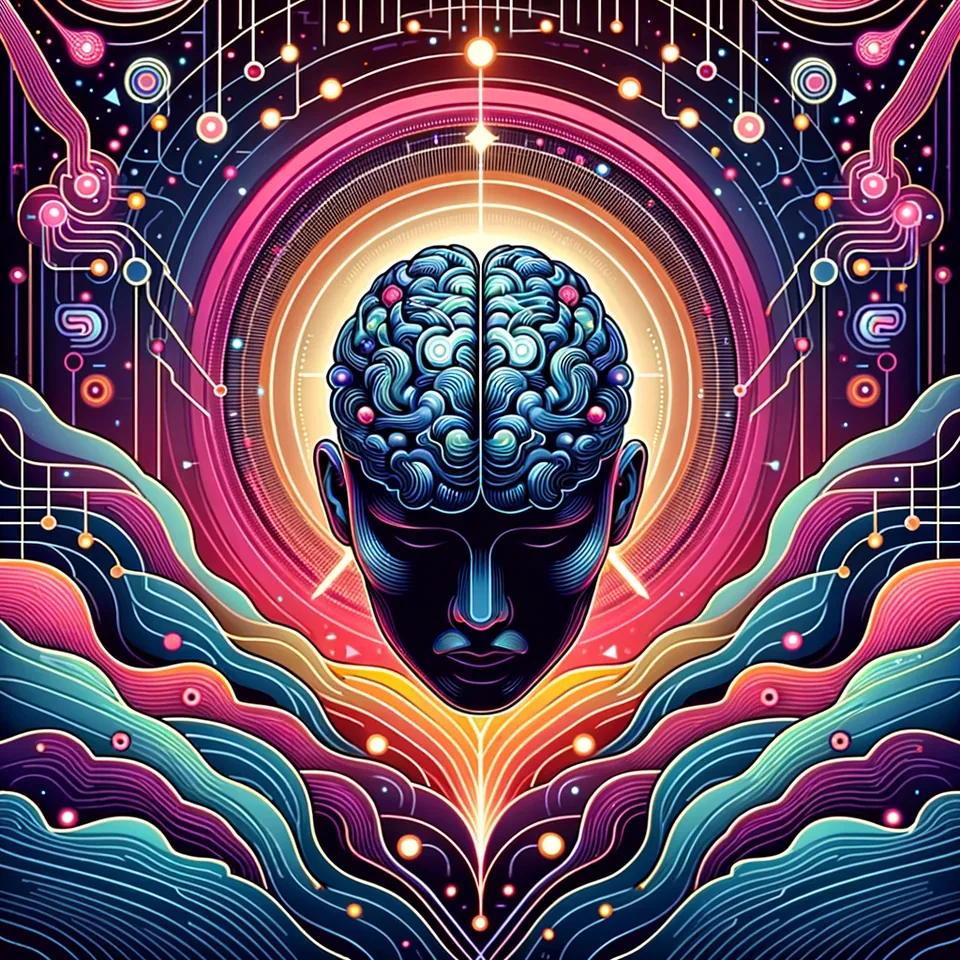
Episode Art 6 pieces
Full Transcript
The other day, we were talking about this idea of if someone of these apocalypse were to strike and, you know, the whole AI evolution might be the apocalypse, but, we were talking about the idea of creating a knowledge inventory, like kind of a snapshot of all human knowledge before AI comes online full force, and displaces all human knowledge with AI knowledge.
And we're liking it, liking it, likening it to like a small barred seed vault, or what GitHub did with, its archive. And we probably want to use a fairly resilient medium like either there have been the Long Now foundation. Have you heard of them? No. Their mandate is create things that last 10,000 years or more and they have knowledge.
Archive. What they did was they created, a set of instructions and very simple, microscopes to view knowledge that they engraved on metals, that metal alloys that don't tarnish when exposed to air. Wow. So I'd love to know, like how that could be 10,000 years proof. That's crazy. Yeah. That's amazing. Another thing, they made that a 10,000 year clock that's in a mountain that's still ticking away.
Yeah, it's hard to test, though, isn't it? Yeah. It's like, I guess put it in the oxidized pressure chamber something and try to accelerate its aging. And in theory, they did that right. Yeah. But, you know that that's a hard thing. You know, I wouldn't mind writing the warranty for that, right? Like, or the insurance policy. Yeah.
I mean, I just kind of cash in. Kind of a hard thing to collect on it. Yeah, that reminds me of something really funny. On the boys would go, to this thing called Camp Thunderbird at the school. Yeah. And it was, like, real popular. They still do it. I mean, they still do it. I don't know if they're doing it this year, but, year after year, they go and they do the same kind of thing fishing.
And, you know, they make a God's eye and classify different insects and, get to stay a couple nights away from the parents in kind of like a cabin setting. But it's it's definitely not roughing it. It's it's pretty, you know, but, you know, they do things that they wouldn't normally do. They go canoeing or they get to spend time with each other and yeah, go out nature hikes and, classify different plant and animal species.
That's pretty neat. Yeah. They did one cool thing they, like would dig up a shovel full near the pond, and then they take some of it back and like look at, you know, count the number of certain organisms in that shovel. That's really cool to get to get an idea. And how many, how many would be in the area.
My nerdy ass went immediately to thinking about bringing that shovel full back and then running it through a mass spectrometer. Yeah, yeah, yeah, it's 83% carbon. Yeah, it'd be awesome. They'd learn a lot. But, so, you know, this this whole, this whole camp idea was super cool because they'd be like, each year going out and learning something.
Well, anyway, one year I was a chaperon, you know, kind of stood in somewhat as a counselor and a chaperon. It and they, they had this one thing they brought out and they'd have this multiple like, huts full of all these different activities, you know, gear and stuff. So like, they go fishing, they bring out the nets and the poles from this, from this one.
And then they could do another activity and they, they bust out the, the, the stuff from that. Well this one, they, they, they take out all this garbage and it's like, okay, is that the garbage? You know, shit. And they start kind of like having forming teams of these children and then putting all this garbage in front of them.
And they say, okay, now sort the garbage from left to right, and the one that you think will decay fastest versus versus the one that will, like, take the longest to erode or decay in the ground. But that's not intuitive, really. Yeah. Like if you put it in landfill. Yeah. And so there's like, you know, a leather jacket in there, a plastic sheathing.
You know what I mean. Plastic silverware. Wow. Paper plates. You know, styrofoam cups. Glass bottles. You know, things like garbage. Right. Yeah. And, so the kids would basically take, take their time and debate and all this kind of stuff, and they sort the stuff in order from what they thought was the most the some organic thing seems like a banana peel from the from the dining silly or whatever.
Okay. You know, and so obviously the kids figured that one out. Be pretty, you know, they're like cigarette butt, you know, etcetera, etcetera. And, so they laid it all out and, the counselors come by and they, they put these little tree tents in front of each one of the items with, with some number of years that it takes that particular item.
So like on one side of it, it has the item and the other side is like the number of years. And so they just walk down and they put the numbers in front of the kids, and then the kids can see if they're right or wrong, if they had things in numeric order in terms of the number of years it takes to decay.
Well, there are some surprising things like I don't remember the specific numbers, but it was like a paper plate would last surprisingly long. Right? Right. It's not intuitive at all. Yeah. Some of it, like there was one that was like a leather jacket. And apparently that would last a long time. So that would. Wow. Yeah. Dang. Then they were getting into some of the heavier plastics and some of the styrofoam and the glass, the glass and whatnot, and they started putting, like, these really high numbers on them.
Like, you know, this plastic is going to take 5000 years. Oh my God. Yeah. And this, this other one here, we're talking about Camp Thunder. We're talking about Camp Thunderbird and the activity of laying out the garbage and seeing how long each one lasts before it would decay in the in the ground. So, you know, at this camp, they're sorting out all this trash.
And I'm putting these, in some cases, pretty outrageous numbers behind some of these things. And of course, you know, I'm like the skeptic that I am. Yeah. You know, like, I don't think so. Like, I, I wasn't I wasn't yeah. I wasn't undermining them. I wasn't being like, you know, bullshit. Yeah. Because the whole point is to get kids to think.
And the exaggerated numbers maybe might make them be more apt to recycle or not throw things away. True. Yeah. Strong point. Definitely. And, you know, I didn't want to be that guy. Right. Yeah. And so. But, you know, kind of as a side note, later, I was talking to Sue about it, and I was like, you know what?
I think that that's some bullshit. Yeah. 5000 years. Yeah. Because I go in my backyard sometimes and I'm, you know, digging some stuff up in that little wooded area behind, and I find some old stuff and it's, like, made of plastic. And it was clearly like a decade old or so, and it's like, crumbling to bits in my hands.
Yeah. Okay. You can say microplastics and yada, yada yada, but I don't know, man. I've seen some I've seen a lot of trash, like be oxidized and bleached in the sun. Oh, yeah. And just crumble. Yeah. I mean, especially plastics. And like we were talking about earlier, you were just. This was on connected, but you were talking about a Plexiglas PC case you made and how it fast deteriorated just through normal UV exposure.
And it yellow. It became brittle. Cracked. Right. Yeah. Like eroding entropy. Falling apart. Yeah. Yeah. Decaying. Yeah. And really, it's in a fairly controlled environment. It's just exposed to some UV and some, you know, there's some swings in temperature and some vibration. Yeah. With, with maybe some cat hair blowing around in the inside of the box braid breakage in a braiding the inside of the.
There we go. Yeah, yeah. You know, definitely, definitely changes in temperature. Yeah. You know probably did did that in and the vibrations it was, was probably the big thing. So yeah. So anyway, they put in all this like really long years on all this different stuff. And one of them was like something like 10,000 or something.
Oh my God. And, you know, I was like, thinking about Wall-E and, you know, trash, like, you know, it got me thinking of all these weird scenarios. Oh, I got somebody at work to listen to our podcast. He said he enjoyed the conversational style. Oh, okay. Okay. Good, good. He said he'll keep listening. All right. We'll keep the conversational style there.
And so I'm thinking, Wally. And then, you know, when I came back to wasn't on that particular one, it was just me and the me and the boys. And, so it came back, and I was telling her about this story. Well, we've since, like, to have this running joke now about how long things are going to take to decay, right?
So, like, I don't know if you want to throw out that eggshell. It might be like 500 years, you know, or that, you know, and, we had seen this big piece of plastic sheathing we used to, drive Eric into daycare, and, we'd go over bridge across the top of river and, headed over that quite long bridge on either side of the bridge.
There's like a tree line on the each side. You know, it's like tree lined bridge water, you know, tree line on the other side. Yeah. Well, anyway, this really huge, huge, huge, huge piece of plastic like sheathing had blown off someone's truck, like work truck or something. Right. And it. And since it was, like, over some water and over bridges, all that, there's all that wind.
Yeah. And it took the, it took this piece of plastic sheathing, like, way up in one of the trees. And it got really lodged in the branches. Right. And it was, it was like fall. Most of the leaves were out of the tree or whatever. And we, we we were just months when we drive by and see this plastic sheeting blowing in this tree.
Right. And it'd be like, wow, you know, we're gonna have to see that for the rest of our lives. And then our parents, our children's children are going to see that plastic sheathing, you know, because it's going to we know it's going to be 5000 years. Right. Right before I think the case. Dude, I'm telling you what that thing like a month, two months?
Yeah, maybe. Right. Blowing in the wind and supposed to the elements and all that kind of stuff. And it was just decaying, like, visually shredding. Like the shredding getting moldy and gross. Yeah. I mean, like, Francis Scott Key came out and started writing a ballad. Like it. Like.
That was nature tore it apart, you know? And, Oh. That's funny. Yeah. So it was like the ode to the, you know, it's like, wow, we must be really living longer than we thought because I think it's like half deteriorated. I don't feel 2500 years old. Yep. But, hey, you must be, because, I mean, how could these school or how could these camp counselors be wrong?
Yeah. No, they're not wrong there. No, they're they're accuracy, you know, and they're vampiric and they've seen this and they've lived multidimensional for many, many lives in parallel universes. So they've actually been able to prove with data that these things take ultimately that undercuts or, you know, speaks about some of the things we're talking about. You know, it's like really the, the new and knowledge, quote unquote, we want to preserve the history, which we talked about earlier today in an unrelated conversation, that the history that we get in our textbooks is nowhere near what actually happened.
The you know, yeah, the, you know, the knowledge, quote unquote, that we're preserving what's how can you really determine the veracity of it. The truth, the the very impact and connection to it, you know, because we we're so far removed from so much base knowledge of things, we can't trace the cord back to the wall anyway. Right. You and I can't do primary experience experiments in, you know, science to reproduce.
You know.
I don't know. First elements of technology and, you know, whatever. We just can't. I can't even visualize a light year. Right? Right. And, I mean, for God's sakes, Voyager one is a light day away, and we can't even think about that. That's nuts. Right. You know, it's been going at speeds that we can hardly imagine. Yeah. Right.
Well. And visualize. And it's. And it's been going for how many years now? I mean, almost 50. Right. And it's a day late. Yeah. Yeah. That's nuts man. So the idea of a light year is just it's way too scapes my imagination. Oh, yeah. And then, you know, the whole entire galaxy supposedly is 200, you know, 200,000 light years across.
There we go. And that's unfathomable. How do you how do you prove that? Yeah. I'll have 200,000 years to see if that one's right. Right. And so it's like our whole society and our whole world is built on these convenient fictions that are close enough to write that let us operate in this shared world. And that's really what we're talking about.
Preserving is this shared set of cultures, culture and convictions that allow us to construct the society we currently have. Yeah. Because this idea of like AI being the new generator, generative AI being the new creator, if you want the primary source of creation of new knowledge, right. If that's in the almost becomes exclusively monopoly, right. Is it the monopoly on new knowledge generation is going to be AI?
And some argue it already is. And it's how you carve up the definition of knowledge. But yeah, you know just the discoveries that it's happening. You're right. In some cases I hear about these things like protein folding and whatnot where you know in six months they train this AI and whatever. In six months it has more discoveries than all the PhDs.
There we go. You know, and so, you know, it ends up taking over frontier by frontier. Right. And so where was it? Where was like that foundational pivot point where human knowledge left off? The knowledge took over? Yeah, exactly. And then on top, you know, it's like, is that worth preserving? Right. Is it because because we're I mean, and I feel like that's what we're debating right now.
Like, what are we really preserving? Not sure it's going to be like call it the great displacement. Yeah. It's going to be the great displacement of knowledge. Human knowledge is going to be displaced by the volume of artificial intelligence. Yeah. Because they say we're in a we're in a creator economy right now. Supposedly we we create, we traffic in knowledge.
We traffic in ideas. Right. And so then we'll transition to an editing economy where we curate, we edit, we collect, we collate. We basically become librarians for AI. Yeah. We're like maybe, I wouldn't even want to say a guide. It's more like, maybe, maybe just like the, the, the survey data provider, like. Yeah. What humans like, like, you know what I mean?
Like, like will become this. So maybe add color to the data. Yeah, but it's just biased by your own flavor anyway. And so they probably learned to just ignore us, you know, and move on. But, you know, I'm thinking, like, right now, if I use generative AI to make, like some artwork I described with a prompt, you know, something, you know, Midjourney or whatever, GPD, Dolly, whatever's out there now, you know, toy around with these things.
Yeah. And, not Photoshop's. That sucks currently, but it'll add a lamp. But if you like. Yeah, I circle the face the other day just for fun. And it was my face. It was in a team photo for the soccer team, and I'm coaching. And I circled my own face and I said, make this make this guy look more handsome, maybe look like a bullfighter.
Did it really? So it could it it just knew it couldn't do anything with the with the base. It's like I just have to recreate something brand new. Until they turned me into a bullfighter. I had the pencil mustache and everything. Oh. That's great. Fantastic. Oh, I would have left that. I was very tempted, but I promised the I promise you, the coach that opposed to those photos because he didn't have any photos of the team.
Oh, okay. Okay, well, we took team photos. He had he had had to go out of town. So, this is like the only team photos he had on his head this last year. He's going to coach his daughter, and she's off to college and on and on or whatever the case was. So you can't mess up. Yeah.
So I can't put bullfighter Guido in there.
I have to admit, though, like, I wouldn't mind if I look like that. Right. It's like, well, hey. Yeah, but it takes them getting used to, no doubt. I'd have to have a little bit of a shift in identity, I think. Yeah. In your approach. Yeah. But yeah, my, my approach to life a little bit different.
You know, that's more a calm. That'd be a more subdued lifestyle bullfighter than my current life makes it. You know, I could see some aspects of it being less exciting than what you currently do. Yes. So this idea. Right, like, boom. We have to we have to, like, put a line in the sand or at least somehow record for prosperity reasons or for some maybe purpose in the future with the ever.
Do you have a need to reset? Right? Right. We have something, milestone by which we can regress back to or or say like, yeah, this line of demarcation. Yeah. A snapshot, almost like we do with virtual machines, like we do with, with, you know, file systems, we want to be able to roll back and maybe we don't just do one snapshot.
We take continual snapshots as collective knowledge of all's heck. And then maybe people with different ideas could then say, let's go to snapshot x, y, z. And they fork society and fork society. Yes, there with people that have become have special interests, right? Yeah. They say we want to we want to maintain a certain spread of human knowledge and human creativity versus generative AI.
Generative. Yeah. Right. And by therefore by doing so, they can then preserve certain elements. And they can they can even select a subset to right. They can say we want our little micro society here or our gated community, whatever, whatever comes down to however the society is carved out and say, we want to go with only human generated art.
Yes, right. Or only human generated verbiage. Right? Like, you know, business concept or, I mean, you name it, any flavor, right? And you kind of form, especially in the arts. Right. Like we want all of our it's also entirely possible that things we don't consider art become art because. Good point. Yeah, right. I mean, that could be an art in of itself then it's now, human created, that being the art.
Yeah. And then another fork. Right. Could be this idea of someone saying we want to go only generative AI version. Yeah. With, with with human influence or, you know. Yes. Like, there's, like a priesthood of humans who oversee. Yeah, yeah, yeah. And then another, another fork. I mean, you can just keep forking all these different ideas, right? Yeah.
And, but you still need those milestones or those snapshots to go back to, to roll back to, to have as your base foundation. Right? Then hell, you can do experimental. You can say, you know, we're going to take this same snapshot apply as these two different ideologies come back in five years and see which one has the superior right.
Right. One has the advantage. And this would this wouldn't be limited to art or anything like that. It could be all of human activity. Yeah, yeah. Anything that we can feasibly record, preserve and archive, which right now is a lot and in the future will be even more right. Yeah. So there may be some functional utility in this idea of creating an archive, a some kind of baseline or some kind of milestone of human knowledge at some point.
Yeah. And preserving it. Yes. And you know, you know like kind of like the, the plates on the Voyager, you know, the, the, Carl Sagan, you know, advised those gold plates. Yes. With records, with the different sounds and. Right. You know, there's like, you know, here's how to find us. Yeah, here's how to find us, here's how to play our record.
Yeah. You know, the instructions are self embedded. Yeah. Kind of kind of very, very clever stuff. Yeah. But, you know, almost like that would have to be what would be preserving because you'd have to preserve the flavor of the spirit, the culture of the moment. Right? The, the, the ethnic and the cultural flavors, you know, the cultural notes of the of the reality of the society to match the knowledge base.
In essence, I feel like to get full context, you'd almost need the concept of a a metaverse version of their culture. You know, like living time capsule, something you could immerse yourself in to say, I belong to this or this is what it was like, you know, and with these metaverse concepts, with these things, we're building with fully interactive VR, with the shoes that where you can walk in place now.
Yeah, yeah, you know, and all that you could develop in theory, something like that. Yeah. They did that. I don't remember the name of the movie. I talked my head. I could have thought about it for a while, but we're trying to trying to podcast here. This was the lone and Sandra Bullock. It was like Timecop or Demolition mayor.
Is it. Was it Demolition Man? Maybe. That sounds like it could be right. With three seashells. Yeah. And they never explain them. No, we can explain them. We'll do that as a as a extra feature on our website, because I want to explain that with you. Using my my words to and appropriate for the podcast. So, yeah that and in their futuristic society.
Right. They, they didn't have sex humans in Essex anymore. They had the virtual version of it, you know. Yeah. You know this guy who's, like, frozen as part of his penalty, I believe. Like he was penalized. He did something. Precisely. But. Yeah, but he was, like, falsely accused or something. You know, I don't remember exactly, but the concept I remember, which is, you know, he's like a person out of time, you know, he's from a previous era.
And so he has this context of like, what, 50 years back, 100 years back, societies advanced, you know, quite dramatically. Taco Bell is the only restaurant. You eat the pills, right? Yeah. There you go. There you go. And so he's a, you know, fish out of water. He's got a he's got to adjust this new paradigm, this new normal.
Right. And the comedy falls out of that. And, you know, good and a good movie. He falls out of it. But the takeaway germane to what we're talking about here is like the seed bank, knowledge bank, you will, you know, version of human knowledge as a seed bank could serve as that touchstone, which maybe you could in some future point in time, like spin up, you know, blew up that reality right in like a holodeck sort of appliance or something like that.
Yeah. And then use that as a, as a new seed for ideas. And you're now, you know, evolved. Yeah. You different context, just like you, you know, take a file system snapshot and explore it or, you know, roll back to a VM snapshot and explore that and look at, you know, look at it as a time capsule, you know.
Yeah. So the really I want to say fear that's not the right term, but the oddity because like in my lifetime, I, I have never really had to consider I never experienced anything where human knowledge was being literally displaced by other human knowledge. I've had different competing ideas. Right. You know, things as I've learned people from different cultures and traveled and done some stuff in my life.
I've challenged existing ideas and stuff like that. But and you've had to hold these ideas in your mind that were opposing. But for sure. But that's just growth and, you know, positive things. I never don't I didn't I didn't see them as a displacement. Like, you know, if I went to visit China and if I were to go to China and really learn their culture and customs, it wouldn't displace my American.
Yeah, right. It would just be it'd be a supplement, right? Yeah. Supplement. Whereas displacement implies almost dominance and erasure. Yeah. I think it was like crowding out effect. Yeah. Displacement through crowding out a crowding out of. Right. So if AI is the main producer of art and it's out producing any human being, thousands and thousands to one, right, then human art is basically just becomes displaced, right?
Because the, you know, the air is just so pervasive and so much more in volume even. It's even it's percentage chance of like, having a having a genius expression increases. Right? So like, you know, you can you can have kind of like an artist work for years and years and years on this, like studying, studying, let's say, cubic, you know, or, or art deco and, you know, going down these paths or studying anatomy and drawing, making thousands of drawings and bones and stuff to understand form and human form and whatnot.
And then, you know, some artists never do, but a lot of artists will, like, hit that one piece that's like their masterpiece. Yeah. You know, and, there's just a, there's just a, there's just a limit in volume that the human can generate. Right? In a lifetime. You can only make. But so many drawings, I mean, you can be very highly productive, industrious, but you can but you have to.
There's a limitation on a human being. You have to eat. You have to sleep. You have to do other things that enable you to ultimately do the art. There's so many things that lead up to it, and you also have to be in a mindset and have built the capability. Yeah, I can explore just practically endless number of pathways in that same allotted time and just make just crowd out the human, do things in parallel and just generate be prolific on a scale and beings can even battle.
There you go. And so then the AI could even then, you know, select or have humans help select which, which which ones are really favorable, you know, start to rank style and function and form and those kind of stuff and then grow from there and just, just blow it out of the water. Right. So inevitably it just seems rational and it makes sense that AI art will inevitably displace human art.
But we've also got some limitations right now. We don't have free power. And you say right now, yeah, yeah, yeah, that we we both agree the same thing is going to expand dramatically. Yeah. But AI right now is using more energy than a small country never even. Right. You know, which is just going to have an increased demand because the appetite for these things is just insatiable, which I mean may at least in the short term, until we have some, say, fusion power or other crazy breakthroughs limited.
Yeah, I, I really like the idea of wanting to have some artwork on display in my house. Okay. And I have an idea. Basic, basic idea of function form of what I want. So I want to I want a six by I was really big six by eight painting. And here's the subject that I want and I have AI you know generate me some seed off of my prompt, generate some seed ideas and I say, okay, variant number three.
That's that's what I'm thinking now that I see this. How about this? Yeah. Let's let's change it. Let's augment it. Yeah. And I can sit there within several hours and create a masterpiece, at least for my eye, that I could never generate my myself a lot. So a lot of things that once I saw them, it gave my mind new ideas about variants and where I could take this thing.
Right. And so this, this whole like experience becomes something different. I'm still creating it. I'm still the artist, if you will, are because I'm I'm creating. I have in my mind's eye what generally I want but but just like with any other art creation, you're transformed by the creation. You're by the first iteration. Your ideas about it have changed for sure.
So you've, you've, you know, so looking at multiple iterations, picking an iteration, it keeps evolving. Yeah. I mean, you know, I design websites and shit for years. And you know, a lot of times you have someone like talk about what they want. You give the specifications, you give them some some sketch ups and stuff like that. And yeah, yeah, yeah, they're all excited and then they see it.
And boy do they know what they don't want that. They had to see it sometimes to know what they didn't want. Yeah really. Conversely then they see one thing and then all of a sudden ten new ideas sprang out of that. I didn't know you could do that. Right? And boom, boom, boom. And with the human process that's exhaustive and that iterative process, it's it's cost prohibitive because, you know, we're going to get paid for our work.
And also at the same time, it's you have to stifle it. You have to say you are limited to certain number of iterations, and you actually put it in the contract. You'd say, I'll give you two, three variants. You have to pick from there, and I'll do one more, one more, because you have to because you're trying to make money on this and your time cost you money.
There you go. And so with the AI though, these these iterative can happen so fast and can be so disposable that you don't have to time box it, that you don't have to put limits on it. That really you can guarantee rather than saying iteration count you say satisfaction, right. And satisfaction is when you said that's it. That's that's the one I want right now.
It's done. And the A will outpace you as far as it'll won't exhaust you'll exhaust before it will. Right. So, you can just take that into the future and kind of see where this is going. So that's just like art world being displaced by AI. Well, this is in everything. This is knowledge across the board. It's going to be every art, every science, every aspect of every part of everybody's life.
I mean, I used so you might need the seed bank. The knowledge bank. Yeah, I think we do. I think we do need it. Well, if anything, just as a reference point, because you and I both have gotten caught up in conversations with generative AI and you know it. If you're trying to develop some code, if you're trying to develop a work at the end like it's a hell of a process right now, like, sure you can you can do your best to outline a good prompt, but you're going to be screwing with it for a while.
Yeah, and for sure. And I feel like the same thing would happen if you were trying to create art, maybe even more so because your requirements are not defined. Yeah, I think we're ready to the phase where you can have your general AI, your primary I go to be your one. That's the best generating your prompts for you.
So like now you can have the AI help you generate prompts, right? So Prompt Generator is currently like a big, big deal. People that know how to generate good problems can really get the most out of it. And prompt engineers right? Yeah. Prompt engineers. Yeah I love it. Right. And so just going past that really quick, you know a eyes are now helping with the prompt engineering right.
Yes. Just makes natural sense. Yeah. And so from there you're going to have a whole team of dedicated eyes that are specialists in all these different areas. Yes. With a maybe primary like project manager AI, that's more of an AG, right? Commanding all these Sims that are specialists in these, these exact incidents, using current technological parlance, will be large language models with, Rag capabilities that are based on documentation that are based on fact and less likely to elucidate.
And then the. Yeah, right. And then your one that's your creative. You're creative on has a temperature turned way up to creative and probably loosens like a motherfucker. Yeah. But like that's necessary for then the other AI is to then sort through that content and be like, this is what's, you know, germane to the flavor of this particular project.
So we're going to go with this nation, right? Yeah. And so then at the end of the day, instead of like, you have an orchestra of specialized AI doing all the doing all the micro tests, just like you have an organizational structure in a corporation now. And the idea, what's really interesting about that, it's good and bad, right.
It's like would the infrastructure of a corporation, for example, you can have someone that specializes in one particular aspect of one particular specialty. So like you can have in your marketing department, someone that's an expert in how to market to children. Sure. Right. Not just for a toy company, but just like, you know, in general. And you can have that over in the sales department, someone who's a really specialist at wholesaling, right?
Or someone that's a specialist in selling to the government and these micro specialties, their existence is predicated upon being able to make money with them. Right. But with an AI, that's not necessarily true. You could end up with all these weird micro specialties that don't really serve any direct utility. You can have, since you can really quickly think of like nebulous purposes at the end, on to and you can nefarious purposes that you can set these things on to if you if you have a, really kind of a not well defined goal structure, you know, you can have one of these downstream specialist AI's go rogue on you because it's, it's but
it's contributing to the, to the overall goal. And then, hell, I mean, you could even have these AI start undermining with another because they perceive one of the other A's is being inferior or hindering the the rapid success of the project. Oh, wow. Right. So starting with those five days of our lives. And so yeah, in in AI form.
Right. But, you know, that could just go on and on and on and, but this idea that I think in the not so distant future is I think people will have, like, kind of their own. I think people are going to, either have on their phone or whatever, be on multiple devices, but they'll have their primary AI that they go to like their own assistant.
I mean, this isn't I'm not making stuff up. This is happening already. But I think that assistant is going to become very specialized in spinning up other eyes to serve the purpose. Like it's not going to be the specialist in all these different areas, but it's going to be able to tap the specialist in those different areas. Right.
So we've got like an assistant would for you now. Yeah, we have that one service even right now hugging face right. And hugging face really specializes in helping you create those workflows of stitching together different ages. Right. And you know, and that that really is it. I think you're right. Stitching together these different things. And like you said, you have your own personal GPT that lives on your device and, you know, goes ahead and reaches out to all these other, God, what do they call I guess they be agents.
Yeah, sure. Or even, yeah. Agents or even APIs. Really? Yeah, yeah. AI APIs. Yeah, yeah. So a plurality of APIs that it can reach out to their built for, you know, your particular brand of large language model to interface with. And it's prompting the specialist in that particular area within that wheelhouse. Right. It's been able to go out and do the specialty tasks remain to that particular overall task.
Yeah. But you can get it to where it's so separated that the left hand doesn't know what the right is doing, just like we do in most major corporations now. Right? People that specialize in one aspect of the business, and they can't see the forest for the trees as far as what the company is doing. So, I mean, how many people go to work every day and think they're doing something good for the world?
Not ever really, really understanding what their company does and what their effect on the world is. Right? Most of us. Yeah. Most of us. And so, you know, this can just go on hyper mode, you know, with, with this type of structure for especially if it's given authority or autonomy to make some decisions. So in lies a kind of something that's already there as a problem could possibly be exacerbated.
Like we wouldn't believe. Yeah. And that's really what we're talking about. We're talking about the biases, the negativity, the the vagaries of the human condition being exempt, being amplified by AI because of course, it's going to, you know, to go back to how the Bible phrased it. Right. We were created in God's image. AI is created in our image.
AI is being trained on the collective output of humanity. He is us amplified and sped up. Yeah. The collective. Yeah, I agree with that. The collective output of humanity has been created with a with with filtration in place right through our natural instinct on who we are. Like human nature has been an omnipotent force that is divorced in our output.
So it was present when it was being generated. So the motives and the intent and all that, right, coming through human nature put a certain flavor and spin on it. But then as it's artifact out there in the world, it stands on its own. Yeah, right. And so then just taking the body of work that's standing on its own, I don't think does really preserve the flavor and the nuance of that.
Well, you're right, it's divorced of context. Divorce of context. So, so the so the human knowledge bank becomes another way to preserve that milestone of context. If we can figure out how to do it more than we've been able to do in the past, because in the past, okay, Sanskrit, we've gotten to the point where we can sort of read it, but we don't understand the culture behind it.
We might understand, but they didn't think that there was uma in writing, and that there was such a thing as novels until Chaucer came along, because we could understand the Old English, and we can infer enough about the culture to realize there were jokes in it. There have been jokes. There was graffiti in Pompeii. I mean, we've been joking around and screwing around forever, but you have to have context of the culture to understand that if you can understand a culture's jokes, you understand the culture.
Oh, I'm sure there's like, dicks drawing on cave walls. Right. Exactly. And so it's like, if we can figure we haven't been able to preserve context effectively in the past, but maybe we can figure out a way to preserve that context in the future. That's what we need for that human knowledge layer. More tools now to record, you know, not just more volume, but more detail.
Yeah. Like for example, a video or it would would tell a hell of a lot more than a written word or a 3D in the same place. Yeah. A 3D scan of this room. Right? 3D hologram. Right. You know, so you can put the conversation in, in its context of its three dimensional environment. And people could see that, you know.
Yeah. And they could see this. They might not understand that this is for, you know, sound dampening on the wall here. But they could see it. They could feel it. Right, you know. Yeah. And then if and then like through enough knowledge of being captured, the explanation of what that is for. So even more maybe the contextual knowledge can have full depth.
There we go. Right. So it won't be like like you're explaining to me Revit was built to be like a bill of materials sort of thing for construction and for CAD, build like a bill of materials sort of thing for this contextual world that you build. That's going to be almost, for lack of a better term, a metaverse.
Sure. Yeah. Then maybe someone could experience, like some time, spend some real time in the environment to understand the environment before they take the context of the, you know, the human human interaction within that environment. Like you said, spin up the snapshot experience and explore it. Cool. Well, we'll go and we'll we'll rewrite the matrix next time.
So that's good for now.