


Extra content pops up along the way.
Trailheads
Good places to start walking.Chapters
September 16, 2022
Future of Digital Labor & Recycling Robots
Double-tap the sides to skip 15 seconds
Trailheads
Places to startArtwork explorations
The other takes the image generator gave us, and the prompts behind each piece.
Chapters
Settings
Future of Digital Labor & Recycling Robots
With Kris Tyte & Sean Snodgrass
In this thought-provoking episode of Positively Pedestrian, the hosts explore the complex issues surrounding automation, gig economies, and AI recycling techniques. They discuss the topic of E-waste, micro-jobs, and blockchain-based gig contracts. This discussion goes beyond what technology is capable of; it raises important questions about what technology should do.
Share
Detour
Episode description
In this thought-provoking episode of Positively Pedestrian, the hosts explore the complex issues surrounding automation, gig economies, and AI recycling techniques. They discuss the topic of E-waste, micro-jobs, and blockchain-based gig contracts. This discussion goes beyond what technology is capable of; it raises important questions about what technology should do.
Chapters
Show notes



Episode Art 10 pieces
Full Transcript
So what about what about the idea of automating crime like so in other words, like taking a whole IT security thing from the other side of the fence being like, how could we automate crime in a way by which we could have automated tools going out to find resources from the, from the world? So basically, imagine like an an AI system that is working towards fraud and abuse.
You know, it's working towards that agenda. Like it's it's like a virus, but it's trying to extract resources and that's it's called function. Oh I'm going to go with and then it, I'm, I'm going to couch this as a Robin Hood effort. I'm going to say find resources that are lying fallow unused. We're appropriate them and yeah. You know.
Yeah. So, this lady sent me an email for this, an example. This lady sends me an email out of the foil. Right. Just didn't it it didn't go through my spam. It actually came to my regular bank because it came from a real person. And she says, and she, she says in this, there's a there's a court document that I found that says that you have that you're entitled to these assets for, from a, from a, from a, judgment that you got on this person at this point in time.
Well, this person has now done legally X, Y, Z. And I flagged it and, and saw it. And you're entitled to that money now because you had a fraudulent transaction. But so this person that has no affiliation with my case, because this public record is just going out and scanning documents. Yeah, he's documents and watching them and they're like, hey, I'm you know, I'll give you the information for a fee.
Yeah. But it was. Yeah, but the the fee was incredibly exorbitant. It was like, you sign over the rights to everything for me and we'll split it 5050 or something like, you know, some major. Yeah. So it's like 15,000 for each of us. You know it and that's it. You know, and, the initial thing was like, sign those rights over to me.
Wow. Right. Well, there you go. So imagine you had some AI engine out there that's doing this work, scanning all these public records and something, finding these things like this. Okay. And then and then contacting the, the, the, the people. It's doing all the automation and seeing just just just trolling just pro they seem to not pay. Right.
Yeah yeah yeah yeah like that. But but what I'm saying is like it's just trolling for suckers because you're loud to enter into any kind of contract want. Yeah. You know, so if someone gets into a really lopsided contract that, you know, there's minutes, but, you know, that's that's their problem. Yeah. They entered into this problem, you know, assuming their of sound mind and legally responsible, you know, like they, they're able to enter into these contracts there of age and all that.
Yeah. It's notarized and all that. Yeah. Then yeah it's your problem and and yeah I think that's one thing. That's one. One harvesting method. Right. You troll for suckers. And then another one could be even the idea of goods playing about. So let's say you end up with a few drones that are area and they determine, hey, this this collecting or not locked out.
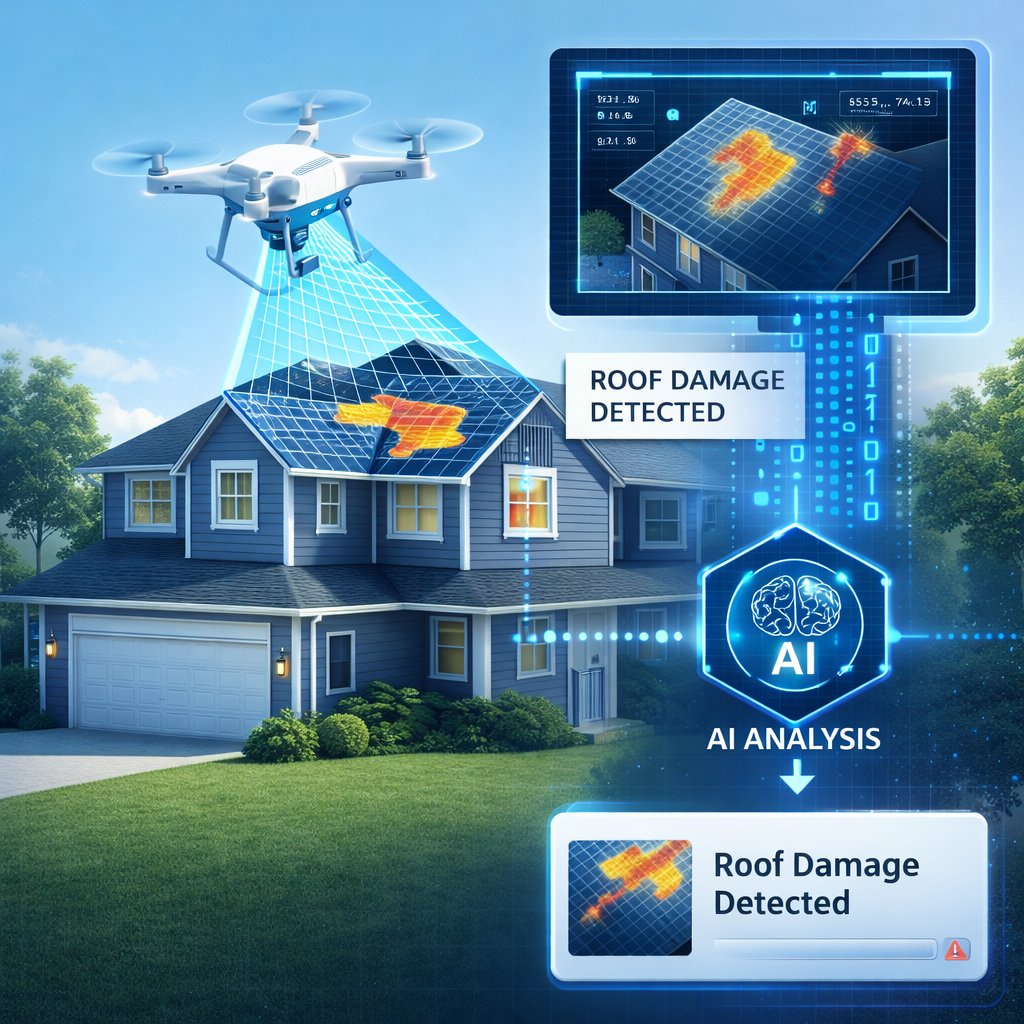
Yeah. This collection of bricks has been here for six months as it moves, you know? So almost like, trolling for service contracts to, like, that you just gave me a great idea. It's like a drone is flying around, finds things that could be done. Yeah. But roofs. You know. Yeah, yeah, yeah, they steer your work, but it's like, you know, we notice your gutters, you know, we're we're we're clogging and in a bad state of, you know, in disarray if you don't fix the gutters, you know, this this kind of property damage happened to your home.
It's in your best interest to fix the others. And so the drone flies, finds the parcel because it's GPS, finds the parcel, goes yeah, looks it up in GIS, looks it up in GIS, contacts the owner. Yeah, yeah. So it's you know, we notice this this thing annual property. Right. And then you just broker the service, you just hire some third buddy that to go deep and gutters, and then you take your fee in between.
Yeah. You hire people that are experienced in dealing with insurance companies. You hire people who are experienced in, you know, dealing with subcontractors. So you have a couple of general contractors on your payroll. So you and you manage these projects. Yeah. And the kind of scandalous version of it like the, the, the dirty version of it, if you will, would be you have a preset template of fear of like, you know, hey, if you don't fix your gutters, that's why he's going to have in your home, you can have foundational damage and you know, it's off.
It's replacements, whatever. Well, like when when water is getting, you know, the foundation of a house in, in North Carolina, like the kind of clay soil, if you get a part of the soil that's like soft and it's this side of the building is still firm because the gutter is leaking, right? And it's soaking the soil underneath. Literally, the house could settle asymmetrically and cause all kinds of engineering problems.
Right? So like you're, you're you're trolling and you have a template that says like, you know, hey homeowner, you risk losing thousands and thousands of dollars on an engineering problem that he can be able to say, you invested the effort. I even be able to identify houses of we're settling asymmetrically.
In the houses of of settling asymmetrically. Yes. Yeah, yeah. And then when she fell on them, you know, even try that other angle of the expensive jack up your house, fix it sort of thing, have all of these different things that you could fix. Yeah. So hell, you can take that to the next level two and you can start coordinating with local projects.
So this happens this happens. I, I don't know if you've been solicited this way, but like, someone will will have a dump truck outside your house. Okay. And they'll knock on your door. You say, hey, we're doing this, asphalt project down the way. We have all this recycled asphalt, you know, could we could lay this down on the driveway and pound it in for three grand, right?
Like, in other words, so we can give you provide you with a, with a, a new gravel slash asphalt driveway. It's not going to be like brand new asphalt, but it's going to be like a nice coverage. It's going to be almost like chip and seal. Yeah. And so like this aggregate we're going to put down then we're going to seal it.
Yeah. And so instead of taking it, taking that to the recycling center. Right. They're looking to just unload it locally in the neighborhood somewhere. Make it pay get paid for that. Right. So instead of it being a cost to them or they have to get rid of the waste, they can just dump it on you, spread it out, you know?
Yeah. Supposedly it's like a way win. We could do the same thing with this, with this, this system we're talking about. You can find out what local projects are happening in the area and then have the automated system broker these deals. Yeah. Broker the waste. Yeah. Or even broker the the equipment. Well, let's say somebody that a, a a bulldozer, you know, five doors there.
And then in this particular yard you see a bunch of tree stumps. So the equipment is, is in location, a, a service need for that equipment is in location B and you broker the connection. Yeah. And you say, you know, it's it's like, hey, you know, guys, is this equipment it needed for, you know, you you have a template, you say, oh well that stump removal job will take five hours.
It's equipment needed for five hours every day within this location. Yeah. And then you get various companies that offer these services to sign up. You can you can then figure out what area they're going to be based on their schedule that they tell us to your system, and then it offsets their rental cost for equipment. It offsets their real cost for disposing of way or offsets or costs for disposal of ways off, you know, all sorts of things.
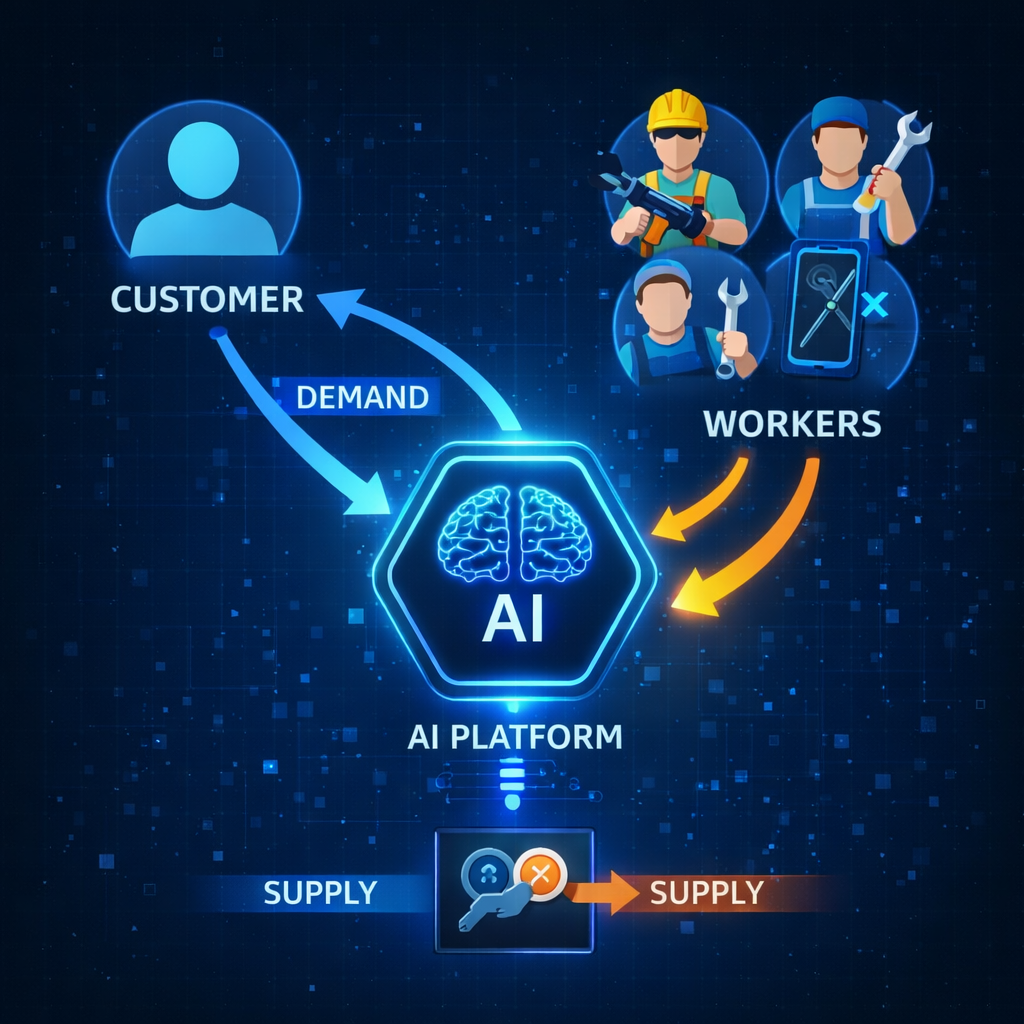
So you're just automated. You're becoming an automated middleman. You're like an automated TaskRabbit for industrial jobs. Yes. Sure. Yeah. It's funny that we're we're losing we're drifting the conversation there because we were talking about, like like, clandestine or not necessarily illegal, but shady versions of things. Right? I mean, this, but we can't. This could be shady.
But what I'm saying was that, like, you and I can't help legitimizing, like, something like, like, we're good guys, right? So. So instead of looking at just like, how do we capitalize, right? You know, like, thinking of, like how it could be legitimate. We use. Yeah. You know, and I wanted to talk about like how it could be done, you know.
Well, I guess one way is to like fear, motivation, you know, like, if you were to get this done on your own and have to because these people are in the area. Yeah. So it's like while supplies last tight that kind of sales take like it decide today this afternoon. Yeah. If you don't act within 24 hours then this opportunity is lost.
Yeah, yeah. This project will cost you a grand to do. The project that you were to do it on your own would. Since these people are in the area, we could pull this off for five days, you know, whatever, you know? Yeah. Throw in the, you know, while supplies last time aspect. Oh, yeah. Time limit it. Time sensitive marketing technique.
Putting the door sales technique because you can even send them the send them the, the drone footage. Yeah. Like send them the photos from the drone. It's like, here's the highlighted portions of your roof that need to be replaced. Here's the highlighted picture showing the lay of your house in in relation to the land. Here's the this dead tree right here poses a threat to your, you know, and your home ownership policy says that's wise.
So, you know, save money. There's a guy in the neighborhood doing tree work. Yeah. Or your a bylaws state and this is a violation will help you get rid of that before the home gets it. And then charge the HOA to try to find the violations. Oh hell yeah. But you do a time delay. You give yourself that way to fix them before the before you.
You tell the it you it before you're the tattletale. Yeah. You're the rat. Exactly, exactly. And.
So like, so we're out there like, you know Takashi 690, no neighborhood, you know, or.
I love it. Yeah, yeah, you could you can go. You can take this, like, to really any level. Right. So there's there's public space, there's public domain, like from anywhere that's from the sidewalk beer or. Hell, you can probably use Google Google images to, to make, to make some of these, AI assessments of people's properties. Right?
Well, I mean, okay, you'd be remiss if you didn't use all publicly available information if you went out and got tried to gather all your information first. No. Yeah. You use what's available, use what's available. Yeah, I agree 100%. Yeah. So, like scanning for these contracts in government documents and databases, scanning for. Okay, here's something a little more shady and clean.
Doesn't probably is, scan for police, police reports and mug shots of people with certain neighborhoods because they always give the address when they when they book somebody. Right? Yeah. And so you can tickle people from the opposite direction. You can say like so within, within, a quarter mile of this particular person's residence, like a sex offender or, got busted for d intern or got busted for criminal trespass or something, right?
Robbery. Yeah. Burglary or something. Right. You can say, oh, such and such a new neighborhood. He's a person who's an individual in your neighborhood who's committed a crime, that you should be aware of where who they are and where they live could offer these things as feeds to not only giving direct communication, but offer is a feed to these fear mongering services that have come up, like next door.
Yeah, yeah. And, you know, there's other ones like this ain't like automate a paywall for the information. Yeah, yeah. What I'm saying we you could have a whole list of clients. I think it's a b to B opportunity to. So what I'm trying to say. Yeah, I think there are businesses who would want to use it for their own stupid shit.
Yeah. Oh yeah. Totally. And they probably already created some of these tools. Well, yeah. But I'm saying it is to seize even better. But yeah, exactly. Just because it's already been created, that just proves out there's a market and that they've created the market for us. We can still come in and dominate it. Look look good bit. There were search engines were established thing.
But Google is the only one that lives now. Yeah. So you could do this. You could do something as simple as you know, cheapest and then insert service main here. Right. So like, cheapest junk removal service nationwide, the ocean wide junk removal service, let's just say. Okay. And you just advertise a service that doesn't even exist.
Okay. So you're so you're advertising cheapest junk removal. You you have a budget. You got you hire some advertising people to, to promote this phone number. So are we talking about basically you drum up sir you drum up interest in said thing. Then you immediately create a virtual corporation to contract out the existing businesses to work underneath that banner.
Yeah, exactly. So you just become a clearinghouse, right? So all you do then is just look up on Google locally what businesses do junk removal and hire a subcontract. What are those out for? You go price. You put controls around the subcontract and say, look, you have to have our branding on your truck. You have to have this door.
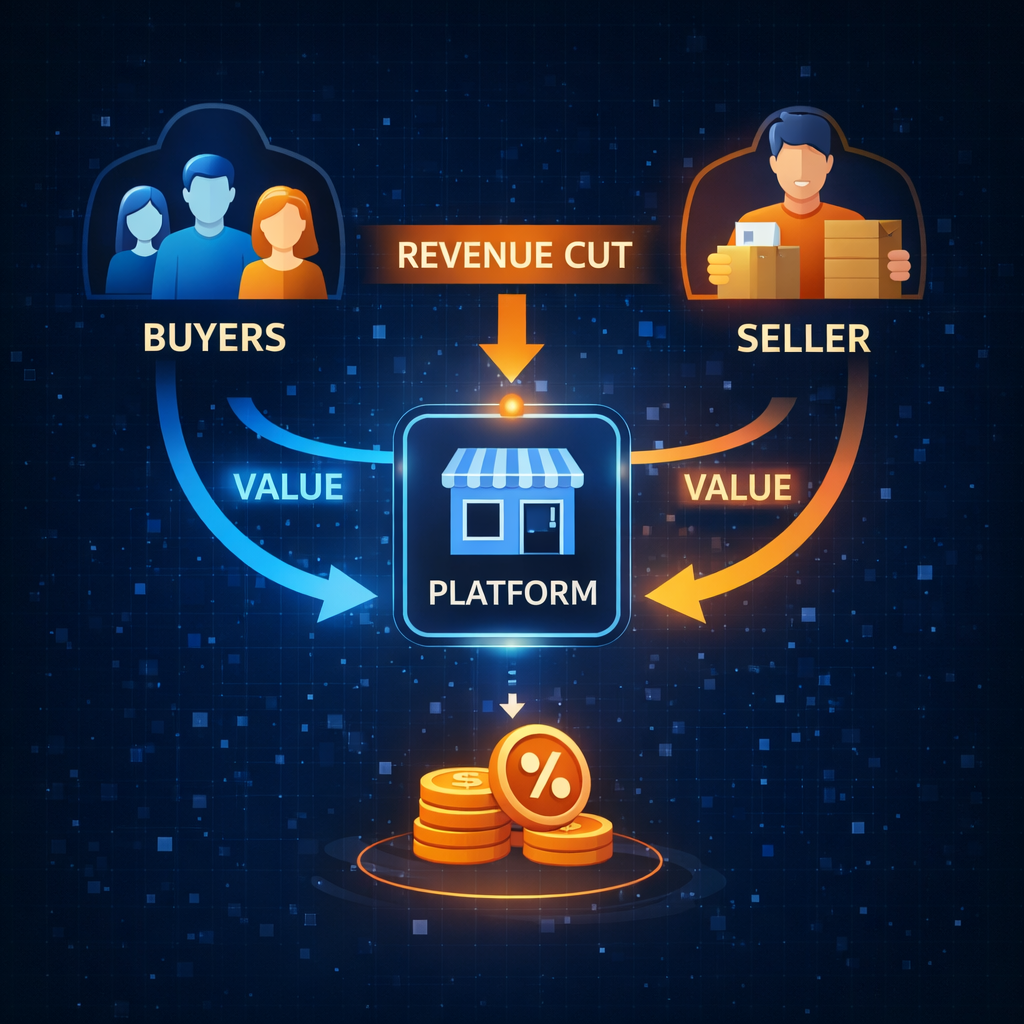
Not even bother. You're just you're just you're just using the clearinghouse to make the cap, to make a markup on each one. Don't even don't even clear. You have in the contract where you pass the all the business forward to that person. So let's say that they they're charging $1,000 for the junk removal. Will you charge 1500? All you did for the 500 referral fee, you know, you took the $500 referral paid and pass it on to Z company.
It's so, so the, you know, the, the, the, the people could have easily just found this company among themselves. Right. But all you did was just connect a and do I still think I still think in the industry fraud. And for me to make it further maintenance and further economic foothold of our virtual preparation, we need to tell the subcontractors, okay, we're canning all these marketing materials.
This is what you have to communicate with and this is what you slap on your truck, you know, because why set it up for not going to continue to commit fraud or to this name? Let's do it. Because we got to recover all our setup cost. This isn't a one time it gave it. Yeah. They you know again we're still not talking under like the criminal you know element here.
Like we're still not doing still doing everything above board. It's just it's just on the shade of your side of above. Yeah it's legal but it's just just dirty. Yeah. It's dirty. Yeah. You know, like, for example, if you buy dirt, you know, like, let's say that I, that I bet I buy a truckload of dirt and there's a the expression dirt cheap, right.
So the idea is that you should be able to get a dump load, a dump truck full of dirt delivered to your house for a relatively cheap. Sure. Well, they sell the dirt by the by the tarp. By the tub. Well, all they have to do is sign, quit, fill the truck halfway, come by with a with a with a water hose and wet the dirt down.
And now they have double the weight of the dirt because it's wet dirt. Right. And they give you the invoice and you just pay. Yeah. It's just putting your thumb on the scale. Yeah. Exactly. Because you're not you're not out there with an actual like moisture meter, you know, see how wet the dirt is that they gain. Right.
Okay. And we say well that's kind of scandalous right there, right there there. We're cheating. But are they. I don't know because because you're not going to be able to say, oh, the $350 load up there that I just got and just come back. It's only in Birmingham dollar. They're not going to take somebody to court for the $200 difference.
You're going to be like, I got screwed. And then they're going to do the same thing to every customer that calls. So down the line. So what I'm thinking it starts with preparation. Then spiritual preparation thing has been wondering if, you know there's Google services on your Android phone that you can do things that you can have it sit on hold for you and reply, you can have it screen calls, you can have it do all sorts of things.
Are they? So they offered a package of voice over IP services to under the banner of People voice. Right. Do they offer the any of these AI services for public use? Boboli. Probably because they they they offer all kinds of, you know, because you be setting all that up under like a personal hell you would. But what I'm trying to say is maybe you can leverage some of the things that it can do already to do some of this.
Maybe you can broker you can use Google services to broker your AI business. You know, like it makes the calls. It makes the deals. Yeah. Of course. Yeah. You can pull that off. Of course. Automate that as he can. Yeah. Yeah. Hell even get it to where it it contacts the third party and makes that deal to. That's me saying yeah, that's that's what I'm saying.
The third party thing would be the most time consuming piece of this. So if you could get the AI to do the third party contact, it's hands off passive income. Yeah. I'm having I was having a hard time figuring out a way to, like, really easily, fluidly and seamlessly coast stuff, like stuff. So like, you know, yard sale, but online, Craigslist, eBay, whatever.
There there's tools that will help you, you know, kind of do the dashes and whatnot. But like, there's no still that does not exist. A really good tool to say this is a thing I'm trying to sell, you know, into broadcast it out to all the relevant service. Sure. If you have something that's worth 50 bucks, let's say someone's going to try to talk you down to 40 on it.
So whatever we'll say it's we'll say it's solidly worth 50 bucks. It's an old dresser or something that's, you know, brand new was about 800 bucks. And. Yeah, but it's, it's, it's four years old and it doesn't meet your decor and you're trying to unload it. So you're putting up. Yeah. It's scratches. It's got this and that. Well, you got to bring it to someplace to put a drop cloth or something down.
Take all these photos of it. You know, by the time you don't get all that, it's it's a huge you've already put several hours with the work into it just to get it posted. Yep. And now you have to deal with all the riff raff that's going to contact you about it. Say, I'm going to give you 20 bucks, or how about you give it to me for free?
Yeah. I mean, then you just have to just a time commitment to to make those correspondences. By the time you get rid of the things, I ain't worth it. Might as well just dumpster, you know, and then you get into, like, well, some things are easier to move there smaller, but they're worth more and blah blah blah. Some things are better stores of value.
The others. So, I don't know if you've heard this big thing about e-waste. There's like a lot of times happens like these big corporations or something, or we'll seven like, get rid of 5000 laptops, you know, and, they put them on a big bait. They put a drill through the hard drive or crush the hard drive or whatever, and then send all the components of it to India.
For these people that are living in service, down to with soldering irons, pulling off the chips and the diable pieces, scraping the gold, all that kind of stuff. Right, right. Well, I thought it would be suited super, super, super cool to have a robotic system that's driven by AI. So boom, it's got a circuit board and it goes out there and takes every single chip and processor off the circuit board and, and can can identify every single one of them and classify it and recycle those things.
A positive for a second. Yeah. Yeah. And you could definitely get into the another hook to this tubes. You can get into the environmental benefit as well. So you didn't you can you can get a credit or some type of tax incentive or we're talking about e-waste. Yeah. He was a recovery of it. Yeah. Yeah. So even if he did it from the environmental standpoint, develop this from that, you know, angle, I'm sure that you can get credits and tax cuts to start this whole thing.
Oh yeah. Oh yeah. Especially if you had a proof of concept, let's say like, look, here's the circuit board. Here's what this machine can be. Yeah. No. And you know, hey, you know, you're probably using something like OpenCV or something like that to identify chips and manufactures. You rep. I mean, it's going to take some effort to work.
But you know, there's a, there's a, there's an after parts market to big after parts market. Certain chips that are especially from older computers will sell more than can sell for a higher price than some of the moderate ships that are that have thousands of crimes. Grade the power because someone wants to do something with an old rake, right?
You know, the retro computing stuff. Yeah. Or and a lot of it has a lot of these things are really popular as far as, the audio files and sandwich generation and synthesizers and all of those type of chips like the Sid chip, the C64, the Yamaha FM synthesis chips, you know, all kinds of stuff. Right? Yeah. Because you're, you're you're building your own, you know, piece of equipment for a special effect on a, you know, first for a, for a performance.
Yeah. Yes. All kinds of shit like that, man. It's, it's pretty, but yeah, I, I think, I think, like automating. I think automating opportunity would be crazier. And imagine, imagine the two we were talking about this idea of, microtransactions for like, like, like a homeless person, homeless person says, hey, I could do this small amount of work.
Here's the contract I pulled up on my phone. Right. The phone knows where you're at GPS, and there's work for you in location X, Y, Z. Right now. You go over there, there's work for you, right? If you want to take it, it pays $25 and it's an hour and a half commitment. Right. So the person just uses their phone on the street.
It's almost like, the, the migrant workers at Home Depot, right? You know. Right. But it's just broadcasting this, this opportunity. And the idea is, you know, a micro payment or a system that allows, you know, that lets them get the money into some kind of digital wallet or something like Cash App or whatever. Yeah. Yeah. Right. Yeah.
Something that's transferable into real, real, real money. Right. Very easily. Easily and without a lot of overhead. Yeah. There's this Cash app plenty of different ways. And so the service that you provide is the s provide like a micro escrow service in the middle. So person A says, you know, hey I need these I need these hedges trimmed.
I have the hedge trimmer, I have the I have the the stuff I just sing. The people who know how it came. These. Yeah. And the way that you set the whole thing up is to where it's like arm's length contacting to where the person that has the job never even has to interface with the person that does the job, you see.
And so the drone, like we're just talking about finds the head that needs. But the the homeowner sends him the thing saying, hey, you need your trims, hedges. Sure, we can get that done for you for $35. And you know, you get really but a homeless zombie comes and does the work. But but really, what we're saying is not the homeless.
The homeless, industrious person who needs the micro payment to get by. Yeah, right. But I mean, from the owner's perspective, it's just a, a human unit that just comes and goes to work and never even has a has an interaction right type. I mean, we go back to tying back in with the whole A, you might even be able to offer some weight to your requests by going through the subcontracting with.
He was to enforce these rules and using their letterhead to contact saying, hey, you need your hedges trimmed. Here is here's the availability of the workforce in the area that we recommend, and they can do it for this amount. You want to do it. Yeah. So you're just training a virtual temp agency with no with no physical location overhead.
Yeah. Yeah. We're we're basically talking about creating virtual corporation as a virtual operation. And, you know, and undoubtedly once you figure out the niches that AI can be made to take care of in this, it could be a help. And ultimately, also what some of the things we're talking about would be facilitated, I think, by the blockchain and related technologies like smart contracts.
You know, we could that could be the mechanism internally that we use for all these micropayments. And and everything is a smart contract that gets signed by all parties involved. Yeah. And then so it's the the risk is always off center. The to the to the people that are transacting never to you. So you offset the risk. So the person that wants the service done for 50 bucks pays the $50 in its out.
It's gone already. The money's there. Yeah. Yeah. We're we're escrow it in in a the wallet and and then as soon as the check box is up the points of performance of our are met in the funds of at least. So everyone has the right at the person doing the work is going to make sure that the that those that the requirements of the job are checked because that's what's required to release the money.
And so then the homeowner or the person hiring on the other side, right, is the one that does those checks and say, yes, the person did A, B, C, and they sign the score contract saying, yes, it was. And when a, b, c gets shut off, the money gets released. Yeah. And and then you're further incentivize it to where if they dispute it, they're going to lose a major percentage of the money anyway.
I think it's just deferred. So like the person the person at the endpoint, the person doing the labor right isn't ever going to get screwed. Because what you do is you you release their funds like they say they did. They said they did the work. They immediately pay them. Yeah. They submit the photos. They submit whatever is required to to to verify that they did the work.
And then the homeowner says, no, no, no, I'm not satisfied. Let's say, right, well, you fix that by saying, okay, well, here's 10% of the money back. That's all you can get back. That's how the system works, right? And so then you only take as the broker that you only take a small that's like your profit. So you just don't do your profit.
Yeah. You see what I'm saying. And then you so, so like a way to automatically, put the incentives to, to have a non dispute situation. There's going to like be killed by bespeaks. Yeah. But yeah. But we also don't want to be giving away all our profit and referring just because people feel like it's the life that you get 10% back and still the job done.
Well the idea is that. Oh yes. But the idea, the idea with that is that the, you you have a huge incentive when you do the contract and not do that. It doesn't it doesn't help you, right? Like, you don't you don't get a benefit by doing it. Because not only can you say you only get 25%.
Let's say you're going over the money back, but it takes six months to get it. Yeah, we we take it into three loan from year to year, six months. Right. So you don't lose any. You just you just cleverly make it so that the, the house always wins type thing. Like. Right. Right. Yeah. And because every transaction at the end of the day is a gamble.
Yeah. And you know what Trump did for all those years is he's have people and thousands of dollars of work on his one of his buildings or real estate probably. And you say, sorry, I'm not saying you take me to court and then drag it out and in court forever. Got the job done and had to pay for litigation and those costs, but ultimately usually came out the other end of either not paying or paying little.
Cool, kind of public service system that you could deal to is you could invent, like, you know, people flip houses, you can have people be, residents that are flipping the houses. So, like, a person comes in to the house for a month while they do the maintenance for you, and then, when that house get swept, see, by the house, put it put in this work crew, like 3 or 4 people, right.
They do all this, like up fit to the house while they're living there for the month or see that they that's going to take you to do all the work. And then when they're done with that, they move to the next place and that you're going to flip and do that too. So they're just they're just floating. There's floaters that that your workforce, your migrant workforce that goes and flits one house up the mess up to the next.
And they always have a place to stay for free. Yeah. I mean okay, so that's your the place to stay for free is your benefit. But if you get paid for doing the work and you get paid to be the word, but you don't find some very special people who'll be willing to do that, well, those those special people already exist.
Errors like maybe and force I wonders like our our, you know, are you going to be able to find those special people in every area? And, I mean, maybe you find your takes on maybe you identify traits that those special people tend to have. What? No, I know what I was going to say is you don't want a druggie working, but I was going to say possibly it was people being.
Not all migrant workers. Yeah. Yeah. Well there's already there's already like a whole entire country, you know, infrastructure taking advantage of those people. So that's that's all news at this point. Yeah. So we don't need to take advantage of those. We take a break. But of course I mean that would be the ideal thing that a you know, you've got a turnaround time of a month to two months and you took the loan out.
Well, you only have to make one payment, you know, to famous and then you flip the house. Absolutely. It's an interesting way to look at the labor of society in general, as if everybody is a gig worker, like everybody is is perpetually just trying to find a gate. Right. So we're sitting here right now and there's some app that says, hey, if you want to take this gig or a gig right now, you know, in your area, walking distance with it within a quarter mile.
I fucking hate the idea of gig work. I can't stand it. Well, what I'm saying is, like. Like you have the day ahead of you. Okay? We're still hanging off on Saturday. Yeah. You you you put it in that your built. Right. So it's like it's a pull request. You're not going to 100%, you know. And then I mean it's an opt in system I get it.
Yeah. And so then, you know this is the gig. Can you do it for this amount of money? And you say no, and maybe somebody puts a gig out there for, for, for work. And then everyone that's just to this app or whatever can see the job and, and bid on it, you know, and it's not necessarily taking the lowest bidder the, the, the, the customer was really put in the person wanting the service is already put in their price range.
Yeah. You know, it's like that's what they'll pay the job. And then the people on the other end that are going to come due to labor are putting in their their amount that they deal for as well. You need to take the difference right, with connecting two points. You know Uber does that would withdraw that. We just do Uber but for everything.
Well yeah. And and I mean you know there's already some things that play in that space like TaskRabbit and something like that. But they they could be they could be abstracted more. They could be you know, yeah. More automated systems and it could be more transparent systems. And I think all of those things would appeal to people, the higher degree of transparency.
How does this work? Why does it work? A, you know, being able to if if we had a if we had a something where people could verify the transactions, verify the escrow, verify all that via some kind of blockchain type thing, I think they would. Yeah. Selenium or whatever the name of that, that that micro contracting already exists.
Yeah. Yeah. And you know it if, if you can leverage that system. Sure. You know, whatever, whatever you can leverage that already exist or maybe you customize it for the application. But yeah, that that's that's the kind of things we would want is, I think greater transparency, greater automation, greater, you know, participation because we're we're looking at it like you said, there are a lot of people who opt in to be gig workers, who opt in to do all these things and have a very varying set of skills.
Why not capture all of it? Sure. But yeah, me and that's what we're talking about, is basically making virtual for everything. Yeah, it's the functional equivalent of like when you talk about how he is, take a virtual machine, spit it out, you're the same thing. But for businesses, yes. You're just spinning endless number of businesses and let them rise and fall as they as they need to for for the needs and to take other area.
Yeah. And you know, you can she could just spin up a regional LLC, an umbrella corporation and put them all under it, in it, it it would just be the ultimate, I think like the ultimate cool factor. If you could just take people stop general, general junk that they don't want anyone out there. What's it or. I'm just saying.
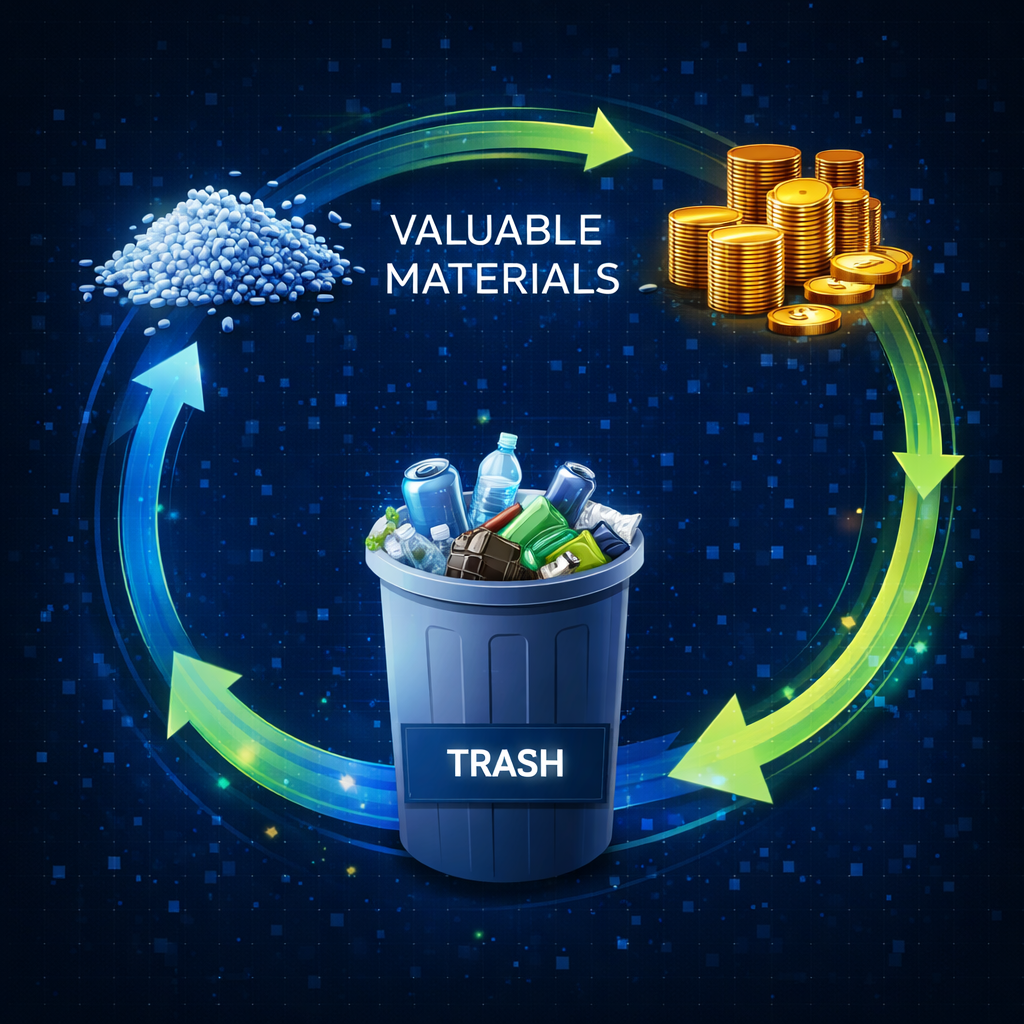
I'm just saying, like, have automated tools that that disassemble and categorize it. And you take all the raw materials and you and you bring them back into the, into the marketplace. You always I know that's called recycling, but I'm talking about recycling in a different I'm talking about a different level because you're, you're no longer, you're no longer using your, tremendous amounts of human labor to, to process this recycling material.
You're not putting a person in danger. You're not. Because, I mean, all of these people who are doing this disassemble, you're being slowly poisoned. Yeah, that's what that's what we try to avoid. Yeah. You know, but then cash in big time on the on the animate process. So I can imagine, like, you know, someone discards this old piece of Ikea furniture, right?
So it's like chipboard. There's there's some metal hardware there, but it's like it's nickel cadmium type, you know, those little grommets and stuff. And, if you had a robot that could sit there and pick that same apart to. It's absolutely, you know, different components, which is going to require some serious engineering, but you could do it.
Well, this is where we're at now with AI is, is is the ability for, you know, these, these systems to just do incredible things. I mean, it's making artwork or making legal contracts, you know. So why can't it do, level recycle? Well, I mean, you're going to need robotics coupled with the AI and the engineering time is going to be the robotics, I think, for sure.
I mean, and that's what I'm trying to say, you know, you're going to you're going to be spending some engineering dollars here. So there's these like garbage patches out in the ocean now. Like it's not just one there's like now multiple garbage patches, you know, and there's like gigatons of plastic in the center. Yeah. And it's not just ball stickers.
There's metal wood. There's all this like, well, fiber materials, like, you know, organic materials on thing if you, if you could actually take human waste like that's not shit. But I mean like human garbage, I get you and come up with a, with an engineering engineered system that can properly sort out 80% of us. Yeah, we were looking at credible, a credible gold mine is because there's material value and all there is, they're absolutely is.
And it's a matter of, you know, like we were talking about earlier, the DoD had a couple of contests to do recycler sorting. That would be my first port of call there. I'd look at what designs were available, what people used, what was considered successful there and then. I'm sure we find other projects to where other people did things.
And, you know, we could apply that recycling idea that recycling robot or sorting robot to a lot of different things from, like you're saying, to from having a service where people put their crap in the hopper and you recycle it, to having a municipality do the same thing with their trash cans to having, a boat out there in the harvesting to.
Yes, I'm I'm just saying, like with capitalism, you have such a disposable economy. Like like everything is planned obsolescence and disposal. I mean, the e-waste is just one, you know, big thing because there's so many. There's so many, like trace Minerals and there's a gold mine inside that, you know, an old piece of hardware is still gold and platinum and silver and Midas.
Right. It's just extracting that. It was very difficult. Right. But there's but there's companies out there, there that are doing it. And like I said, what we're doing right now globally is they're all sending it to mostly India. And they're poisoning all these young people, seeing they're sitting there with a satellite. Right. So, so, so to take that business away from India and do it in an automated way would be incredible, because or even carrying the business to India and do their it doesn't matter where we do it, if there's expertise there in India then we could leverage even.
Yeah. As long as you're not poisoning people though that's. Well yeah that's what I'm saying. That's why I would bring it to India because that's where people are being poisoned. So bring it to India as an alternative and use the expertise and knowledge that's already there, and disassembly and collection and all that, you know, hey, these guys have done it manually.
Who better to help you automate it than people who know the manual process inside and out? Yeah. And then I guess you'd like like in on start with the I Eric easy the cliche term low hanging fruit. But start with the easy to grab elements. Automate those first and then you know use phase out the human later. Yes, yes.
And you know my idea there is meantime sorry. But in the meantime, give them the proper equipment so they're not getting poison. Exactly. So you're ending the poisoning immediately, right? Yeah. You end the poisoning immediately. You you say, hey, also, we want you to subcontract with us and and that give us knowledge, give us an vise on this.
And, you know, then you slowly ramp up the automation. But of course, you have your automation to the point where it can offset your cost of bringing the equipment in for them. Yeah. So you fill up your automation to the point where you're making money with it already, but you're going to go bring it in, say this is a replacement for at least this and these types of harvesting.
And then you give them the equipment. Right. And then you just keep building the automation. I mean, it's amazing this, this concept of paying people for their trash and paying people to be halted has stopped. Right? They used to buy shipping container after shipping container after shipping container for trash. They they will do it anymore. Well, yeah, because they end up with a huge trash files that are probably poisoning their environments.
But but that aside is like there's so much material value in in trash and waste. Right. And then if you had it sorted out into its proper, you know, all all this type of plastic isn't here. All. But that's what we were doing when we were sending a shipping container and stuff over there. Hey, here's a shipping container, a waste of metals.
Here's the shipping container of this, right? They're probably getting a lot of, like, some substandard stuff. You know, so. So you can do, like, something basic, like, have a big trash pile and just run a superpower magnets and pull out all the metal. Like, you can start with something like that, but I'm talking about getting it down to the very near.
Well, we're harvesting microplastics where we're harvesting this and that. Right? Getting it out of the environment and re having it as, as virgin material for me, for me product. Yeah. Totally totally can be done. It's just the engineering cost. And then you get people into these programs to, for their, for their own personal health. So we're like, if you maintain a healthy lifestyle and this measured right, that you're living a healthy life, you get paychecks for doing because it's a, it's a, it's a it's a kickback from the insurance.
There's another steam right here. Let's say that somebody, called calling no insurance. Insurance. Right. And, yeah, this this one, this one shouldn't be on recording. So we're done for the day.